Youth Strategy
Youth Strategy Introduction
The development of the new Cheshire West and Chester Youth Strategy comes at a pivotal moment for young people across the borough and the country. The youth landscape has undergone profound shifts in recent years, shaped by the long-term impacts of the COVID-19 pandemic, a rising cost of living, and evolving digital behaviours. These changes have intensified existing challenges and created new pressures that demand a bold, responsive, and inclusive strategic approach.
Nationally, the 2024 National Youth Agency Census reveals a youth sector under strain but delivering vital support to over 224,000 young people across 28,000 locations. Mental health and wellbeing remain the most pressing areas of need, with over half of youth organisations reporting increased demand for access to a trusted adult. The sector is also grappling with rising operating costs and shrinking budgets, particularly in areas of high deprivation, where demand is greatest. Locally, Cheshire West mirrors these trends, with a growing youth population of 357,700 and increasing diversity in needs and experiences.
The new National Youth Strategy for England, announced in late 2024 and launching in early 2026, marks a significant policy shift. It prioritises co-production with young people, investment in youth spaces, and a move away from one-size-fits-all provision. This aligns with the NYA’s own strategic vision (2024–2029), which calls for youth work in every place and space, a strengthened workforce, and evidence-led practice.
The Challenges Young People Are Facing
However, the context is complex. The number of young people not in Education, Employment or Training (NEET) in England has risen to nearly one million, with young women disproportionately affected. The mental health crisis continues to escalate, with over 25% of 16-24 year-olds now experiencing a diagnosable condition. The cost-of-living crisis has deepened inequalities, with many young people facing food insecurity, housing instability, and limited access to essential services.
Digital transformation has reshaped how young people engage with services, education, and each other. While digital platforms offer opportunities for creativity and connection, they also expose young people to online harms and deepen the divide between the digital 'haves' and 'have-nots'. In Cheshire West, this is compounded by regional disparities in access and affordability.
No single service or organisation can meet these challenges alone. The complexity of young people’s lives today demands a collaborative, cross-sector approach. Strong partnerships between local authorities, education providers, health services, voluntary community and faith organisations, and, most importantly, young people themselves are essential. By working together, we can build a more coherent and responsive support system that maximises resources, shares expertise, and creates joined-up pathways to opportunity. Partnership is not just a method, it is the foundation for securing positive futures for all young people in Cheshire West and Chester.
Our Shared Commitment to Young People
This strategy responds to these realities with a commitment to equity, empowerment, and resilience. It seeks to build a youth ecosystem that is inclusive, future-facing, and co-designed with young people. By investing in targeted support, strengthening partnerships, and embedding youth voice at every level, Cheshire West and Chester aims to ensure that every young person can thrive, regardless of background, postcode, or circumstance.
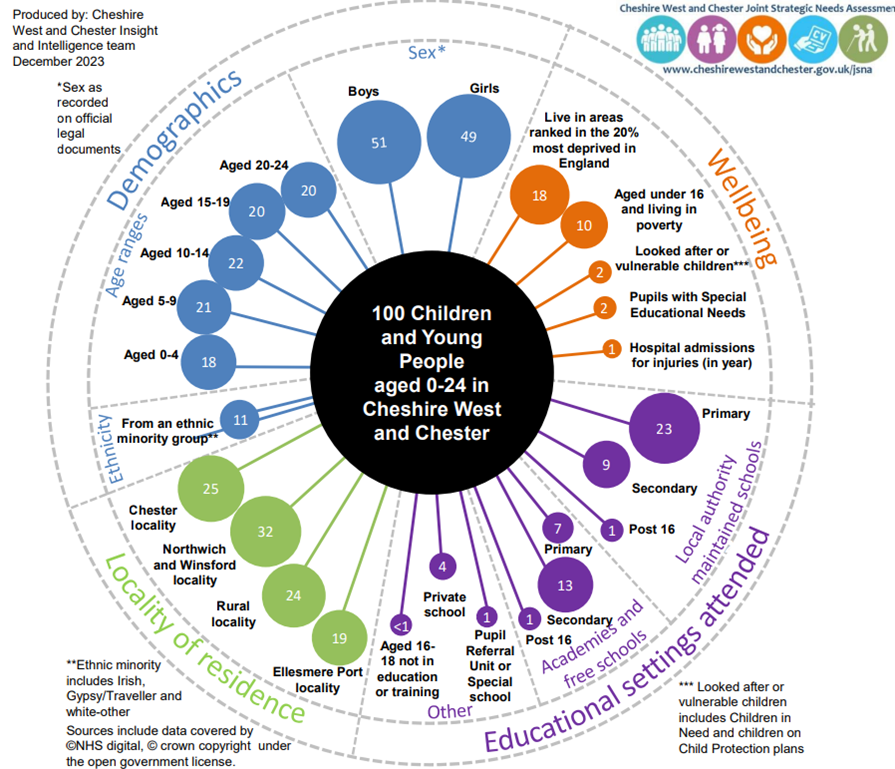
If the population of zero to 25 year olds was reduced to a village of precisely 100 young people, with all existing ratios remaining the same, the demographics would look something like this