2.3.1 Tree planting considerations
This section sets out planting principles for both new development and retrofit schemes, in line with the recommendations of the England Tree Action Plan (DEFRA), the NPPF, the Building Better Building Beautiful Commission (BBBBC) and the National Model Design Code (NMDC).
Cheshire West and Chester Council advocates the “right tree, right place” principle to ensure the success of newly planted trees. Major considerations in selecting the right tree include size, height, shape and form at maturity, along with shading, leaf and fruit drop, rooting habit, and local landscape character. Tree specification should be conducted in collaboration with an arboriculturist.
Specification should also be informed by an understanding of the trees that characterise the context of a site. This leads to the selection of trees that thrive under their specific environmental conditions, and that strengthen local townscape character.
Along with this code, designers are advised to refer to the following documents:
- British Standard (BS) 5837:2012 Trees in Relation to Design, Demolition and Construction: Recommendations
- BS8545:2014 Trees from Nursery to Independence in the Landscape
- National House Building Council (NHBC) Chapter 4.2 Building near trees
- Forest Research: The Urban Tree Manual
- Trees and Design Action Group (TDAG) Trees in Hard Landscapes (2014)
- National Joint Utilities Group (NJUG) Guidelines for the Planning, Installation and Maintenance of Utility Services in Proximity to Trees (2007)
All new Principal Streets and Residential Streets (Types 1 & 2) must include street trees planted no more than 16 metres apart within the adoptable highway.
All new tertiary streets (Type 3) should include street trees planted no more than 16 metres apart within the adoptable highway.
Existing trees must not be removed to accommodate lighting or utilities. Refer to NJUG guidance and BS 5837:2012.
Common utility corridors must be provided and planned around trees. This is a passage built either underground or above ground to carry utilities such as electricity, water and sewer pipes.
Tree pits and tree verges smaller than 3m in width must include root barriers, root deflector or structural soil system to prevent root damage to pavements.
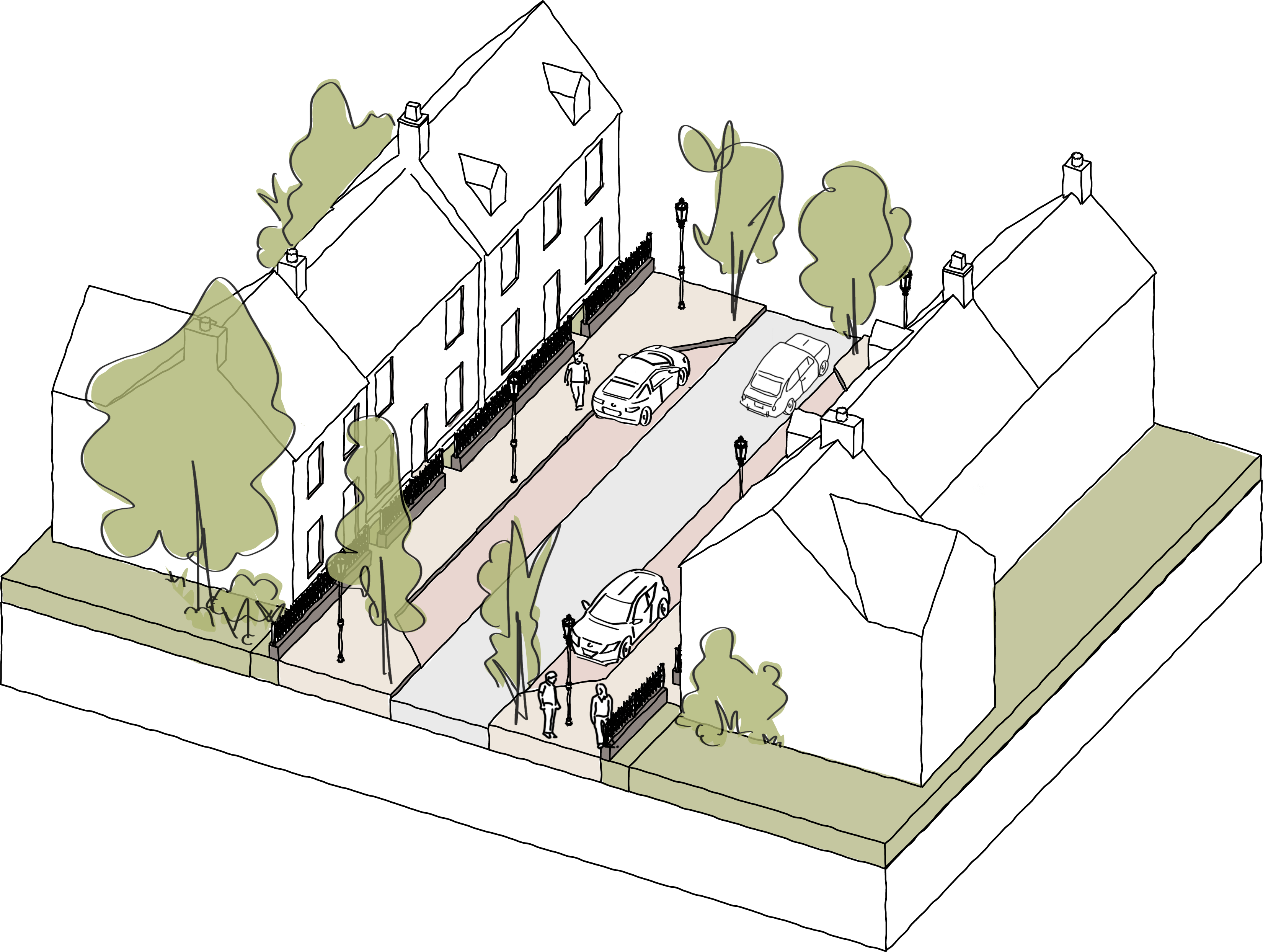
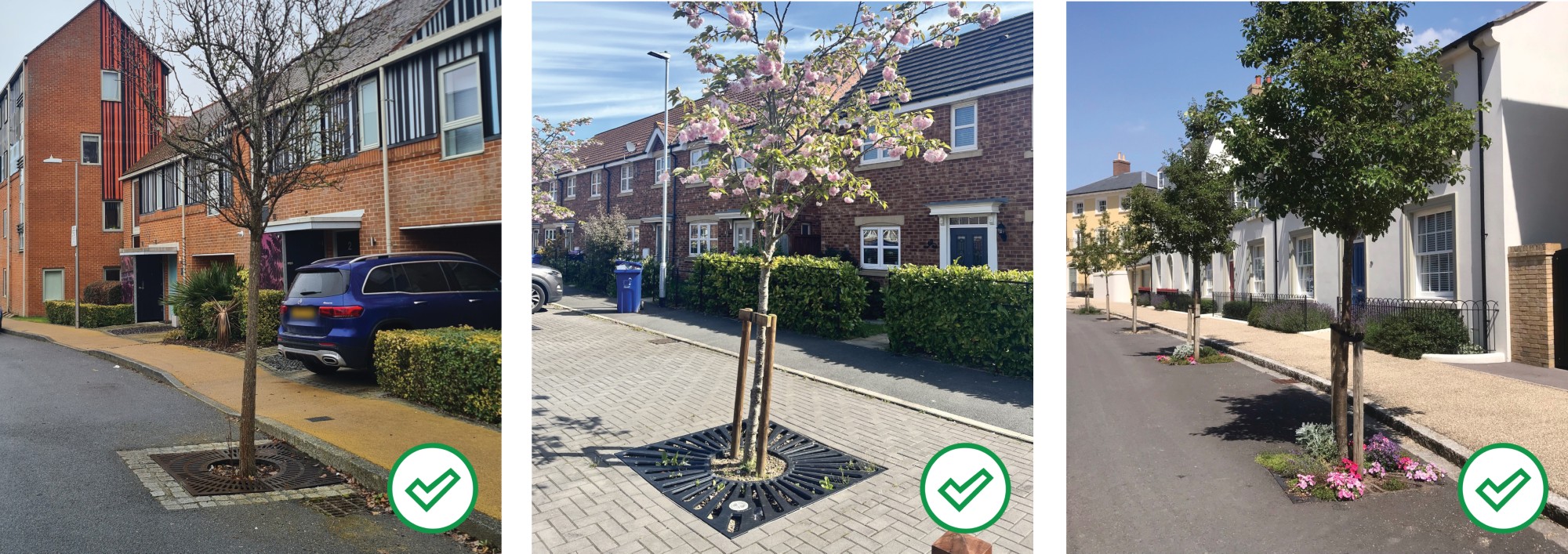
Street trees should be planted in the following locations:
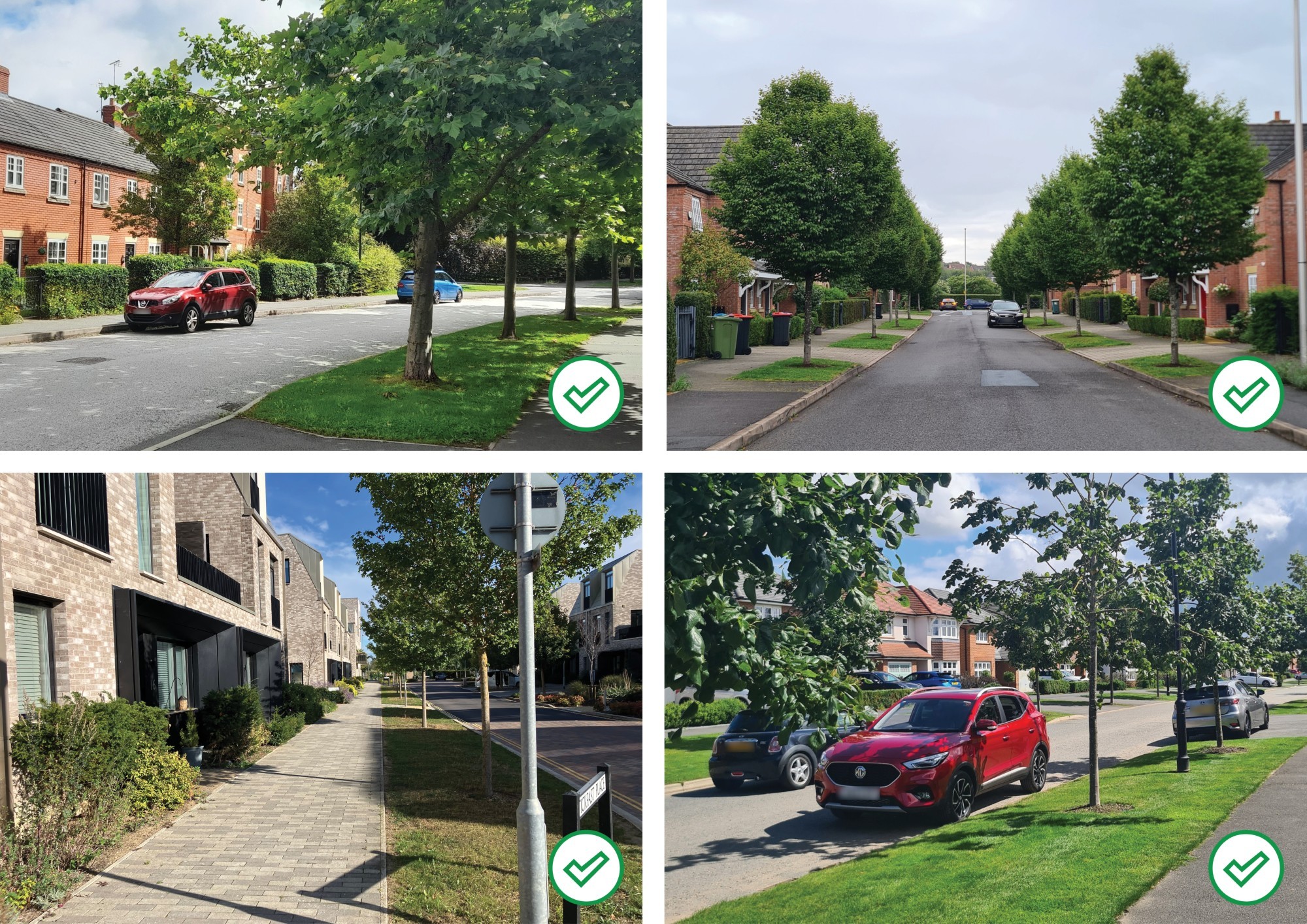
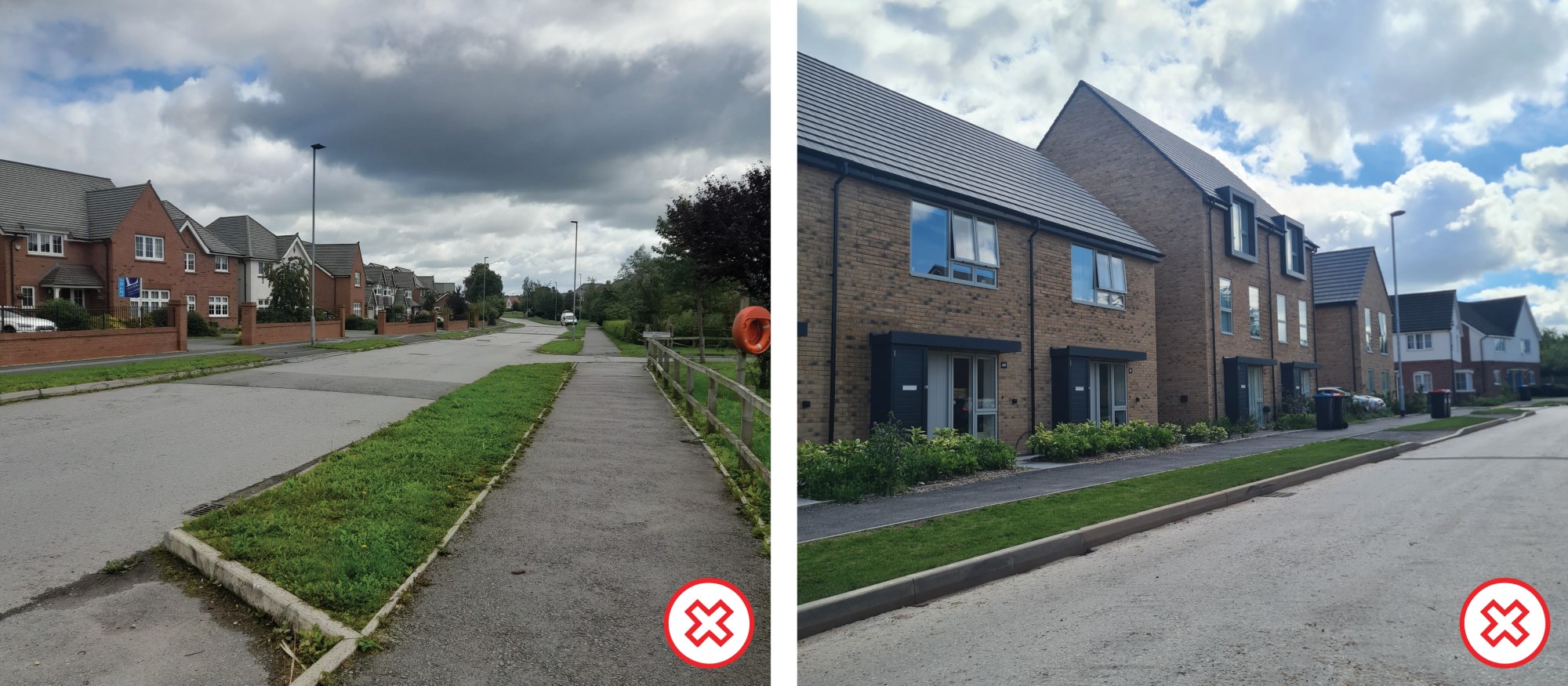
- In grass verges adjacent to carriageway. On busier roads, trees should be planted in verges. Verges should be a minimum width of 1.0 m. This provides space for root growth and offers an effective way of separating people and traffic.
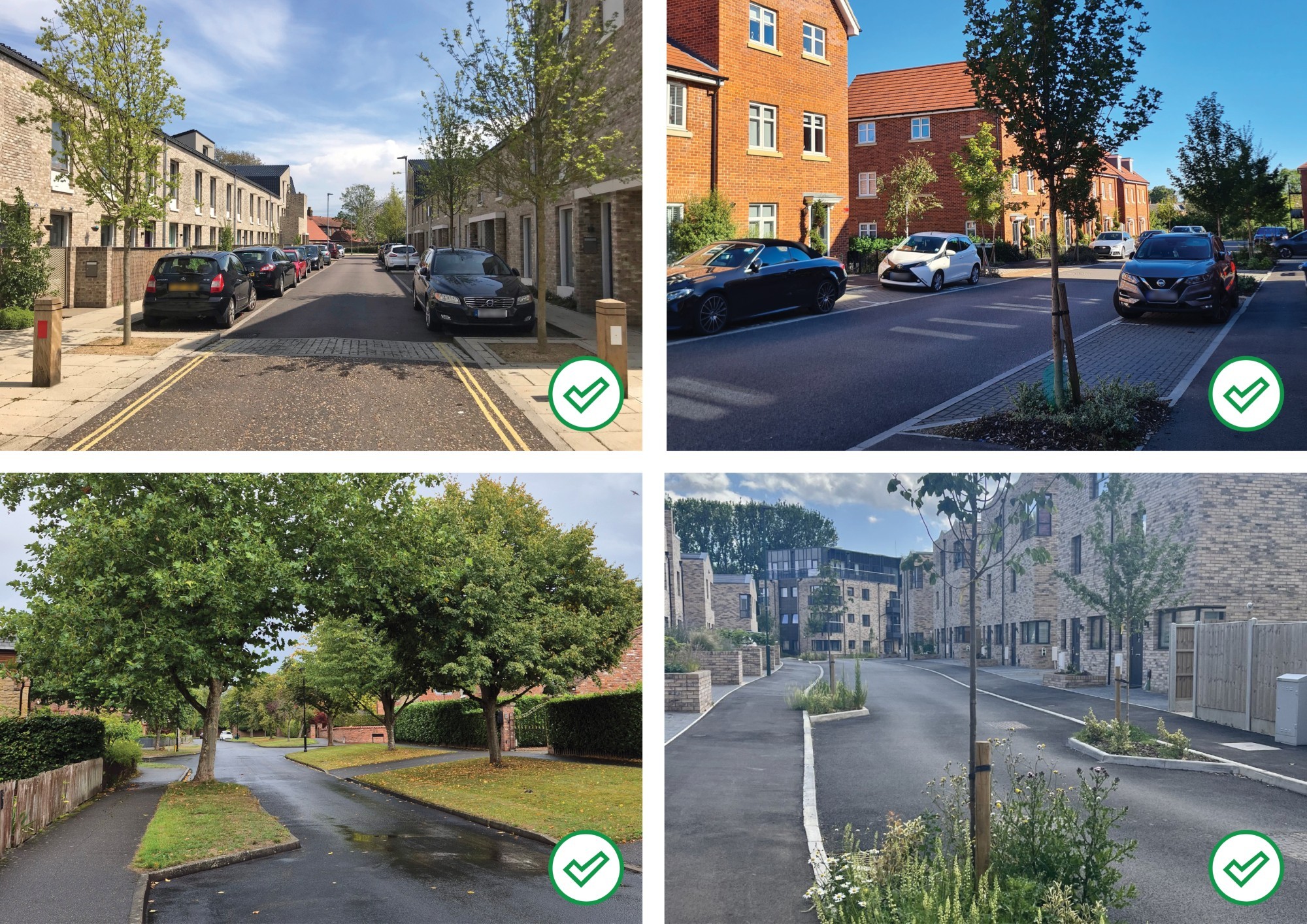
- In build outs. Build outs provide traffic calming and visual relief to long rows of parked vehicles. Tree pits should incorporate low level planting to maximise opportunities for greenery and improve biodiversity.
- In tree pits within the carriageway. On low traffic streets such as mews, tree pits should be constructed at the same level as the carriageway. A low level barrier should be included to protect the tree.
Street trees should leave sufficient room for future growth without reducing available, accessible footways to below the desirable minimum widths set out in this Code.