2.6 Lighting and protecting dark skies
Light pollution is detrimental to both human and environmental health. It has an adverse effect on wildlife migration and animals’ sleeping and feeding patterns. The following rules apply to adopted street lighting, non adopted street lighting, external lighting and the illumination of buildings.
The borough has low levels of light pollution outside of its urban areas. These dark skies should be protected through sensitive lighting design and specification practices. Additional rules therefore apply across the rural area.
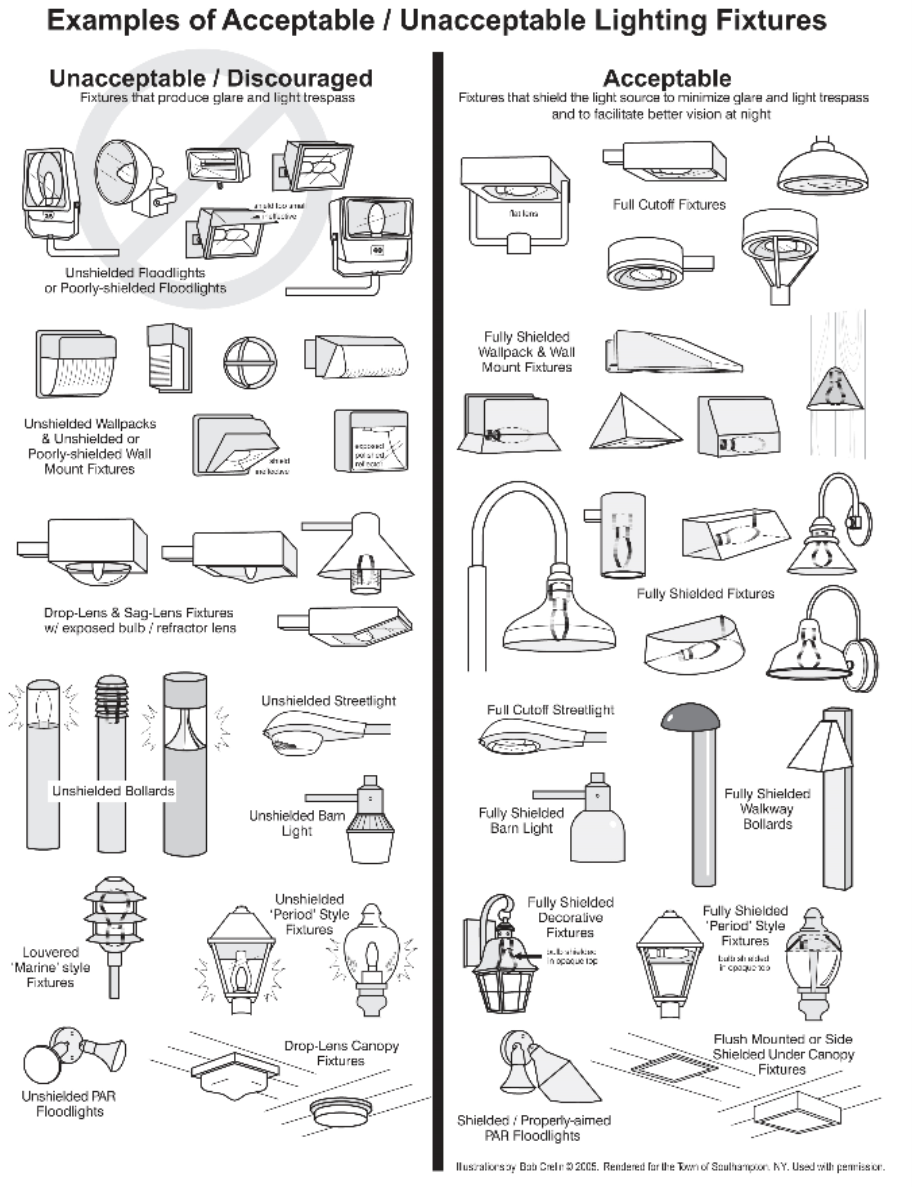
All lighting must be designed to minimise impacts on nature and wildlife. Light must be directed away from the sky and habitats such as hedgerows, trees, water bodies and grassland.
Lighting must have a colour temperature no higher than 2700 Kelvin (K).
In rural areas, all new external lighting must be DarkSky® approved.
Lighting requirements for new development shall be risk assessed on a site-by-site basis.
Smart control systems that automatically adjust lighting levels and colour temperatures could be used to reduce the impact on people and nature.