
2.2 Responding to the landscape
Landscape design should connect up and enhance existing landscape habitat features, such as hedgerows, woodlands and ponds.
A buffer from existing habitats must be provided, to protect and enhance these features, maintaining sustainability and long-term resilience in the development in which they are situated. These buffers should include planting (see species selection 2.2.2) and should incorporate tree falling distances.
Views out to key natural features such as the Sandstone Ridge and the Clwydian Range should be maintained. Streets, buildings and open spaces should be designed to frame key views of such features.
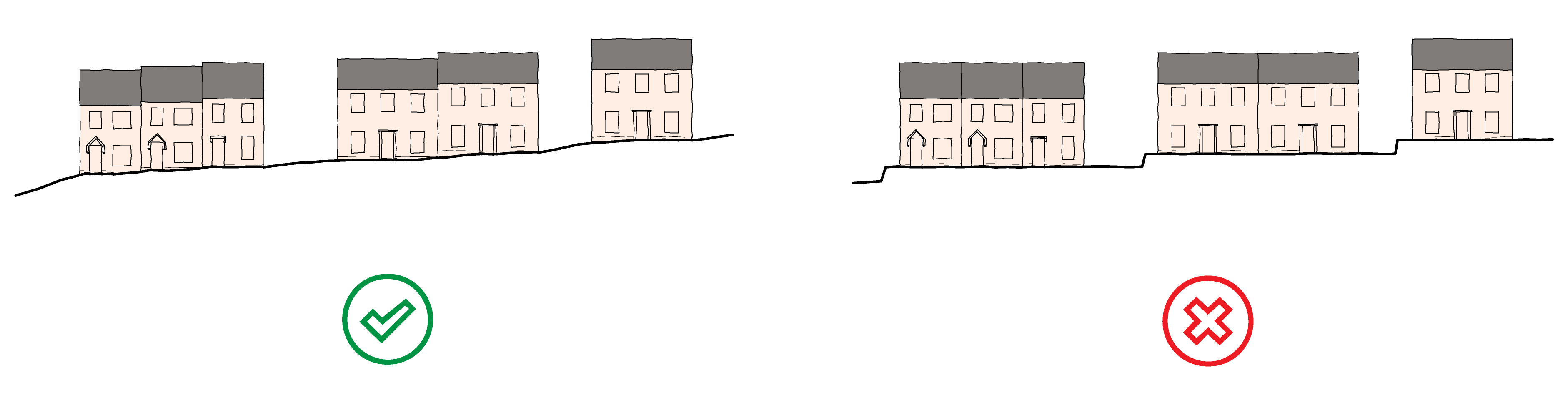
New buildings in visually sensitive locations should be integrated into the landscape through careful siting, e.g., by avoiding brows of hills, skylines, or isolated locations and by positively responding to the site’s natural topography. This is relevant to any development proposal (including residential, commercial, industrial, agricultural, and renewable energy) that could have adverse landscape impact. Visually sensitive locations are those where development has the potential to cause harm to the local and wider landscape and/or built form character.
Retaining walls higher than 1m should be avoided. Where they are required, retaining walls should be faced with the same walling materials as their host dwelling, or masonry as permitted for boundary treatments (see Identity).
'Existing significant healthy trees must be retained, unless there is a strong and site-specific design reason for removing a particular tree.
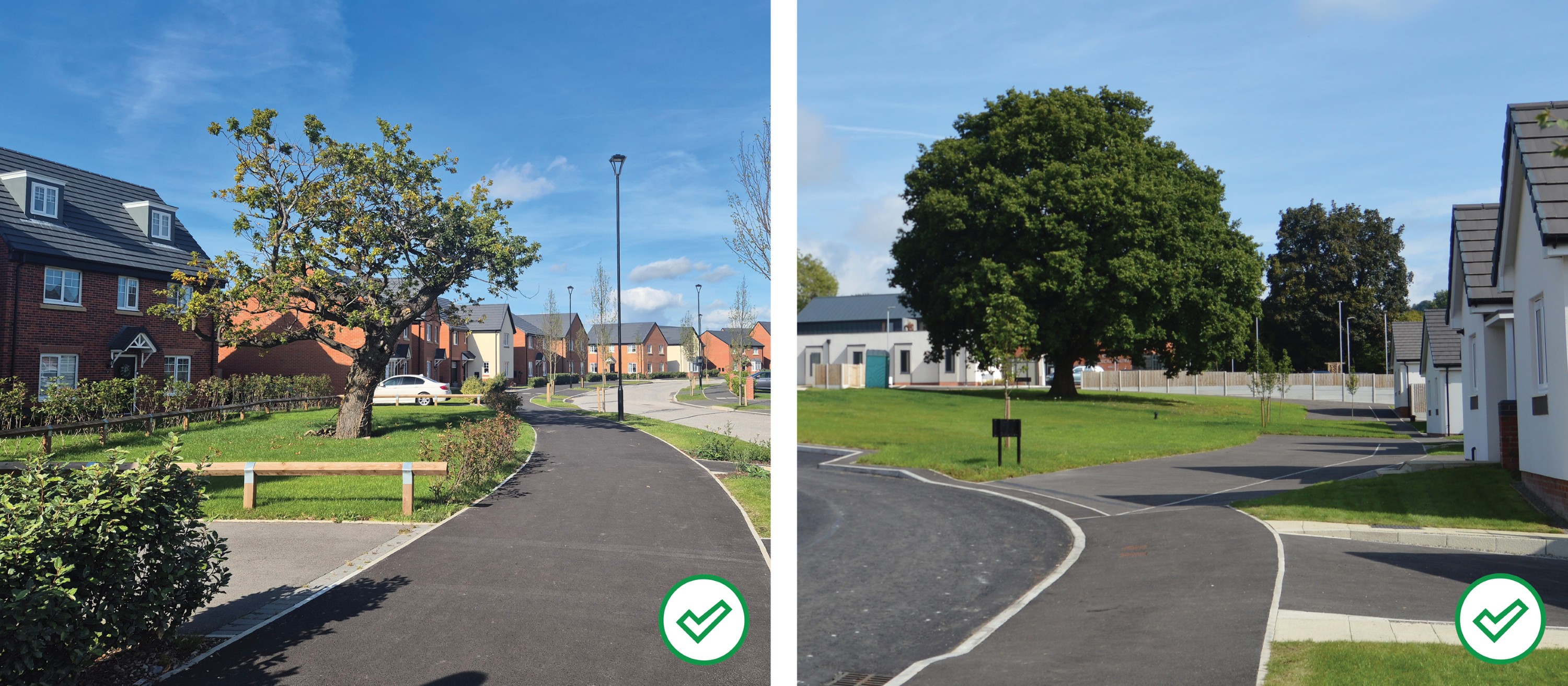
When they are centrally located, existing significant healthy trees must be well-integrated into public green space within a development.
Existing mature trees should be a key consideration in the layout of a development to maximise their placemaking value.
Where they are valuable and in good condition, existing hedgerows should be retained and integrated into areas of public realm within a development. Removal of sections of existing hedgerow along a site's boundary may be acceptable if it can be demonstrated that this would improve edge-to-edge connectivity.
For the benefit of people and nature, green spaces within the site should be connected through blue and green corridors. Links for pedestrians, cyclists, and wheelers should be made through to green spaces 'beyond the red line.'
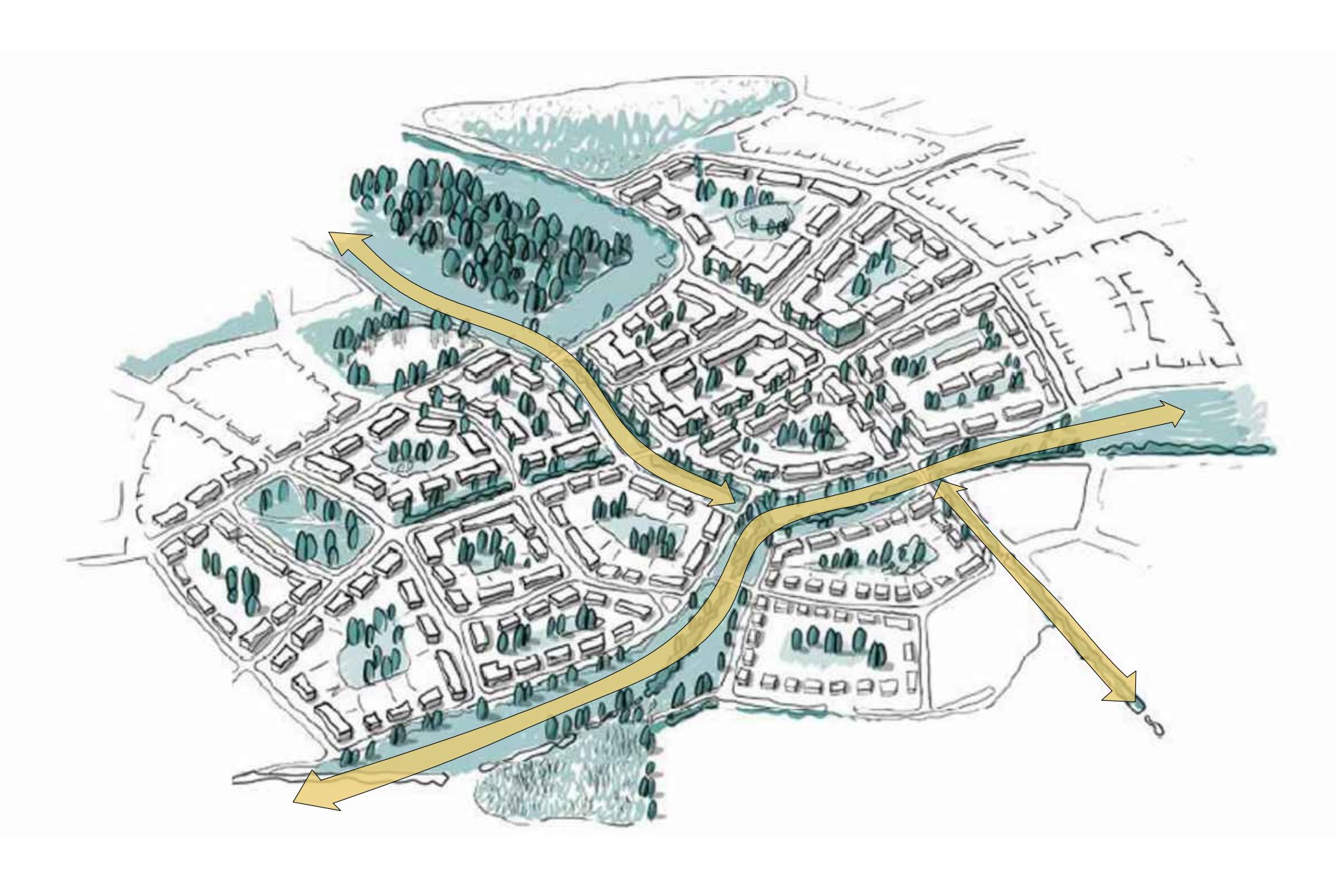
A green corridor at Newhall, Essex