
3.1 Introduction
Designing Streets for People and Places
This section outlines the broad objectives of Cheshire West and Chester’s new design code and the benefits of taking a people-first, place-led approach to street design. The principles set out in this section support Local Plan Policy STRAT 10 (Transport and Accessibility), and the Borough's Local Transport Planopens new window, supporting the shift towards healthier and more affordable ways of getting around the borough.
The Code also reflects the vision-led approach advocated by the National Planning Policy Framework (NPPF), which seeks to align transport and land use planning to create sustainable, healthy and well-connected places. This means planning streets and movement networks around the needs of people and places first, ensuring that development supports walking, wheeling, cycling and public transport as the most convenient and attractive travel choices.
Our design approach in Cheshire West and Chester is called 'Streets for All' and it is key to achieving our vision for a healthier, greener, better connected, and more equitable and prosperous borough. It will underpin the Council's objectives for net zero carbon emissions by 2045, making transport fair and accessible for all, improving health and wellbeing, boosting the local economy and creating great places to live.
In line with its duties under the Equality Act 2010, Cheshire West and Chester Council has formally committed to “removing the barriers that limit what people can do and can be.” This includes barriers that restrict the use of street infrastructure by people with mobility and sensory disabilities, those experiencing different life stage challenges, and individuals with neurocognitive conditions such as dementia.
A key challenge is managing potential conflicts between pedestrians, cyclists, and vehicles while ensuring that streets remain people-friendly, are not over-engineered, and do not unnecessarily segregate users. This code balances the needs of all users and create a street environment that works for everyone. Central to this is creating a street network that is legible, consistent, and logical, ensuring that all users can navigate it safely and with confidence.
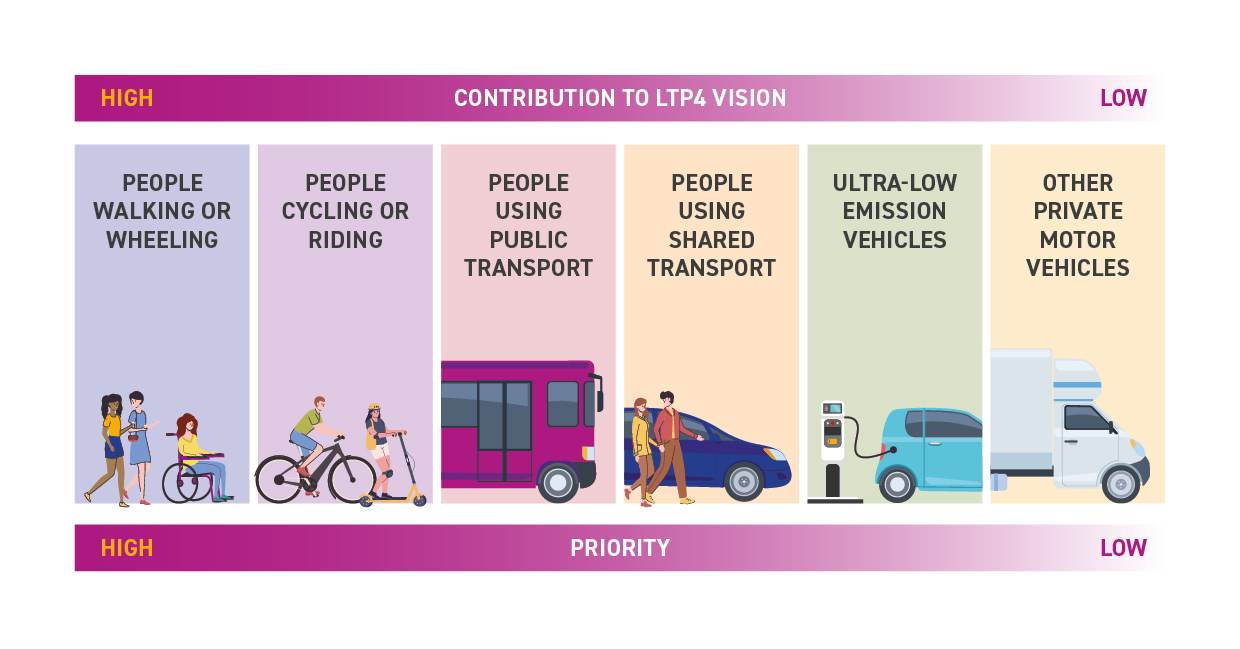
This Design Code has been prepared in accordance with national planning and transport policy objectives which seek to reduce reliance on private car travel and support a shift towards more sustainable modes of transport. In line with the vision-led approach promoted through the NPPF, the Code prioritises the creation of places where sustainable transport options are integral to the form and function of new development from the outset, rather than being considered as mitigation for forecast traffic demand. The Code promotes development patterns and street designs that prioritise walking, wheeling, cycling and public transport, in line with the principles set out in national guidance, including Gear Change: A Bold Vision for Cycling and Walking and the Cycling and Walking Investment Strategy (CWIS).opens new window
This section sets out key design requirements. Further guidance can be found in:
- Inclusive Mobility (Department for Transport, 2021)opens new window
- Creating Age-Friendly Developments (Greater Manchester, 2023)opens new window
- Dementia and Town Planning (RTPI, 2020).opens new window
- PAS 6463:2022 Design for the mind Neurodiversity and the built environment (BSI, 2022)opens new window
- BS 8300-2:2018 Design of an accessible and inclusive built environment (BSI, 2018)
New streets in Cheshire West and Chester, designed in accordance with the Streets for All approach, will have the following key components:
- Streets with multiple uses: not just places for moving through, but places to socialise and enjoy at the heart of local communities
- Designed with higher levels of sustainable and active transport in mind using a vision-led approach, providing coherent, direct, safe, comfortable and attractive access for walking, wheeling, cycling and public transport modes, which lead to better health outcomes, reduce inequalities and improve access to services and jobs, while also reducing congestion.
- Spaces where the car is welcome, but with slower, calmed traffic, linked to fewer colissions and improved health through more active modes of travel without significant impacts on journey times
- Integrating climate resilience through increased levels of well-designed street trees and greenery, which calm traffic, reduce urban heat, absorb rainwater, clean the air, support biodiversity and even reduce crime;
- Featuring high-quality paving materials, improving the look and feel of streets, reducing maintenance costs over time, and minimising the carbon footprint of new streets.
Vision-led street design and transport planning
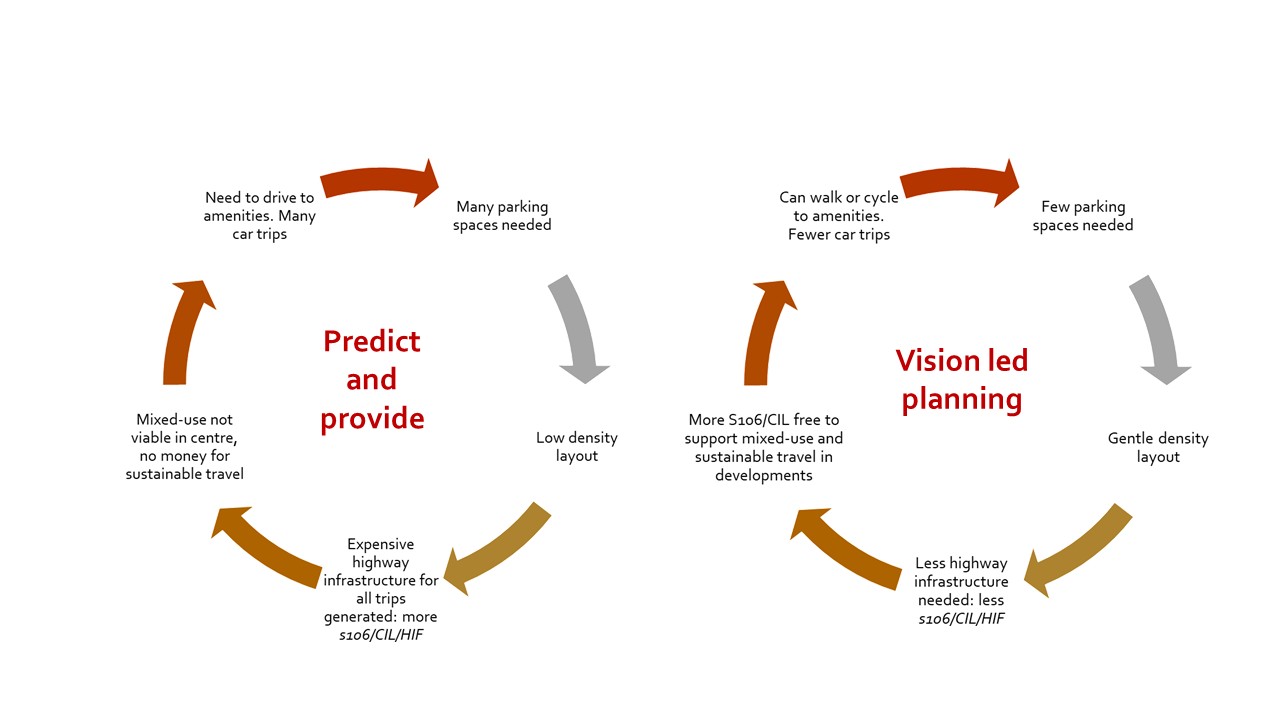
All new housing, commercial and mixed-use developments in Cheshire West and Chester must take a vision-led approach to transport, not a predict and provide approach. The council will prioritise transport projects that address the climate and poverty emergencies and deliver the objectives set out in Local Transport Plan 4opens new window. Traditional transport planning objectives such as reduced congestion and journey times for general traffic are not goals in themselves.
Streets are Public Spaces
Streets are important public spaces, both an extension of the home and a shared place for neighbours to come together, and should be places where children play, live and learn. Streets make up around three quarters of all public space. They are not just about moving vehicles as efficiently as possible; they are the heart of our neighbourhoods and communities, and are critical in providing accessibility to all users.
Street design is central to the success of our villages and towns. Good street design can promote a healthy lifestyle, improve physical and metal health, and encourage community cohesion while bad street design has tangible negative impacts on our health and wellbeing.