
6.4.2 Bricks
Bricks must match the traditional rich orange/red, red/brown or ruabon red typical of their local area. They must match the palette below as closely as possible.
Limewashed brick should be off-white or cream.
Higher quality, locally made bricks could be used but these will need to be approved on a case-by-case basis.
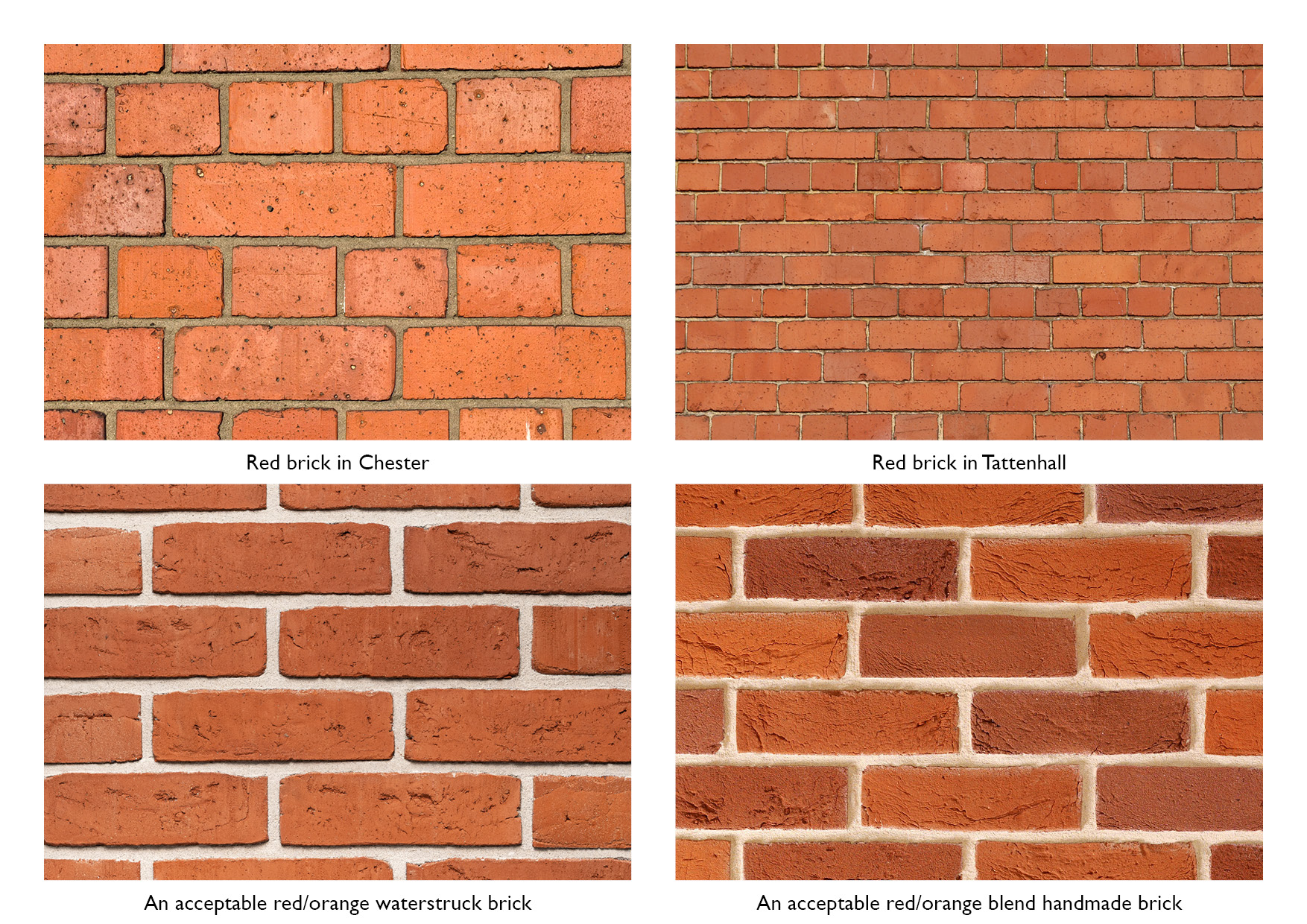
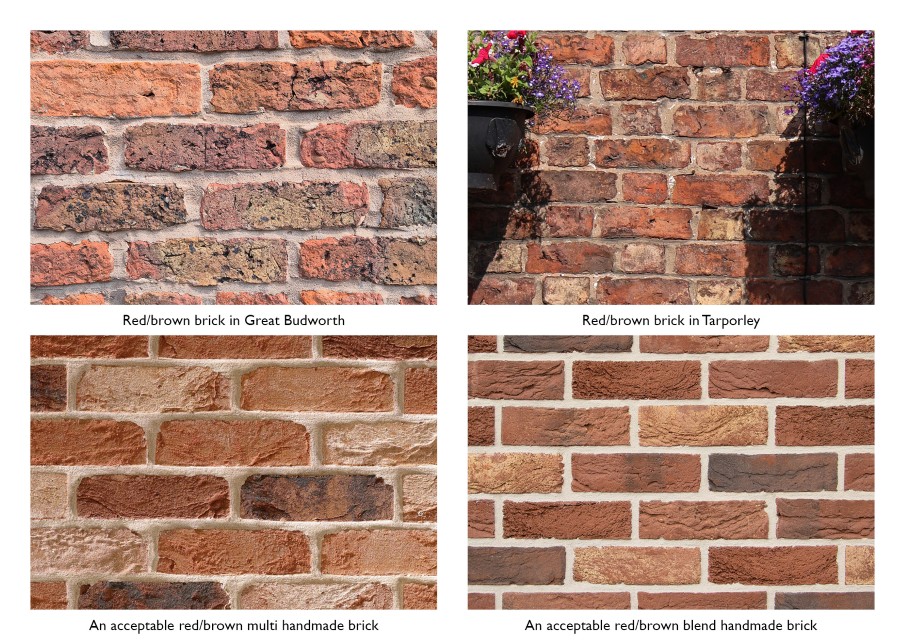
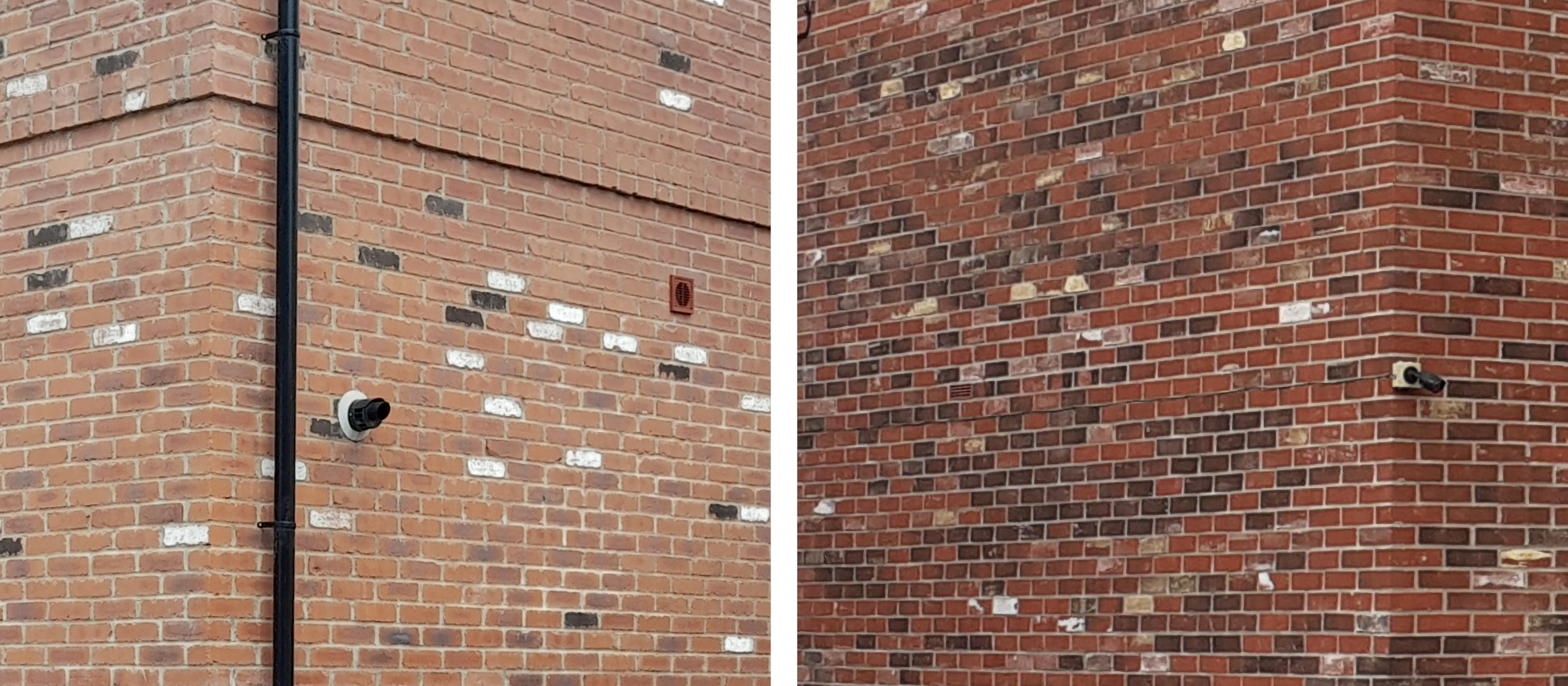
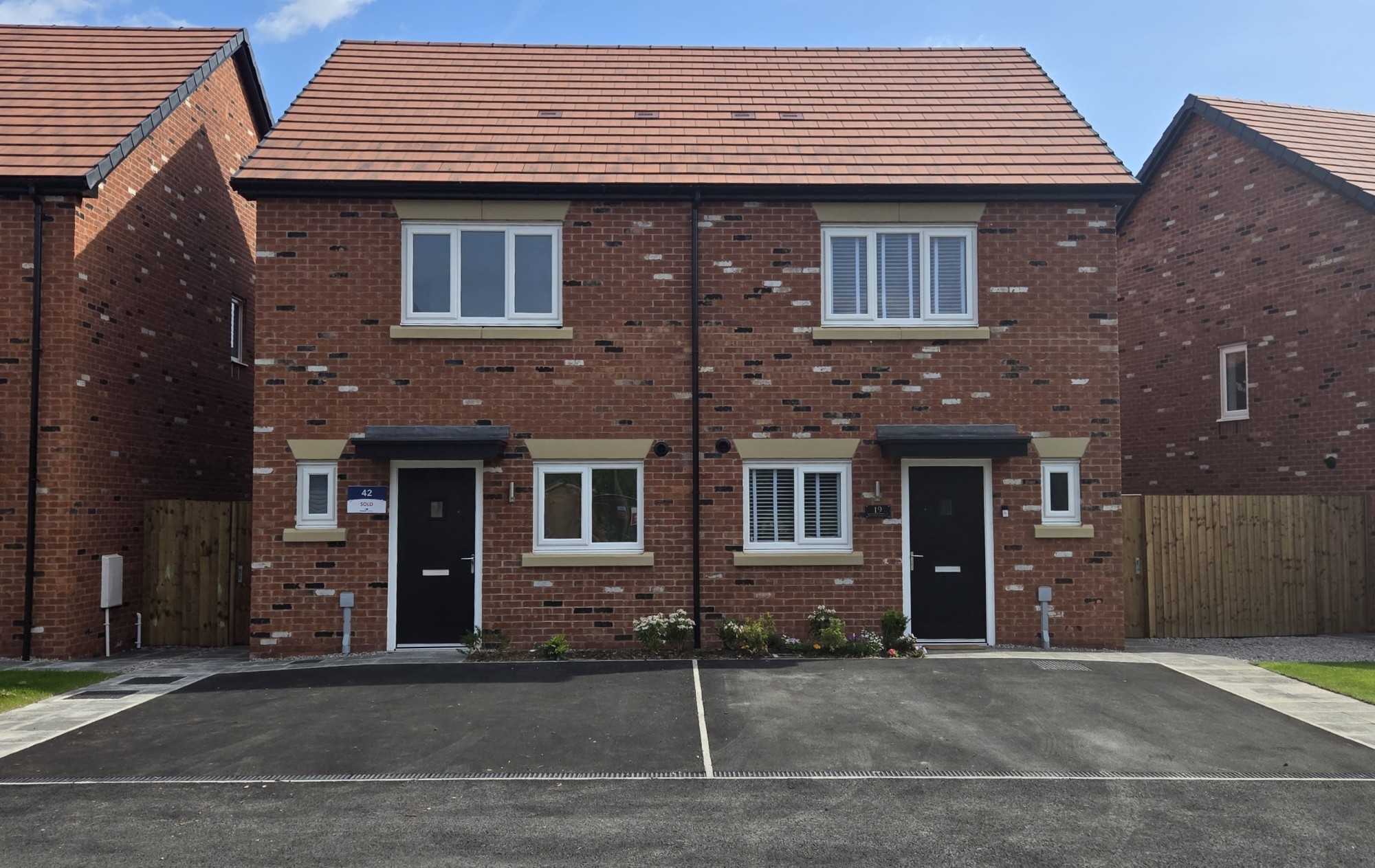
Artificially weathered or distressed bricks, bricks with black spots, or incoherent brick patterns using multiple colours, must not be used.
Wire-cut bricks must not be used on street-facing elevations. Where they are used, they must match the colour and tone of other bricks used within a development.
Engineering bricks must not be used in visible locations, other than for low plinths. An appropriate use could be an underground course or where bricks will be concealed.
Corbels, dentils and other projecting brick features or recesses should project a minimum of 25mm.
Brick buildings should include locally inspired decorative brickwork such as diapering, banding, dogtooth, dentil courses or string courses, in matching or contrasting brick colours.