
Updated HWRC Reasonable Use Procedures
To ensure our Household Waste Recycling Centres (HWRCs) operate efficiently, remain fair for all residents, and continue to deliver good value for money, the Council is updating its reasonable use procedures.
These outline how residents can safely and responsibly dispose of household waste at our sites.
Why are we making these changes?
All HWRC sites have experienced a notable increase in repeat visits, as well as instances where waste that may not be from households has been brought to the sites. In 2023/24, 1,187 vehicles were investigated — a significant rise from 746 in 2022/23 - with many cases involving vehicles typically associated with commercial use.
To help prevent misuse, manage service costs, and provide a clearer, more consistent and convenient experience for residents, a number of improvements are being proposed.
The updated procedures and the new registration system will:
- Encourage residents to plan their visits, helping reduce peak‑time congestion and improve access.
- Protect the service from misuse, reducing the cost of disposing of waste brought by unauthorised users e.g. residents who live outside the borough or commercial traders
- Provide greater flexibility, allowing households to choose which of their registered vehicles to use depending on the type and amount of waste they need to bring.
- Allow residents to check how many visits they have remaining through the online system, giving clear oversight of their usage.
- Enable residents to bring waste on behalf of another borough resident — such as a family member or someone they care for.
- Ensure visits to HWRC reuse shops without depositing waste do not count as a visit, making it easier to donate or purchase reusable items.
Together, these changes will make HWRC visits simpler, fairer and more transparent, while continuing to support responsible waste disposal.
Previously:
- Automated Number Plate Recognition (ANPR) flags vehicles visiting more than 24 times in 180 days, and these visitors must complete a form explaining the waste they are bringing.
- All commercial‑type vehicles must also provide information about their waste.
- Where waste is confirmed as household, access is permitted; where further investigation is required, restrictions may be applied.
1. Visits monitored by household, not vehicle
Using the new registration system, visits will be tracked by home address. This ensures fairness for households that only have one vehicle, even if it is used more frequently.
Site staff will also be able to notify visitors when they are approaching their annual allocation, helping households plan their usage throughout the year.
2. 30 visits per household in any 12‑month period
Each household is permitted up to 30 visits within a 12-month period, which they can use flexibly — either spread across the year or concentrated during busier periods such as moving home or completing DIY projects.
Residents will be able to see their remaining visit allocation at any time using the online system.
3. How visits will be counted
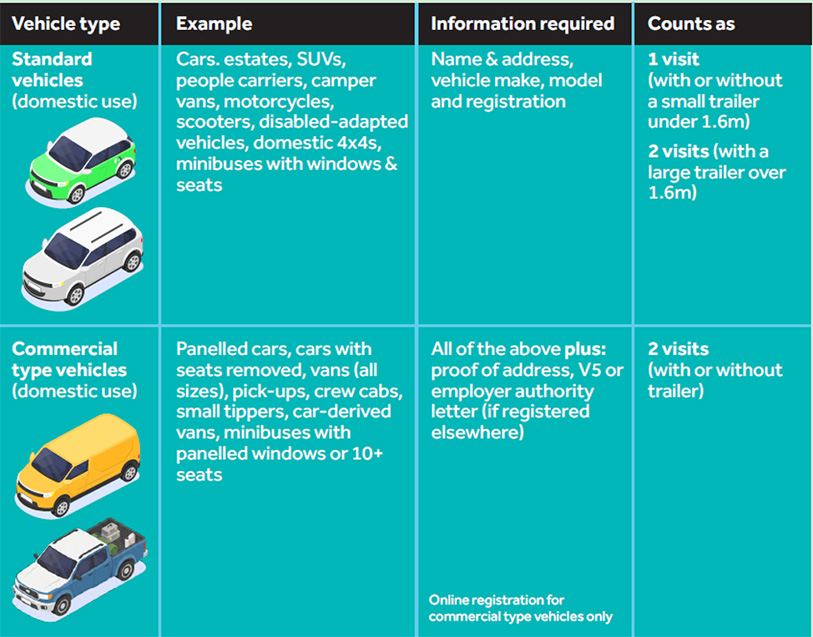
Waste from commercial premises or from any paid‑for work is not permitted at any HWRC.
4. Additional visits
Residents will be able to apply for additional permits via their online account where there is a genuine or urgent need, such as moving home. These extra visits are in addition to the standard 30, conditions apply.
5. Charity permits
No changes are being made to charity permits. Charity workers or volunteers using their own vehicles must show their charity permit on arrival so their personal household allocation is unaffected. Charity permits
A fairer, simpler, more transparent system
These changes, supported by the new registration system, will:
- give residents better visibility of their visit usage,
- support residents who need to deposit waste on behalf of others,
- ensure that reuse‑shop visits do not affect household allocations, and
- help our HWRCs operate more efficiently at busy times.
This modernised approach ensures the service remains accessible, fair and easy to use for all residents.