3.2.1 Where this code applies
Roads and streets are not the same: roads are primarily for movement, while streets are public spaces where people both spend time and move around. Guidance such as the Design Manual for Roads and Bridges (DMRB) must not be used for places where people live, but may be suitable for trunk roads and the strategic highway network. The following design rules explain when and where this code applies.
DMRB standards for layout, geometry and junction design must only be applied to trunk roads or the strategic network outside cities, towns and villages. They must not be used in built-up areas. The 'Streets for All' standards apply to all streets in built-up areas, even where these streets fulfil a strategic network function. This includes industrial and large-scale commercial sites, but excludes certain rural facilities such as quarries and renewable energy developments.
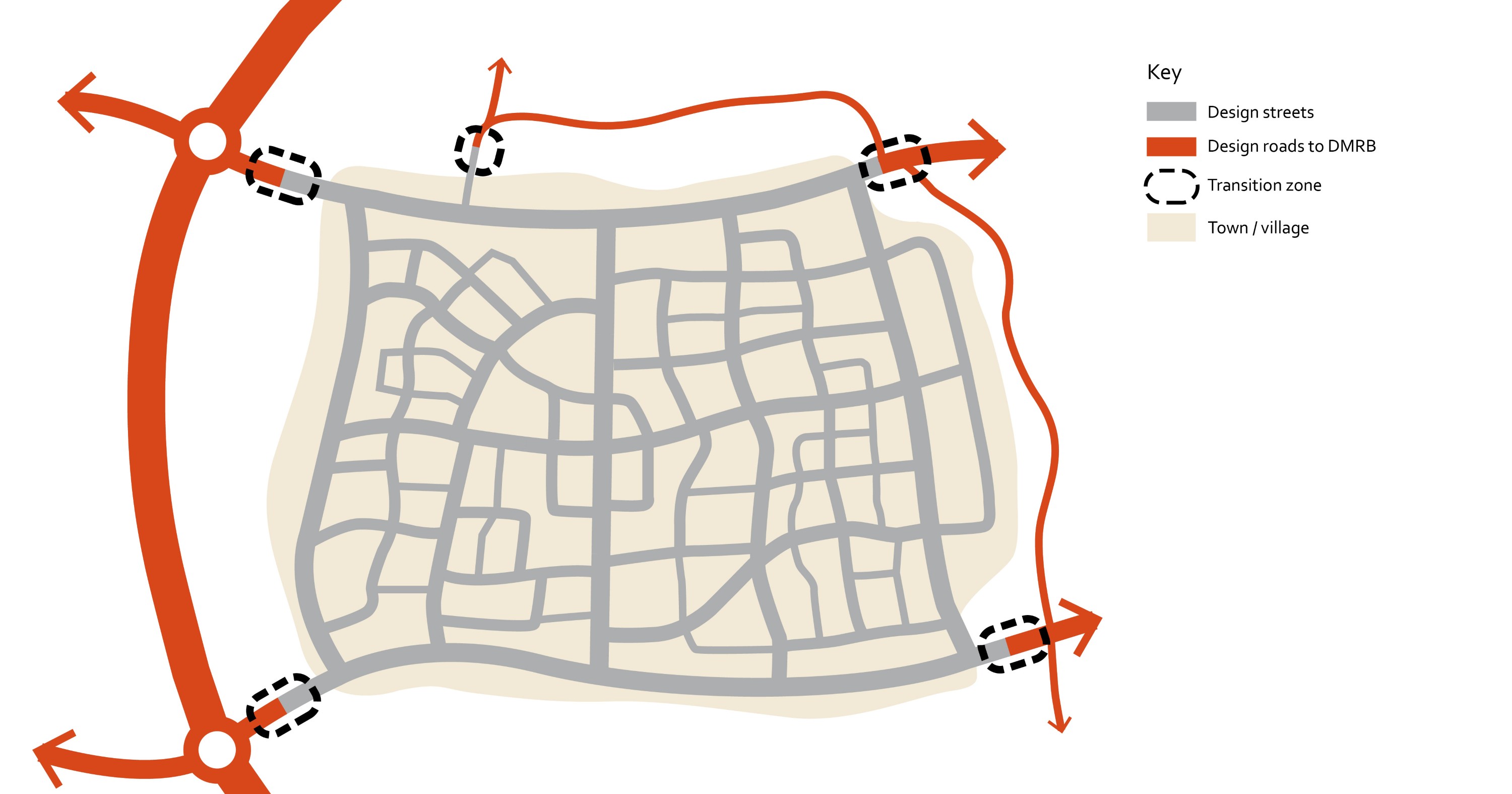
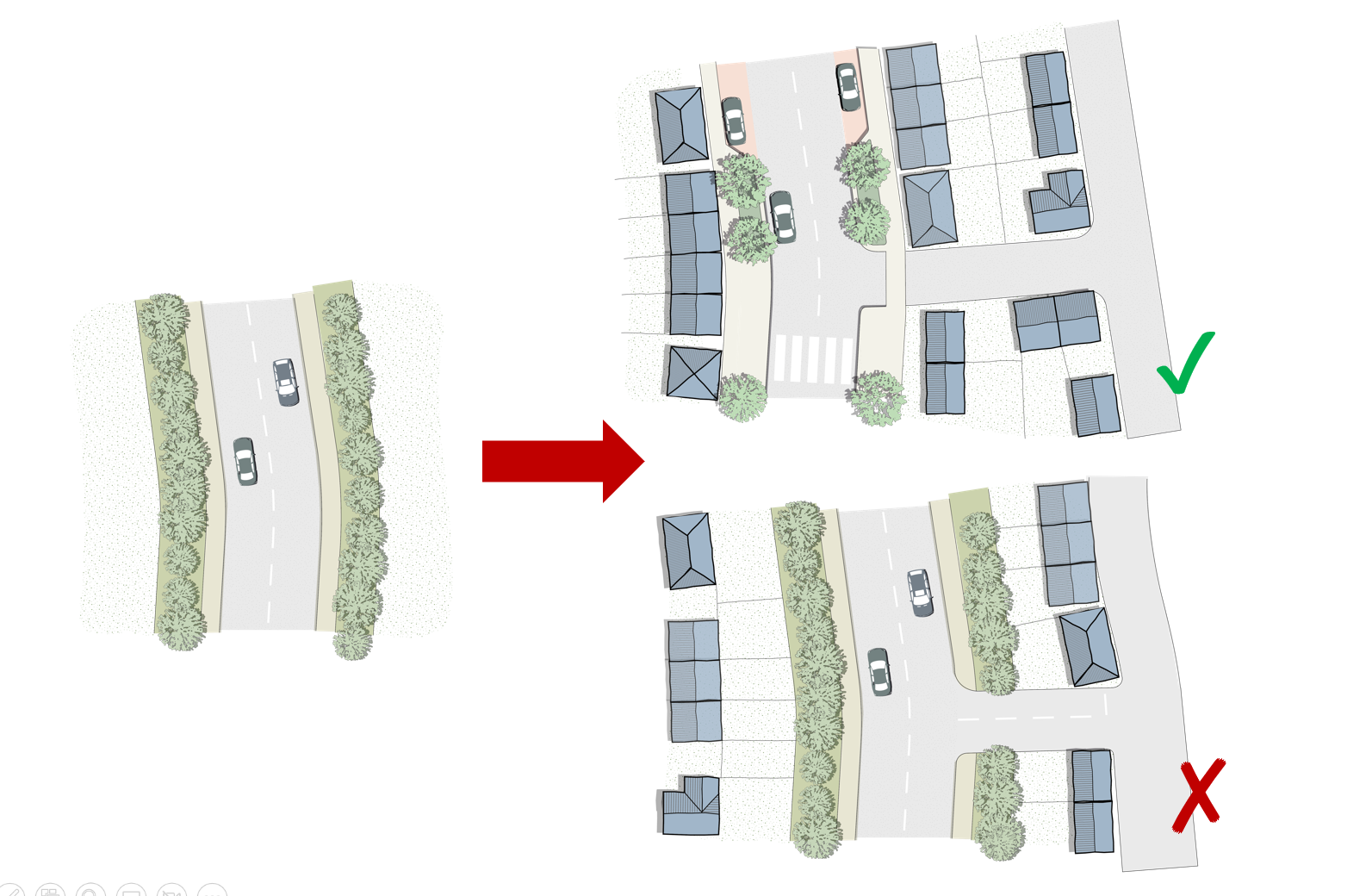
Where a settlement expands and new development adjoins a trunk road, that road must be redesigned as a street in line with the typologies in this code. It must include a clear street frontage. This section of trunk road has become part of the settlement area, and needs to be treated as such from a design perspective, even if it continues to carry large quantities of traffic from a network perspective.
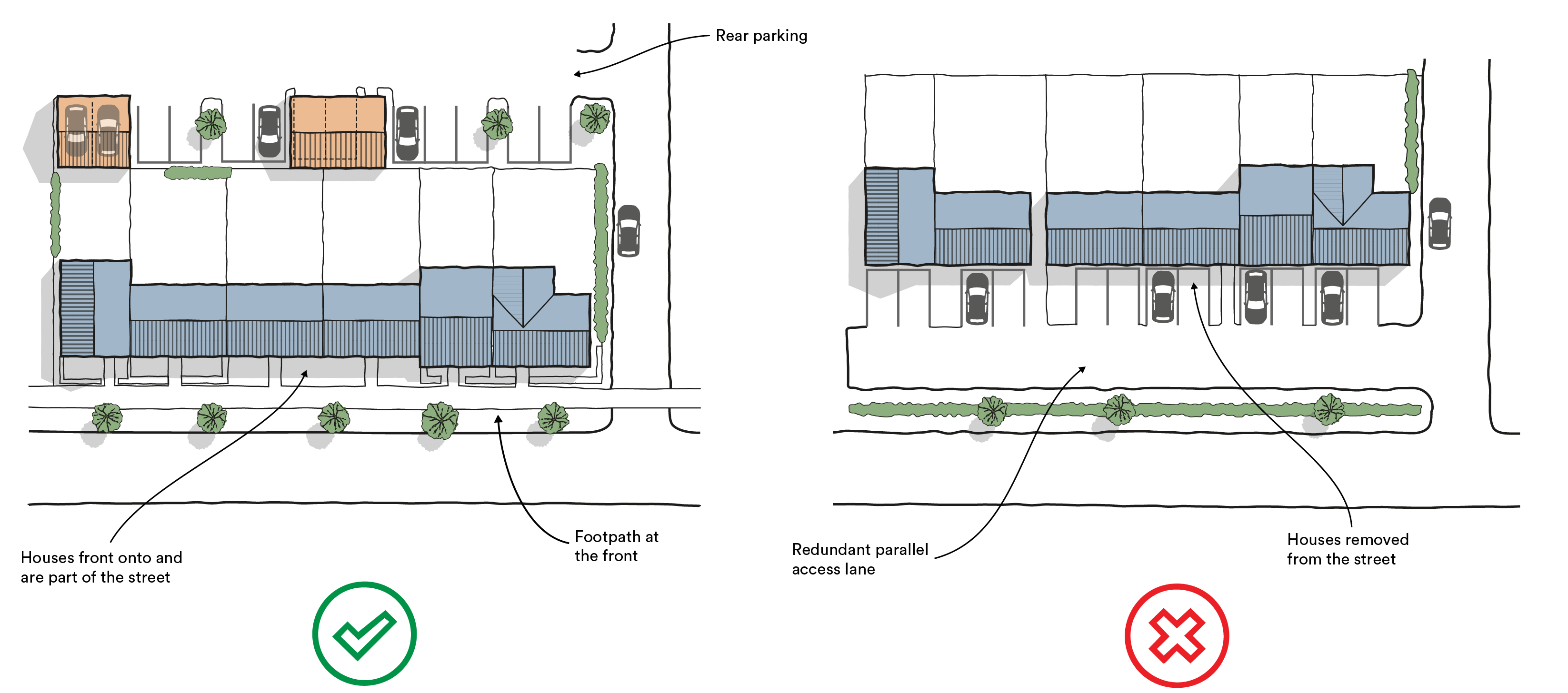
When new development fronts onto an existing street, parallel access roads must not be used. Instead, provide direct frontage access on the existing street, or use a pedestrian only path (Type 3.D) and provide car parking elsewhere (see section 3.8).