3.2.3 Permeability and walkability
Content
- Getting the network rightopens new window
- Public Rights of Wayopens new window
- Types of filtersopens new window
Permeability refers to the internal connectivity of a site, and the degree to which the street layout makes it easy to move. The Streets for All approach is based on well-established principles of good urbanism which create legible, walkable mixed-use neighbourhoods with a clear heart.
Getting the network right
Getting the street network right is essential. In most cases a street network will outlive the buildings it serves. The following rules set out how to achieve a good, permeable street network.
New developments must have a permeable street network for walking, wheeling and cycling modes and must 'plug in' to the existing street network for all modes
Tree-like development patterns that have been common in suburban development must not be used. Cul-de-sacs should be avoided unless high-quality permeability for walking, wheeling and cycling is designed in (to the design standards set out in this code).

Diagram of a poorly connected street pattern with cul-de-sacs (left) and a well-connected street pattern (right). To avoid 'rat running' most through-routes should feature modal filters (Credit: NMDC).
Block patterns will determine junction spacing. Blocks should be up to 150m long, and up to 50m wide.
To maximise permeability, crossroads or slightly staggered junctions should be used. The ideal spacing between opposite streets on a staggered junction is one street width.
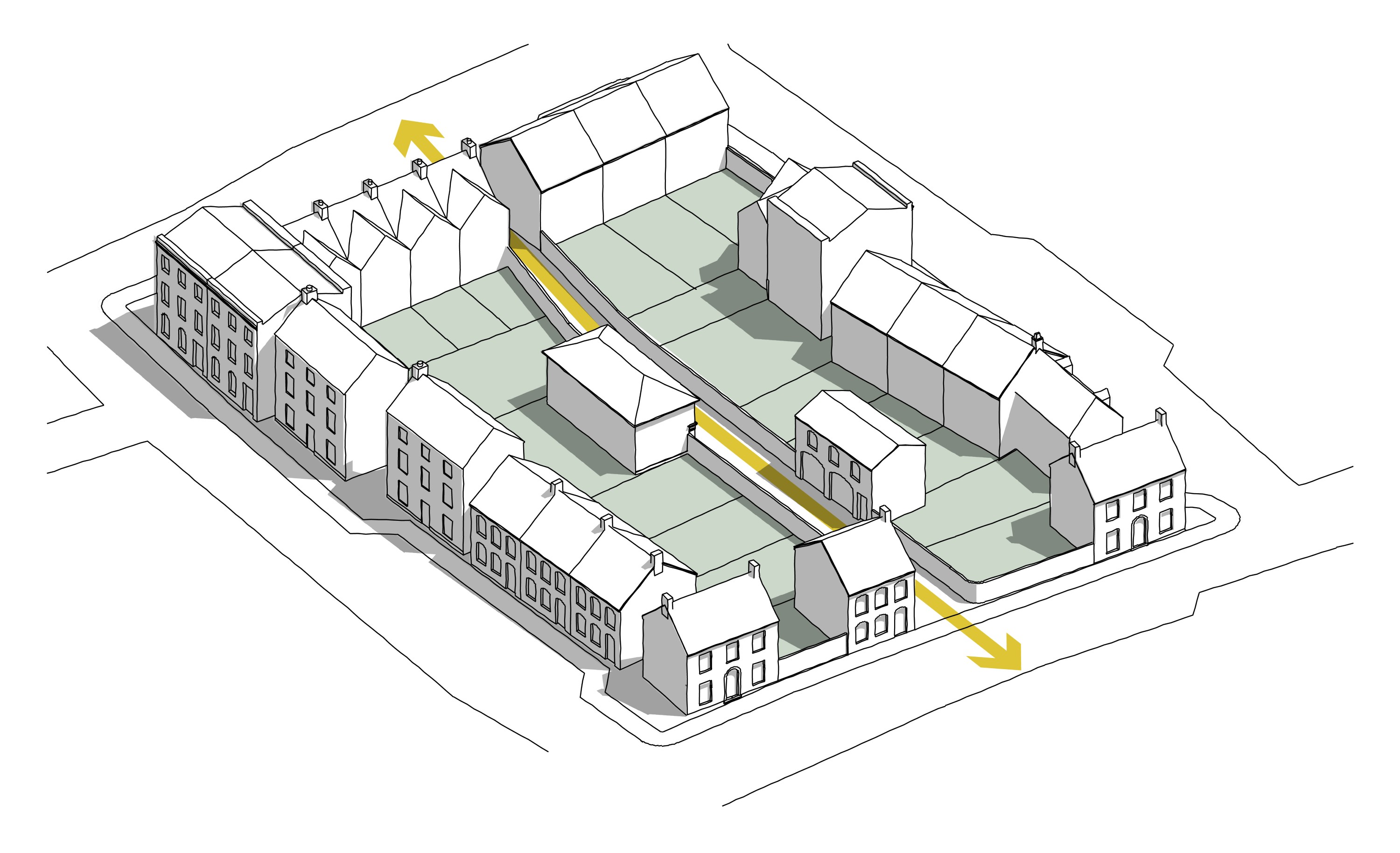
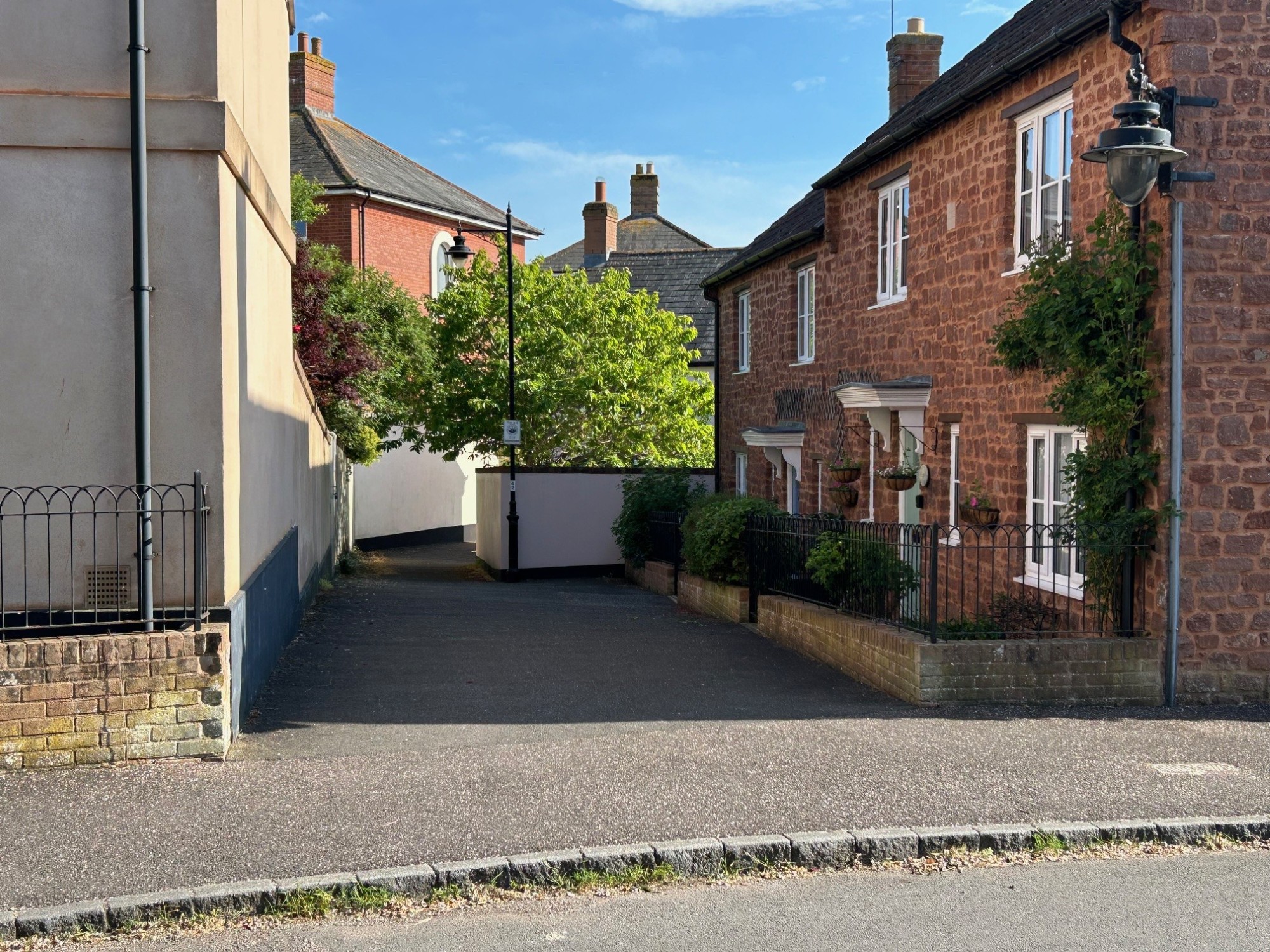
Where blocks are longer than 150m, or junction spacing on opposite sides of the road is greater than 50m, an alley should be introduced through the block to maintain permeability and convenient walking routes. Refer to Street Type 3.B Courts and Ginells for design requirements.
Public Rights of Way (PRoW)
The following rules apply to existing Public Rights of Way (PRoW) that run through the site, or are impacted by construction.
Existing Public Rights of Way which run through sites must be maintained. Where appropriate, these could be diverted to better integrate them into the new site layout, subject to statutory consultation and legal processes.
Public Rights of Way (PRoW) through or alongside any development must be upgraded to meet current accessibility standards, to promote equal access and opportunities for people with disabilities. Access points, gateways and wayfinding must be repaired or replaced, and any stiles must be replaced by more accessible alternatives.
Where Public Rights of Way closures are required, an appropriate diversion route must be agreed with the Council in advance of closure. Temporary closures or diversions should be avoided wherever possible.
Medium housing developments, of more than 50 homes, should provide at least two vehicular access points to the highways network, where constraints of topography and ownership allow. These access points do not need to be permanently connected for through trips by general traffic (see section 3.2.4 Emergency access, servicing and refuse)
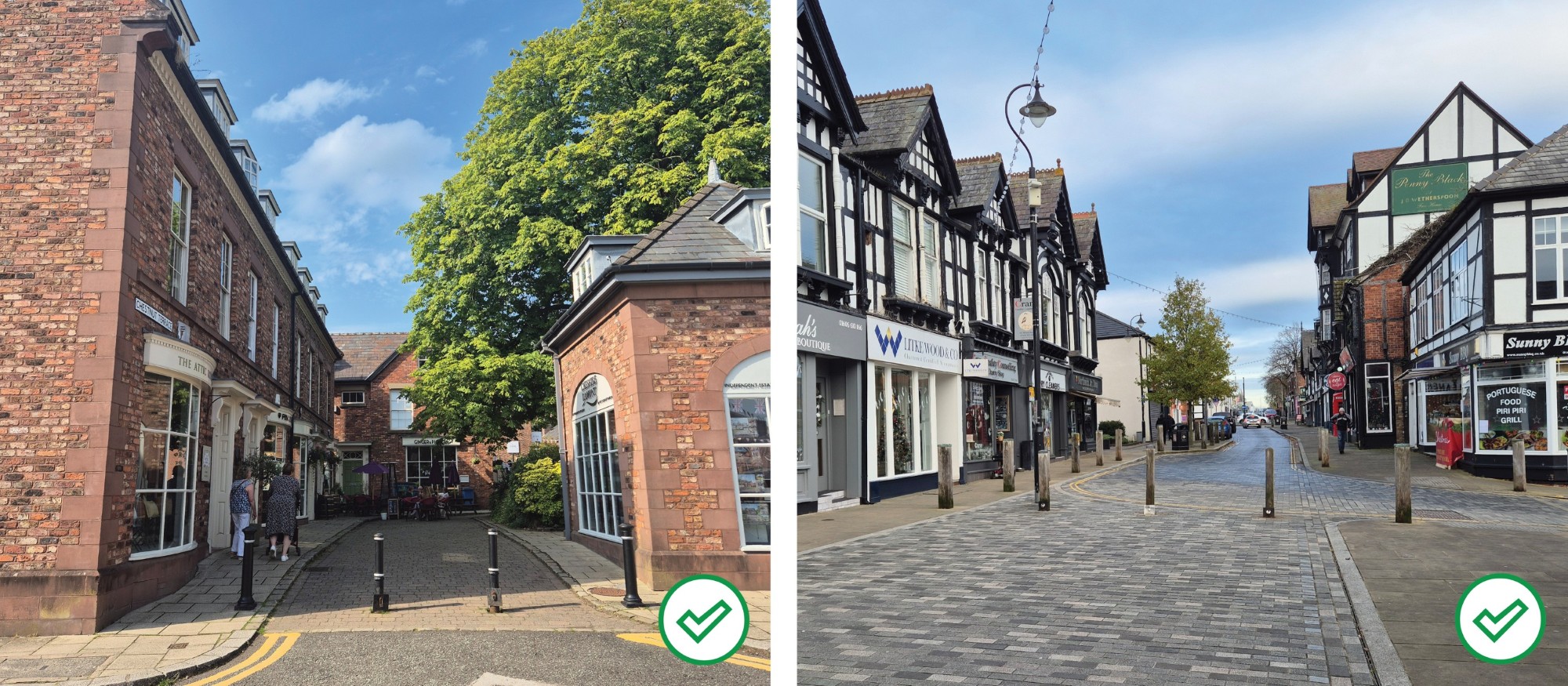
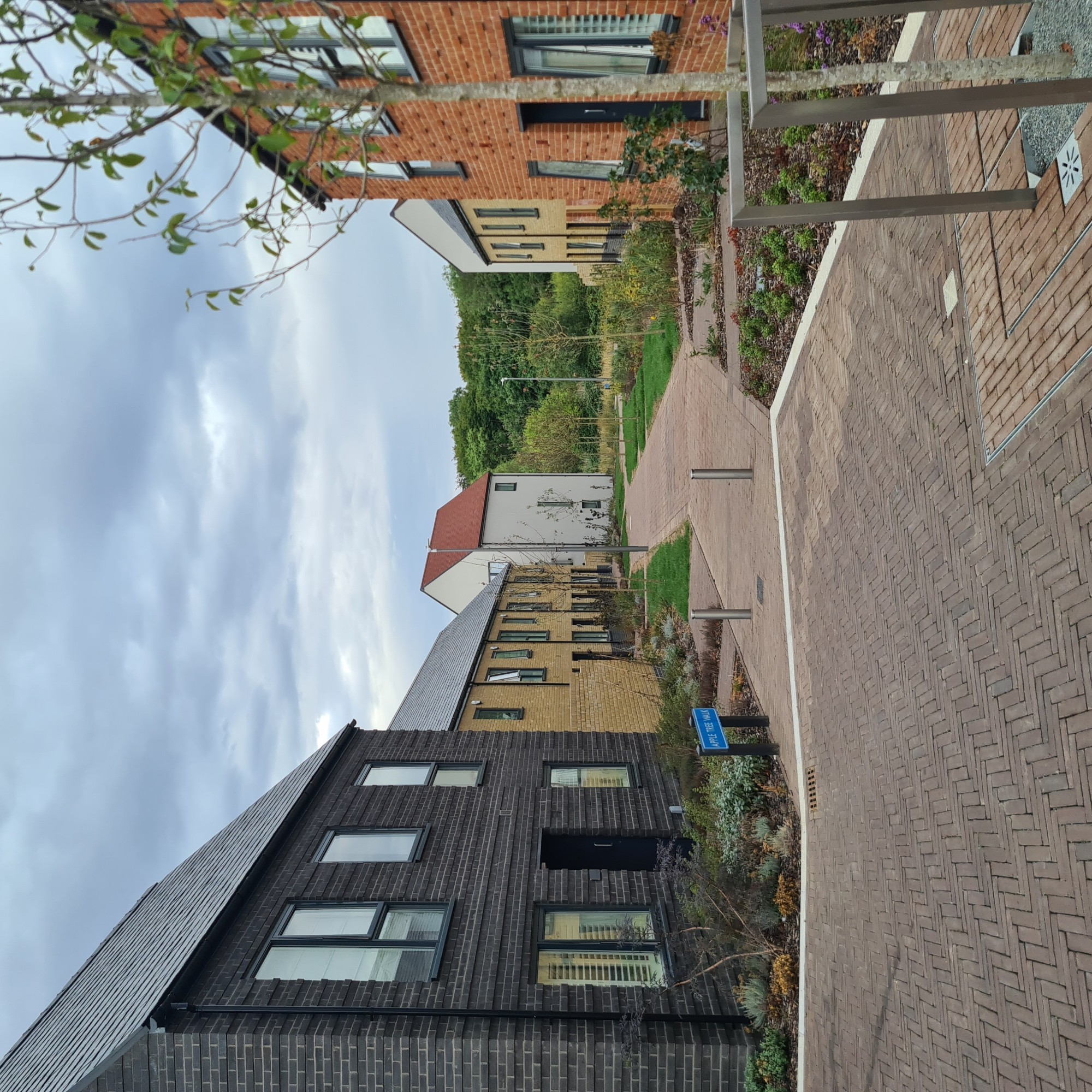
High permeability for motor vehicles is undesirable in residential areas, leading to 'rat-running' through traffic. However, while cul-de-sacs prevent through traffic and provide increased privacy and safety, they severely restrict movement for pedestrians, wheelchair users, and cyclists, forcing longer journey times and reducing permeability.
The solution lies in combining conventional street layouts with targeted modal filters. These allow access for pedestrians, wheelers, cyclists, and sometimes buses, while restricting private motor vehicles. This creates street networks that retain local access, prevent rat-running, and balance vehicle access to homes with safe, direct routes for active travel.
Local streets and tertiary streets must be filtered if they provide a through route between secondary or primary streets. Only secondary or primary streets can allow through traffic.
Filters must allow access for pedestrians, cyclists and wheelchair users, while preventing private cars, vans and lorries.
Modal filters could also allow access for public transport, particularly where a street is likely to enable a key bus route but is not suitable for general traffic. This will require enforcement, and designers should liaise with the Highways Authority on the best options for facilitating this form of filter.
Designers must consider how filters impact potential diversionary routes when a primary route is closed. In some cases, bollards may need to be moveable to allow temporary access.
Designers must consult with the emergency services to agree an access strategy. If necessary, filters must allow emergency vehicle access via locked removable bollards.
Types of filters
Filters typically take one of the following forms.
- Permanent filter.
Using bollards, planters, trees and other furniture to block the street to cars but permit other users. These offer excellent opportunities for placemaking and greenery. - Timed or emergency access filters.
Similar to the permanent filter, but with a locked gate or bollard to limit access to service and emergency vehicles. This includes filters on school streets that only operate at certain times of the day. - Bus Gates.
Limit access to all but buses, access is typically controlled through use of Automatic Numberplate Recognition (ANPR) or a remote-controlled bollard. - Access control.
Like bus gates, filters can incorporate ANPR cameras to control access. Subject to location, the council now have the power to enforce moving traffic contraventions and can issue fines.
Highways authority approval is required for any ANPR designs due to the ongoing enforcement required for these designs.