
3.2.2 Connectivity - outside the red line
For new developments, a Streets for All approach requires designers to think beyond the red line of a site. A well-designed place is well connected and integrated with its surroundings, making it easier to travel by foot, wheels, bike, or public transport and encouraging sustainable travel whilst supporting residents’ health and wellbeing.
Creating neighbourhoods with a centre and a permeable network of streets can help both existing and new residents meet more of their needs locally.
Routes between home, town and village centres, amenities and workplaces must be safe, direct, and enjoyable so that sustainable travel is a convenient and appealing choice. This includes access to both new and existing schools. It is essential that developments allow children to travel freely, independently and safely to school on foot, wheels or by bike.
Site layouts must have a clear and permeable street hierarchy that connects to the existing street network and provides good internal connectivity.
Opportunities to connect development with neighbouring communities, amenities and workplaces must be maximised. Connectivity gaps beyond the site boundary should be identified and addressed through the creation of new links, strategic corridors or by improving existing connections through the site and the wider area, including footways, public rights of way or traffic-free paths, or cycle routes. All foreseeable 'desire lines' must be catered for to avoid the growth of unoffical, poorly maintained paths in future.
These routes must be coherent, direct, safe, comfortable and attractive.
Layouts must not prevent the connectivity of future phases, and where potential for future connectivity exists, such as where an adjacent site is allocated for development or redevelopment, a passive provision should be made in the site layout for future access (as a minimum by walking, wheeling and cycling, in line with the design requirements of this code). This will enable the creation, over time, of a connected, permeable, and coherent urban fabric.
Layouts must not create 'ransom strips’. Areas of adopted highway on the periphery of a development must extend to the full extents of the site’s red line to provide the opportunity to connect to future development phases.
Large sites (greater than 250 homes) should provide bus routes connecting to key amenities, employment and education sites, either through new services or enhancements to existing services that serve the site. This should be delivered during the first phase of development. Bus stops should also be provided, as set out in section 3.9 of this Code.
Community consultation should be used to identify wider opportunities for connectivity early in the design process. This includes consulting on emerging neighbourhood plans, which may outline new proposed routes.
New schools on developments must be accessible by safe and accessible walking, cycling and wheeling to pupils from the site and surrounding area to access the school independently. This should reflect the statutory walking distanceopens new window of 2 miles for children below the age of 8, and 3 miles for those aged 8 and over.
Where developments are served by existing schools, links should be provided to allow pupils to walk, wheel or cycle to school independently, inlcuding links from local bus stops etc. This should reflect the Council's statutory walking distance of 2 miles for children below the age of 8, and 3 miles for those aged 8 and over.
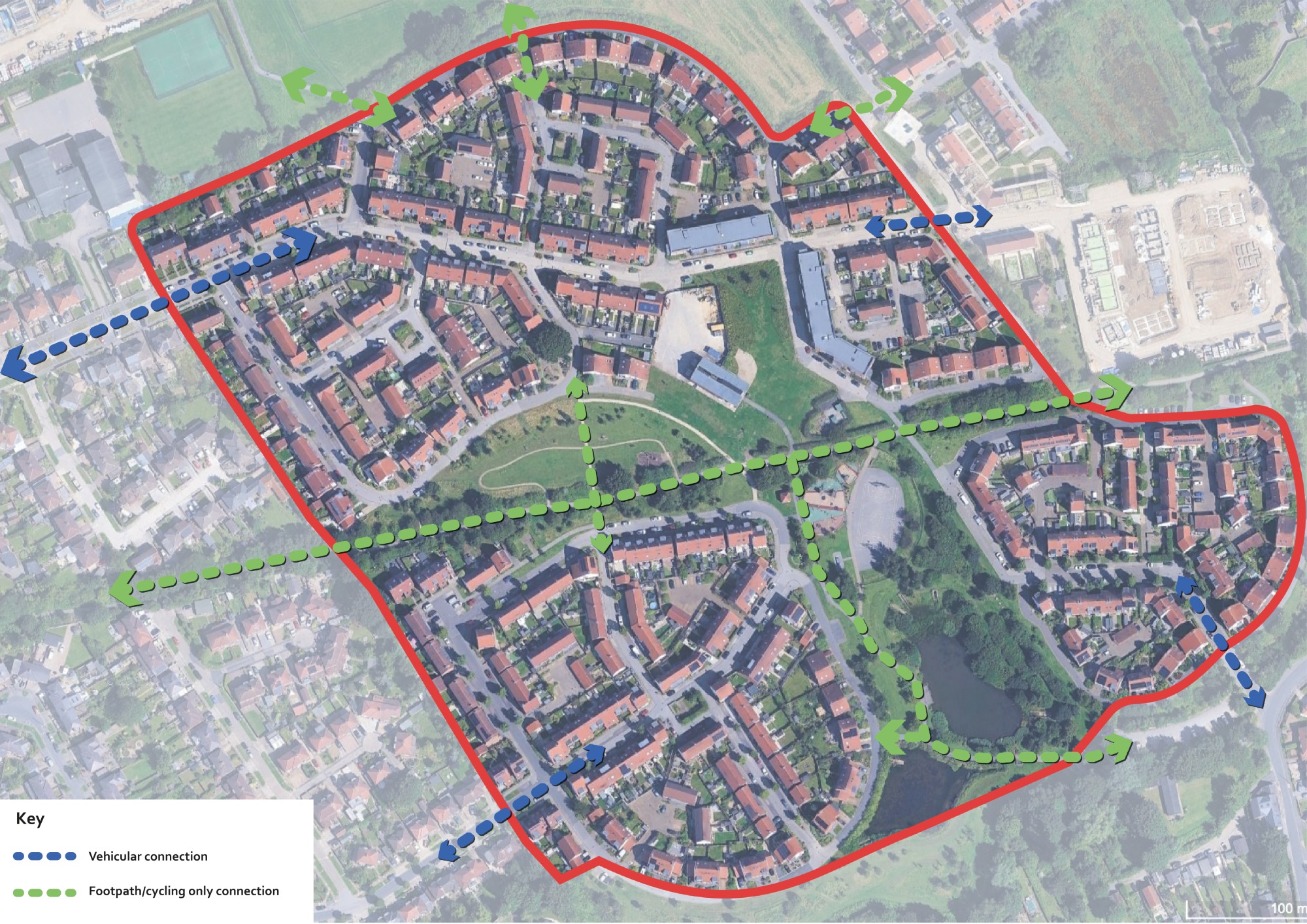
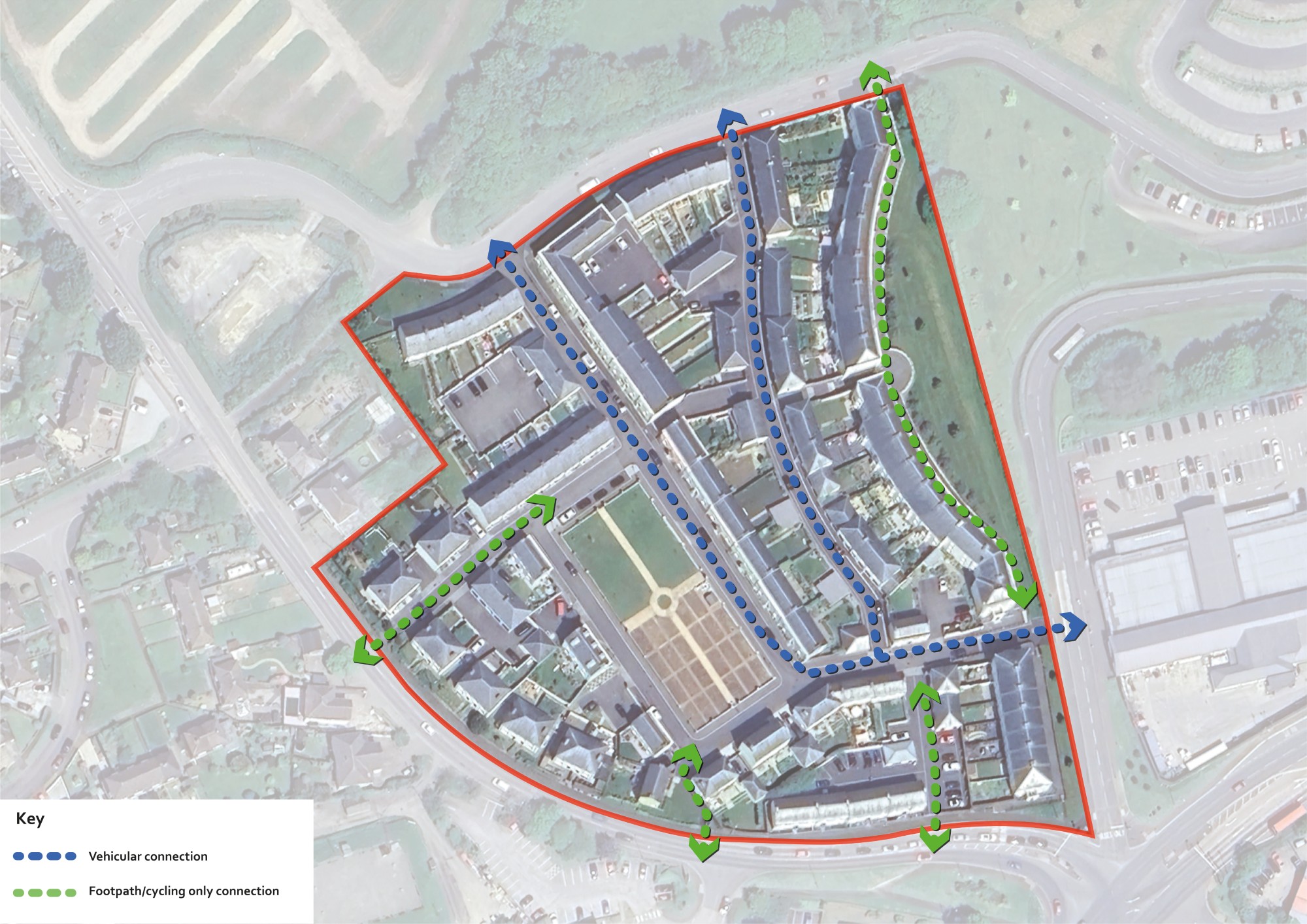
The following rules apply to existing Public Rights of Way (PRoW) that run through the site, or are impacted by construction.
Existing Public Rights of Way which run through sites must be maintained. Where appropriate, these could be diverted to better integrate them into the new site layout, subject to statutory consultation and legal processes.
Public Rights of Way (PRoW) through or alongside any development must be upgraded to meet current accessibility standards, to promote equal access and opportunities for people with disabilities. Access points, gateways and wayfinding must be repaired or replaced, and any stiles must be replaced by more accessible alternatives.
Where Public Rights of Way closures are required, an appropriate diversion route must be agreed with the Council in advance of closure. Temporary closures or diversions should be avoided wherever possible.
Medium housing developments, of more than 50 homes, should provide at least two vehicular access points to the highways network, where constraints of topography and ownership allow. These access points do not need to be permanently connected for through trips by general traffic (see section 3.2.4 Emergency access, servicing and refuse)