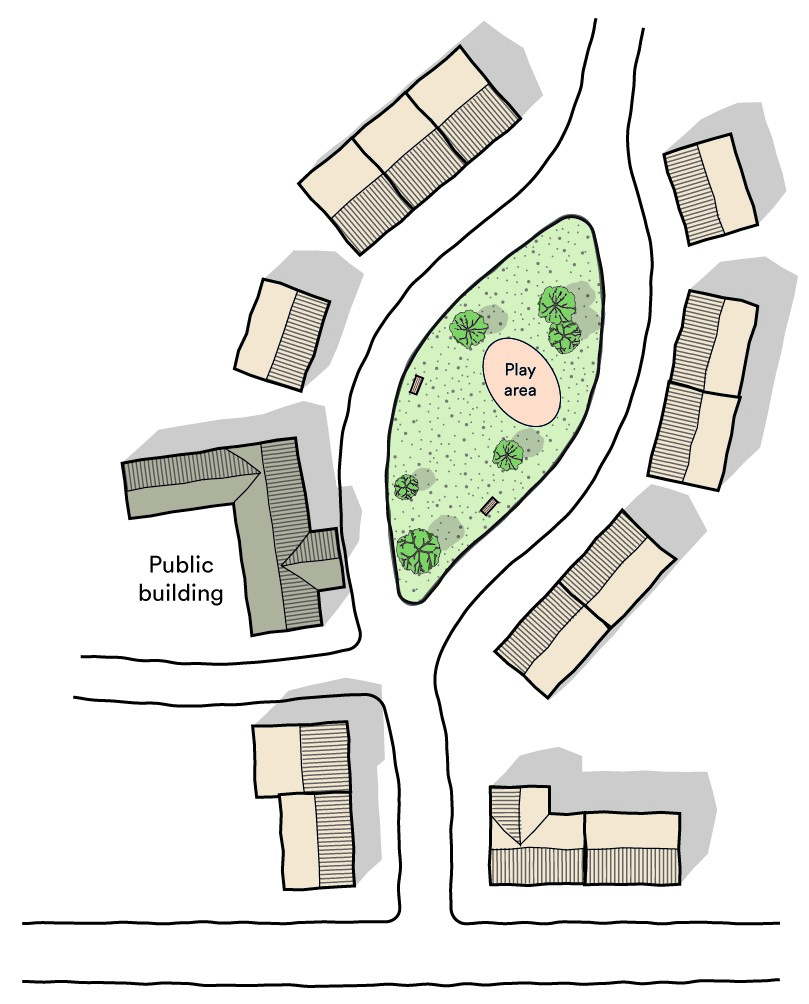
4.4 Play areas
All areas of play should be designed as fully inclusive and engaging spaces with a range of multi-sensory and accessible play features. They should include designs and equipment suitable for those living with disability, which may include:
- Ramps and mounds;
- Sensory boards and music panels;
- Ground level roundabouts;
- Bounce pads; and
- Seesaws (with back panels).
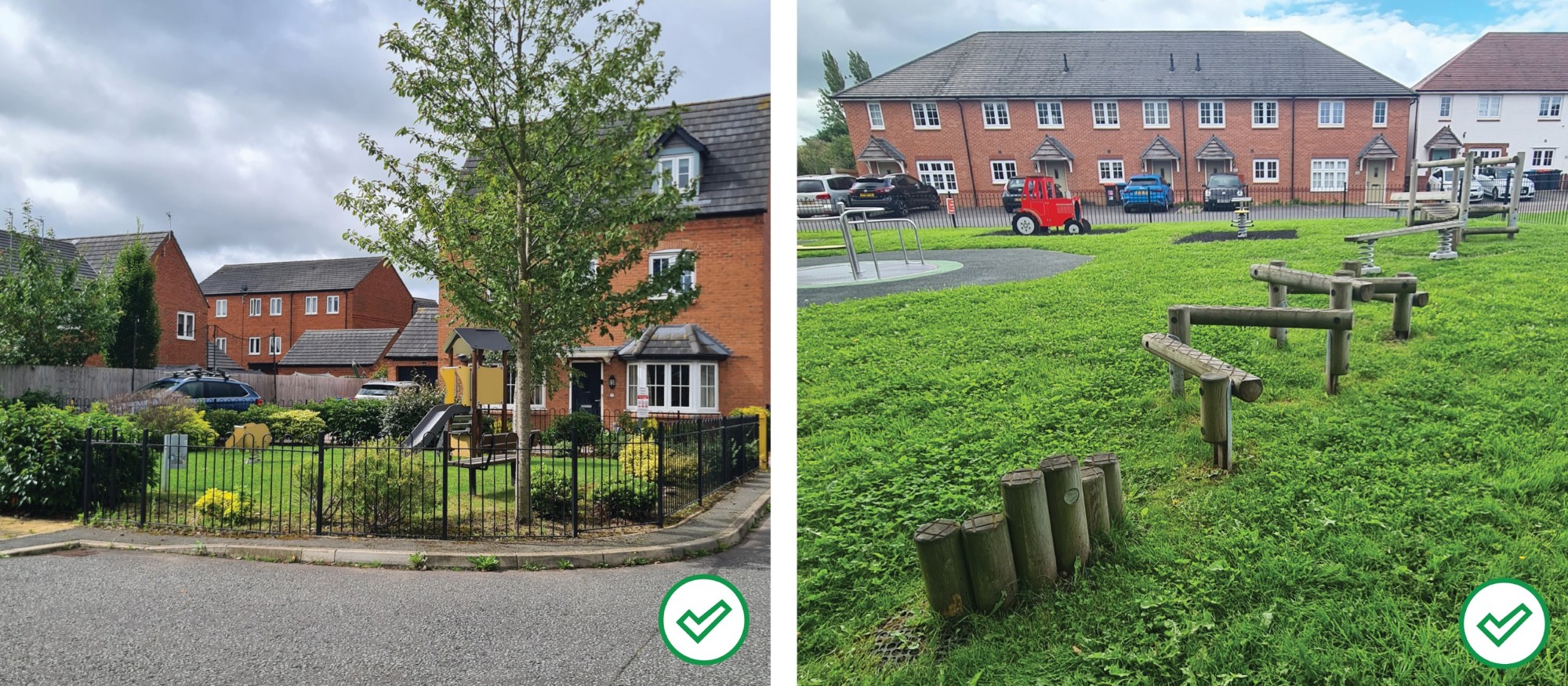
Play areas must not be located adjacent to railway lines or existing streets with heavy traffic and high pollution.
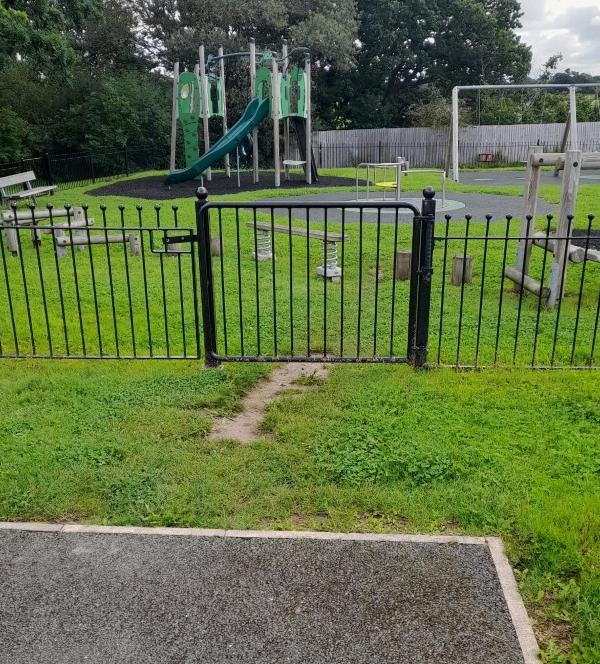
All entrances and internal routes within play areas must be step-free and accessible to all.
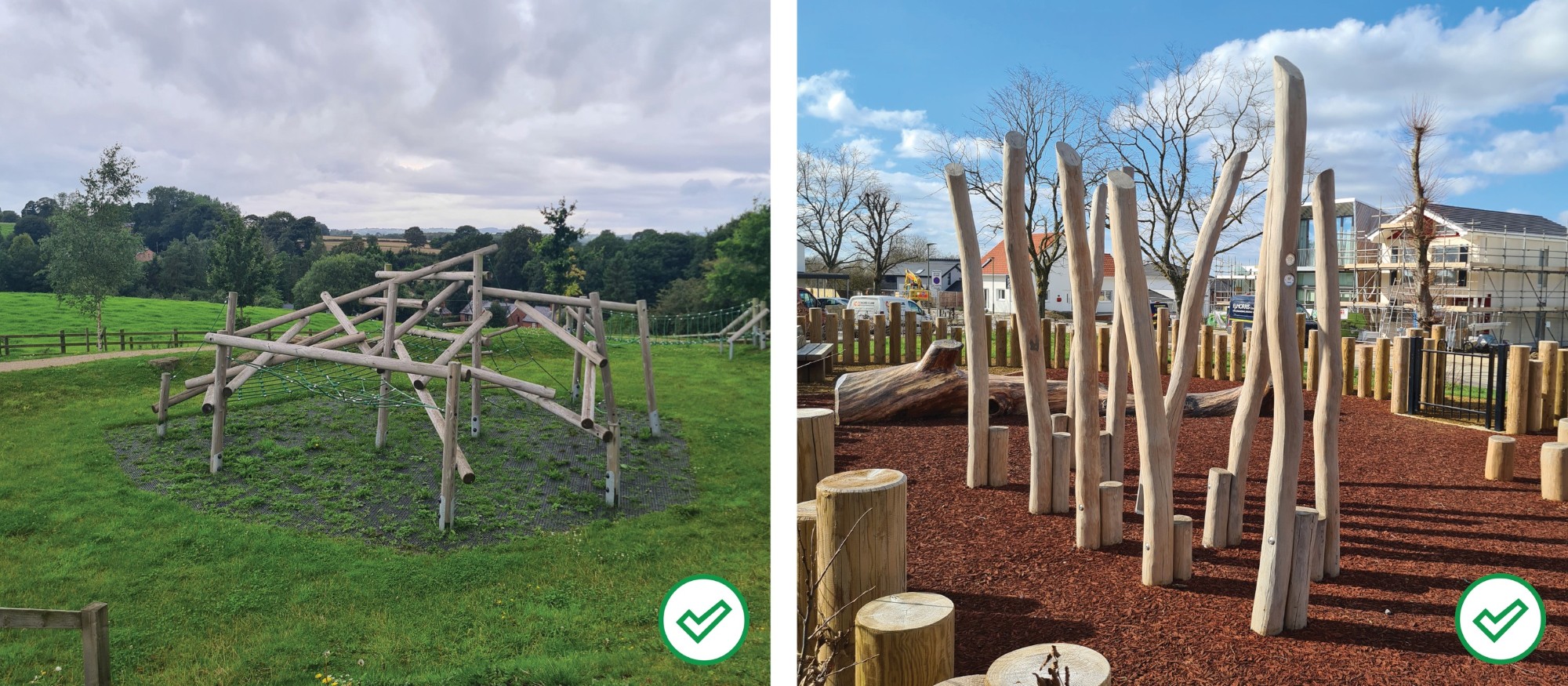
Play equipment should be made from durable, natural materials (e.g. with a lifespan of over 10 years). Where possible, landscape features such as mounds or play logs should be included within provision of play equipment.
Where school or community facilities are to be delivered on site, (or a development provides a means of access to them), traffic free 'play streets' or 'play corridors' could be created to support play on the way.
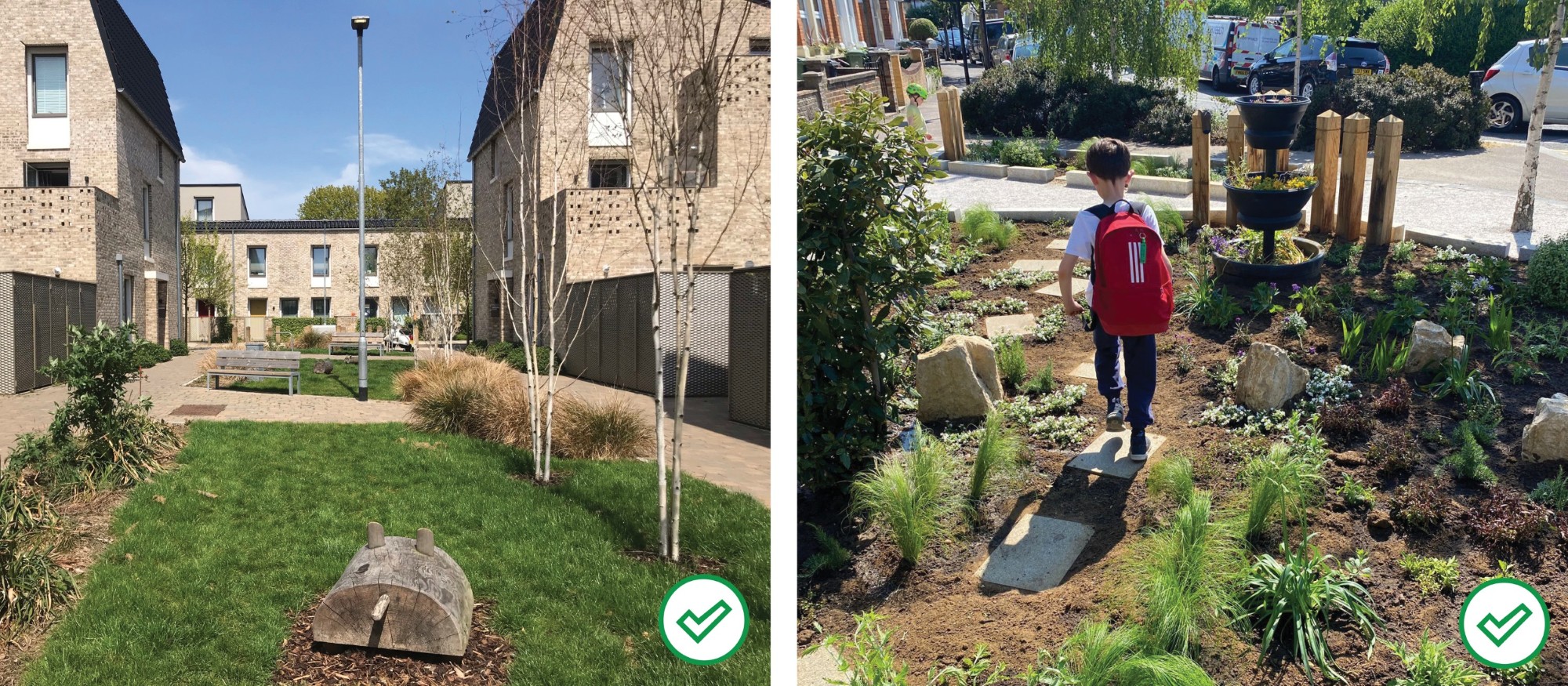
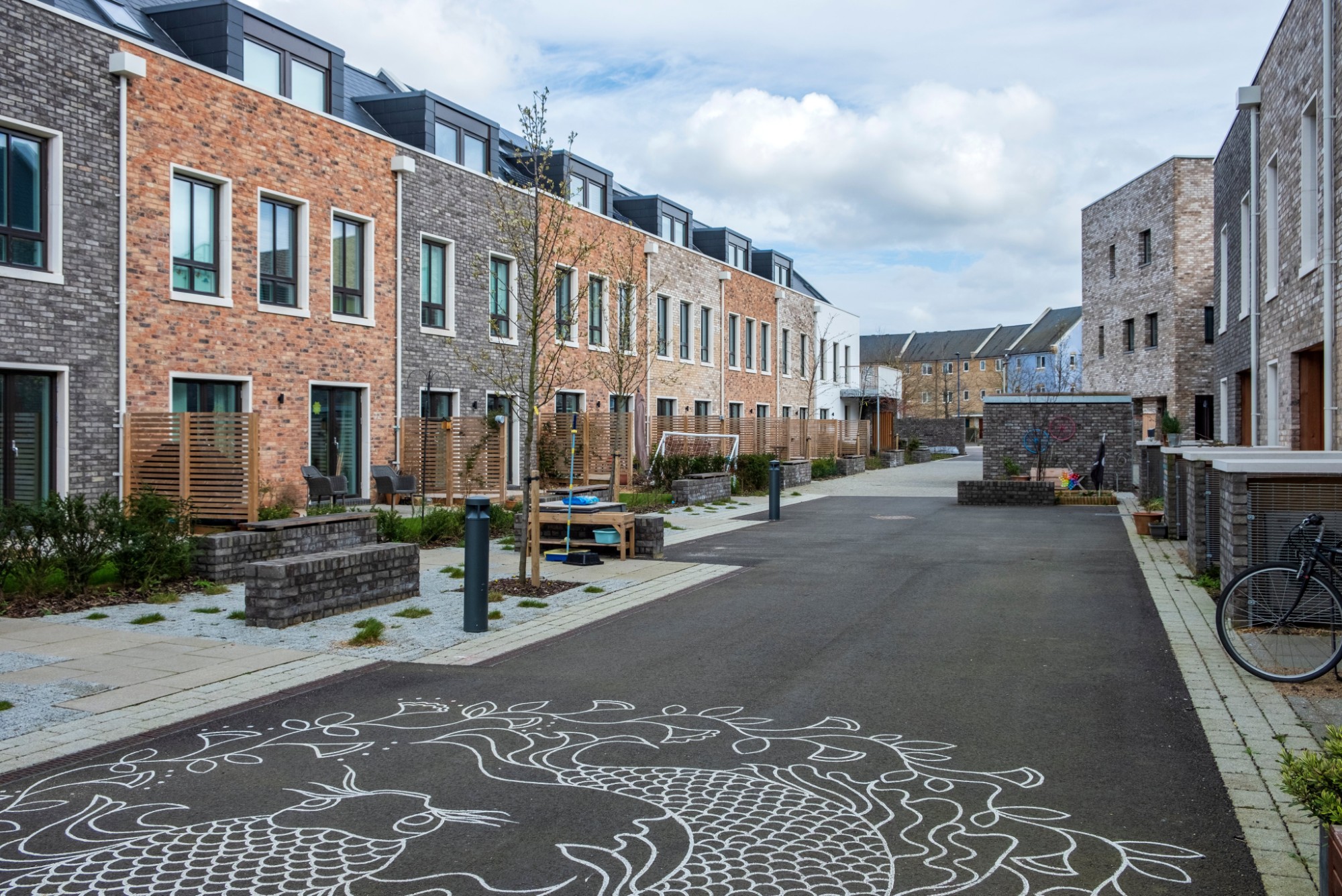
As an alternative to formal play, 'trim trails' and 'play trails' could be used to support activity and play for all ages.