
3.5.1 Introduction
This section sets out how designers should approach junctions and crossings, including geometry, safety and urban design considerations. Well designed junctions and crossings are essential to creating permeable, walkable, and attractive places.
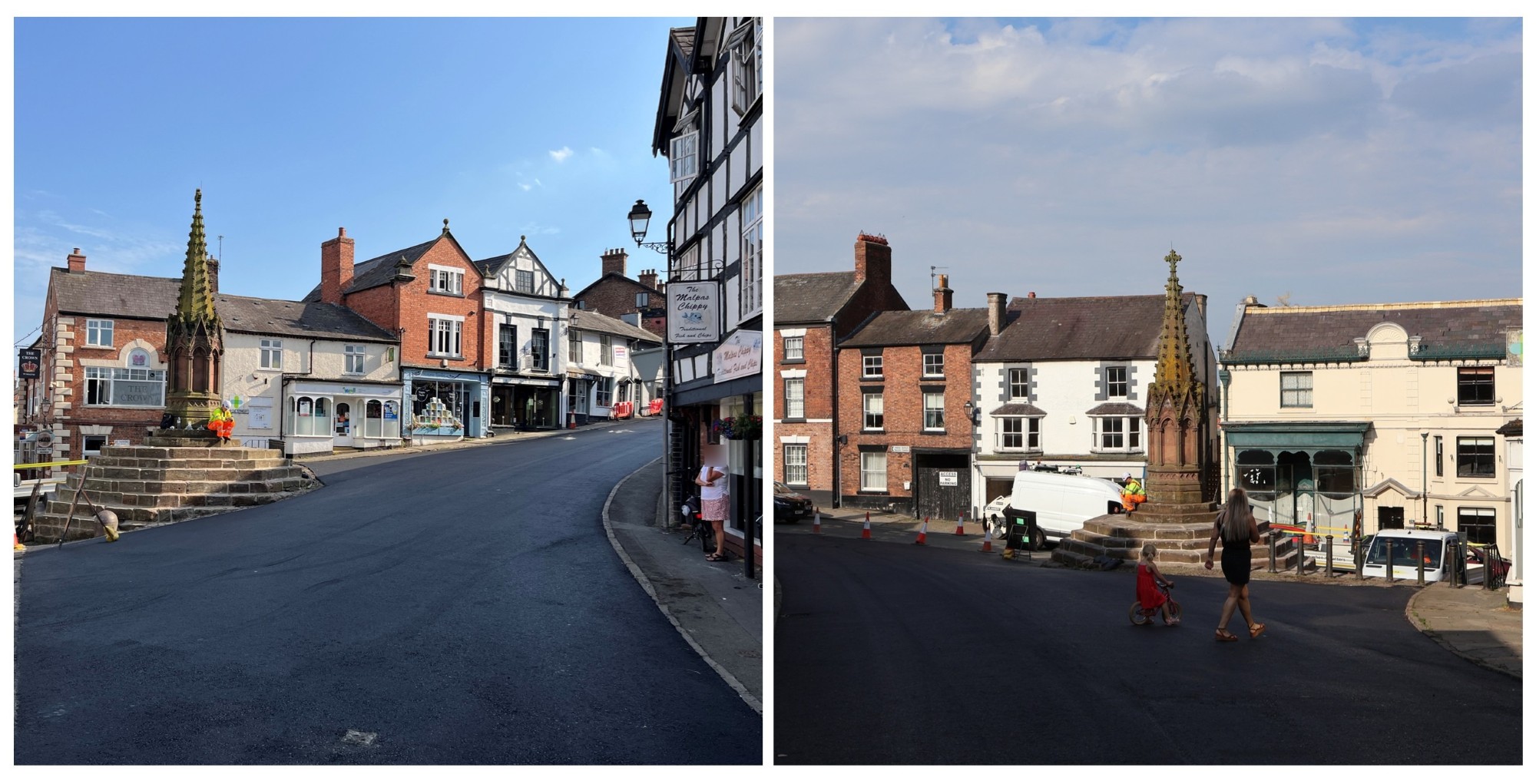
As well having an important movement function, junctions are places where people can meet and spend time. Key junctions are often a focus point, with taller landmark buildings, public spaces, amenities and activity. They are not just about moving vehicles as efficiently as possible.
Standard DMRB (Design Manual for Roads and Bridges) roundabouts must not be used, except on the trunk road network and on industrial roads (including Industrial Distributor Roads (Type 4.A) and Industrial Estate Roads (Type 4.B), where their use can be justified by operational requirements.
New junctions should be in accordance with the principles and palette of junction types below. The following types may be permitted:
- Raised table junctions;
- T and Y junctions;
- Multi armed junctions;
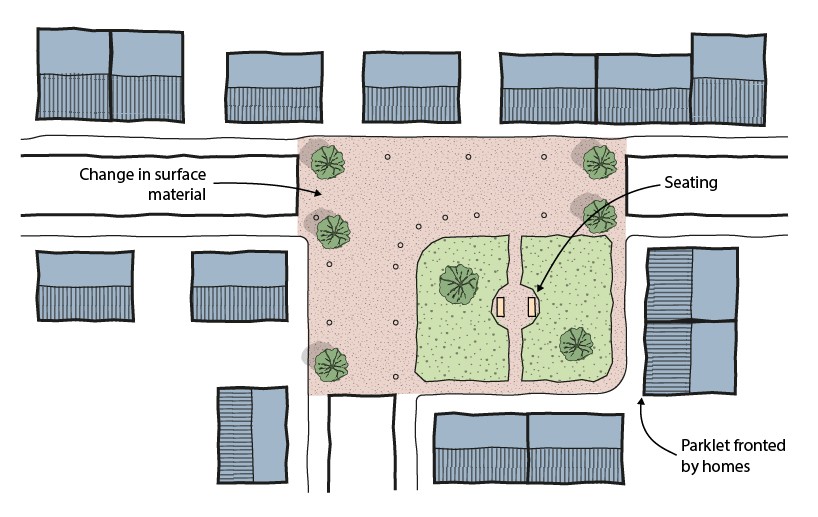
- Formal and informal squares, circuses or crescents;
- Mini and compact roundabouts, roundels.