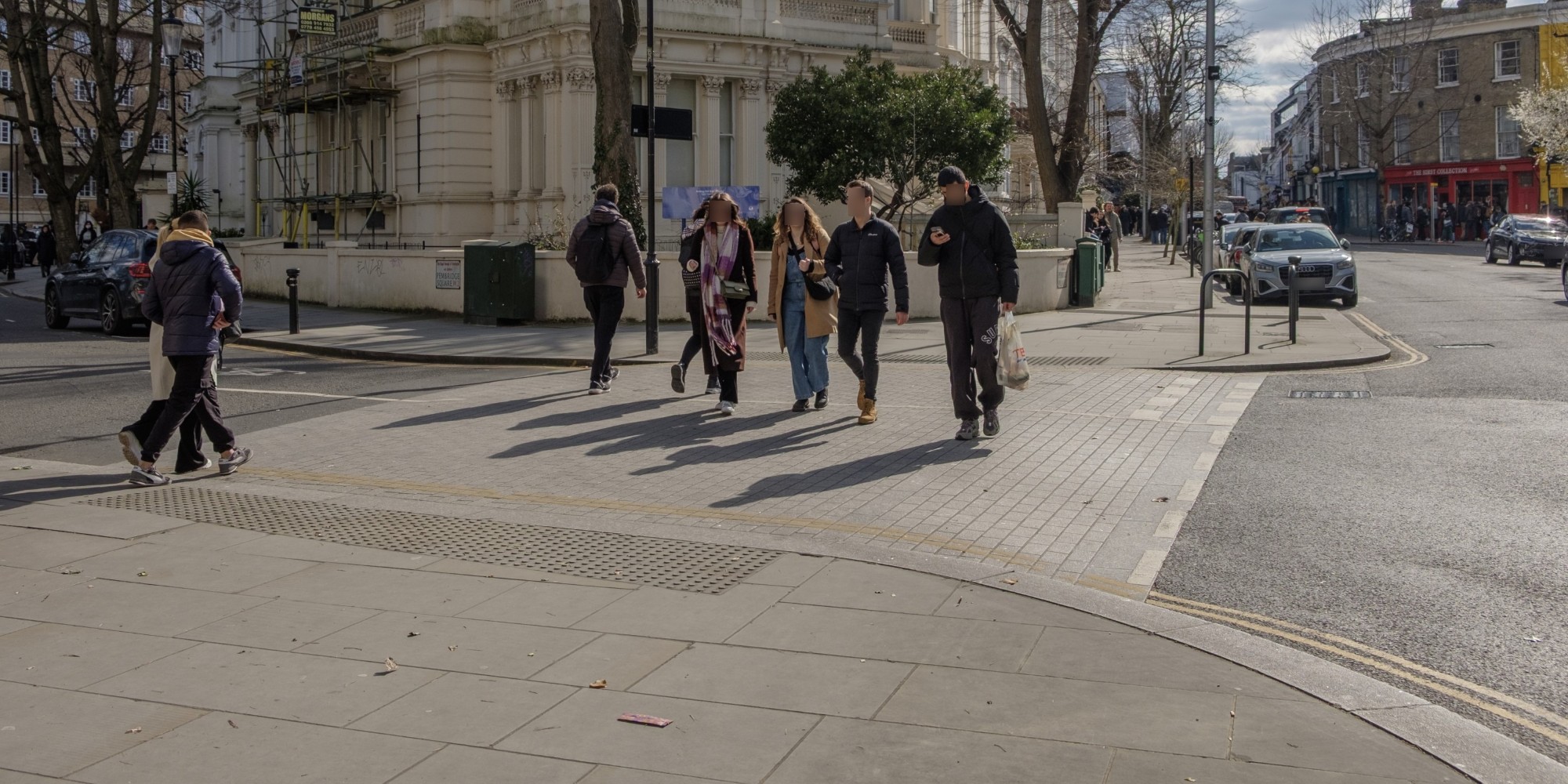
3.5.3 Junction geometry
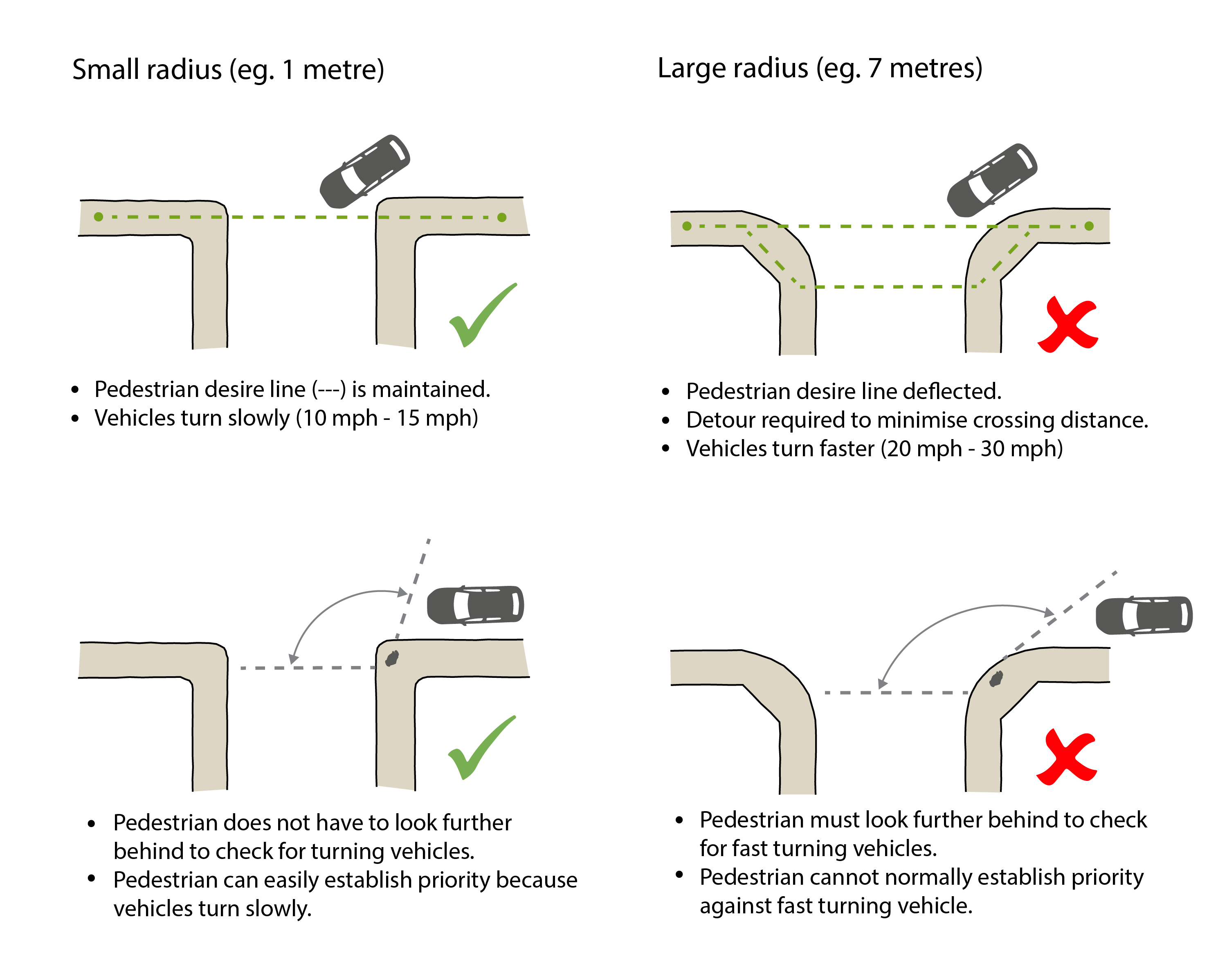
Large radii junctions are land hungry, expensive to build and maintain, and less safe for pedestrians, wheelers and cyclists. Smaller corner radii encourage slower, more careful driving and maintain pedestrian desire lines, reducing the width of carriageway that needs to be crossed.
Most vehicles do not require large radii to turn, and those vehicles that do (such as refuse vehicles) only tend to use streets occasionally.
Junction radii must be as small as possible to ensure that the pedestrian desire line is maintained and that vehicles turn slowly. For most streets covered by this Code, this will be between 2.0m and 0.6m.
If larger radii (above 2.0m) are unavoidable, then one of the following should be used:
- A raised table at the entrance of the junction (known as a raised entry treatment) to help slow speeds.
- An overrun area to visually tighten the corners and encourage careful manoeuvring, laid in a different paving material.
- Widening of the carriageway of the minor arm of a junction (the side street) for the first 5m to allow easier manoeuvring, while keeping the kerb radii low.
Junctions must not be designed around large vehicles that would only use the junction occasionally (twice a day or less). In all streets covered by this Code, it is acceptable for large vehicles to take up both lanes when turning. However, designers should consider an exception to this rule on very busy streets where there are likely to be conflicts at peak times of the day.
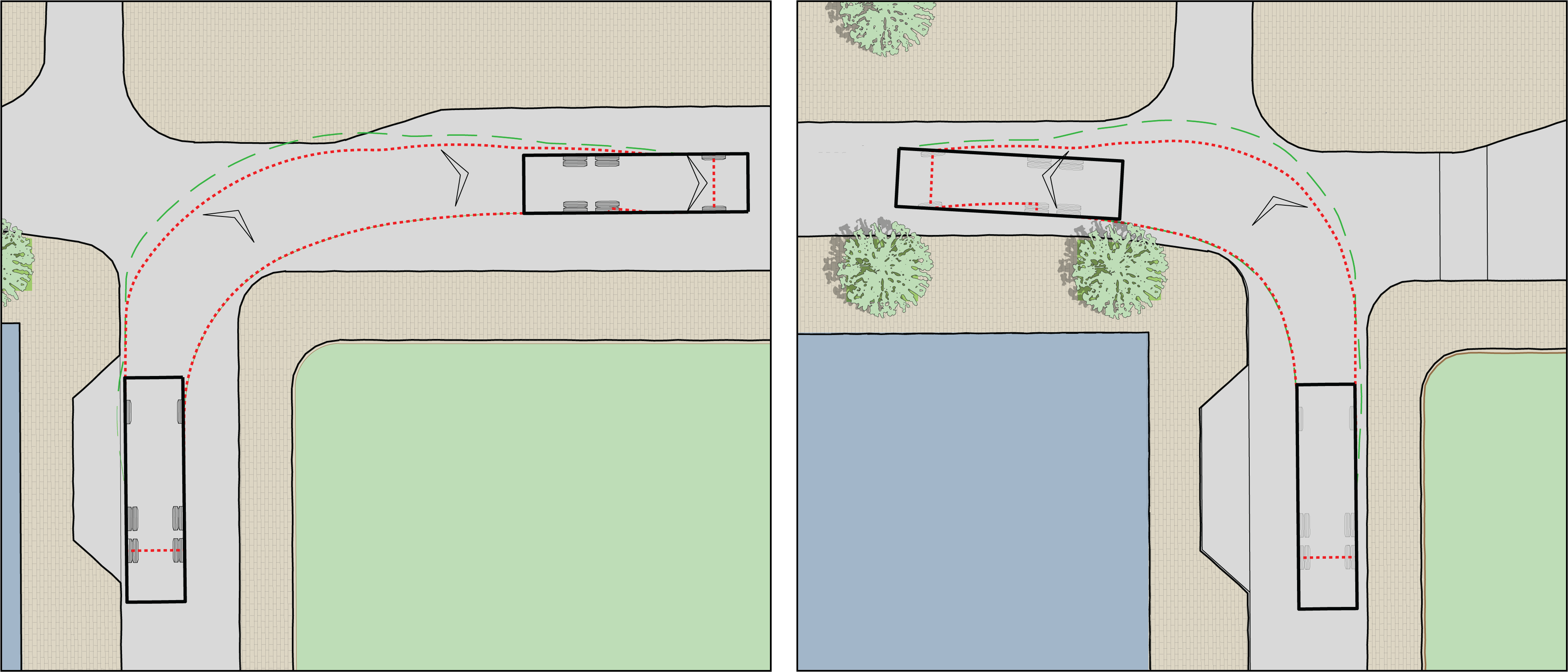
Overrun areas should be used on junctions with a very acute angle, taken to be anything less than 80°.
On existing junctions undergoing retrofit work, large radii should be reduced using kerb build outs and reclaiming space should be used for greenery or public space.
It could be possible to use reclaimed space for new buildings, especially where it provides an opportunity to restore historic street patterns that have been damaged by previous road schemes.
Where planting is proposed that has the potential to exceed 600mm in height, it should be set back a minimum of 1m from the rear of the Y-axis visibility splay. This will help ensure that the required visibility is maintained should the vegetation not be routinely managed.