3.8.3 On street parking
On street parking is the most efficient way of delivering parking and integrating it into the layout of a development. It helps slow traffic by introducing edge friction providing additional separation between moving vehicles and pedestrians and cyclists.
This section refers to the following typologies:
- On street parallel parking
- On street echelon (45-degree parking) or perpendicular parking
- Parking squares and greens
- Central reservation parking
On street parking
The following design rules apply to on street parking:
On street and opportunity parking must be unallocated, and where parallel parking is provided individual bays should not be marked. This is a flexible and spatially efficient approach that reduces the overall need for spaces.
Nuisance parking must be controlled through efficient street design which leaves no left-over space, and the use of trees, greenery and street furniture. For example, using shrubs or low-level planting in verges to discourage parking.
On street parking should be parallel to the kerb. This ensures streets are not excessively wide.
Perpendicular parking should not be used in front of homes or other buildings. It should be integrated into parking squares, green space or central reservations.
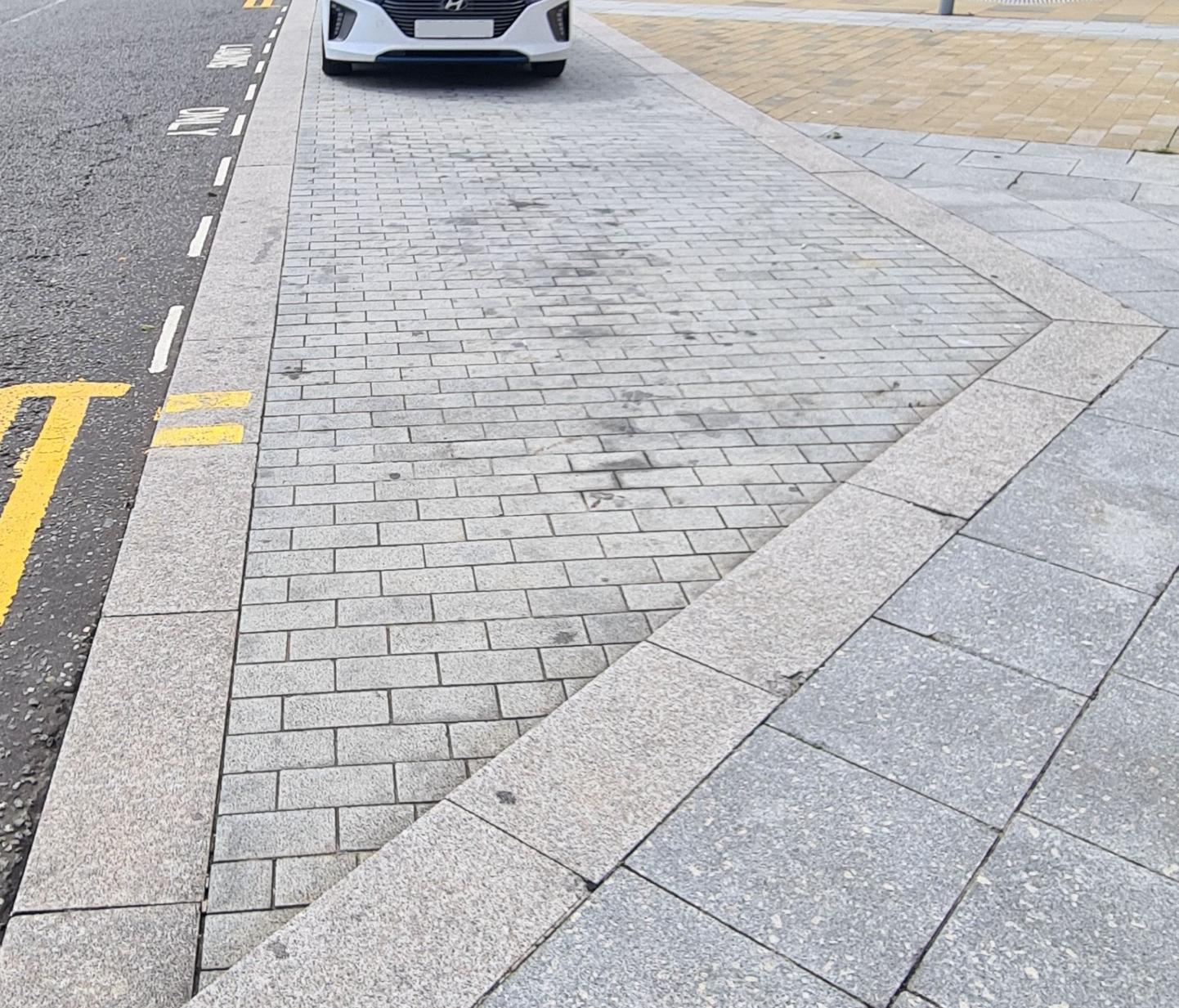
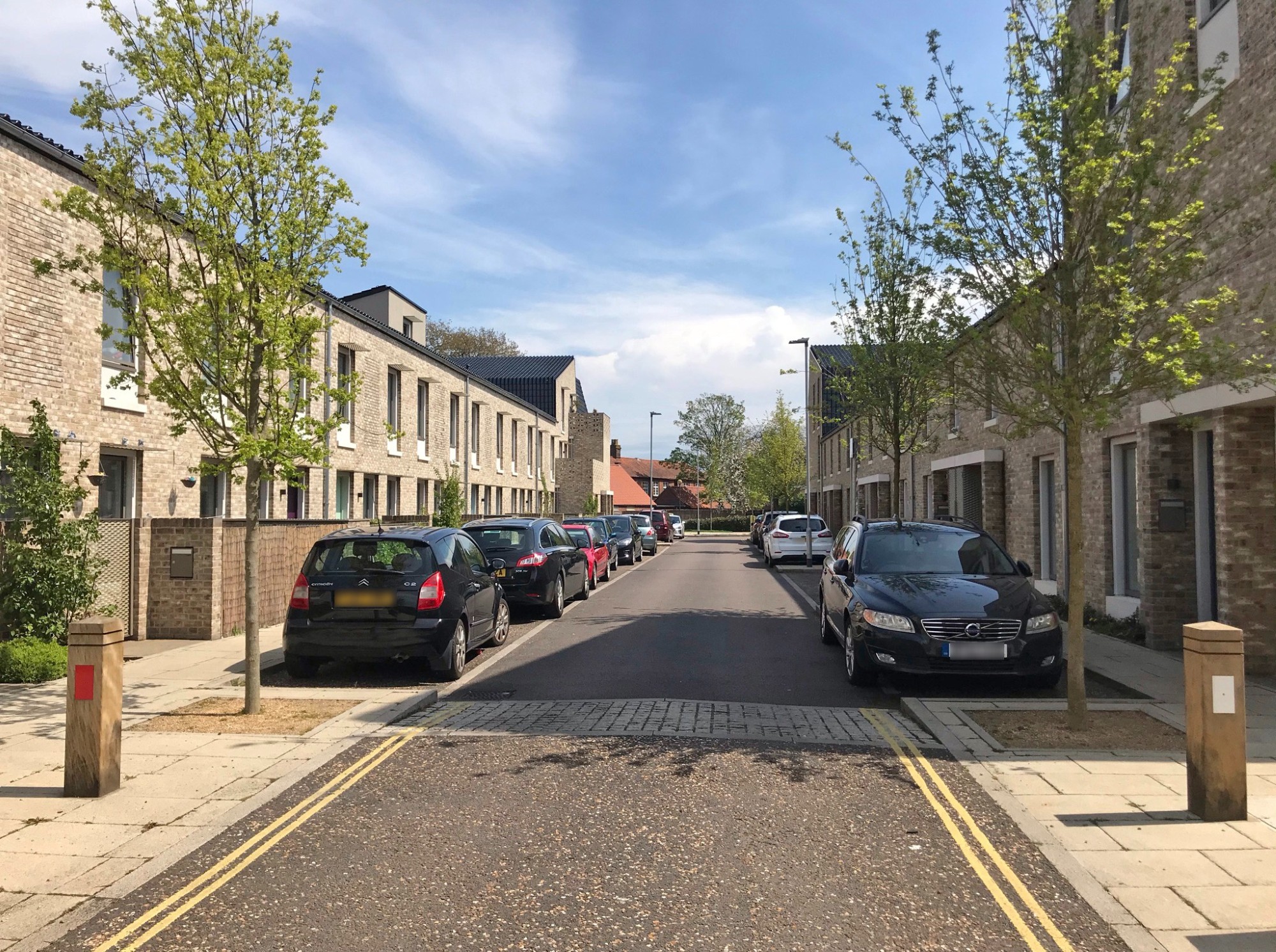
Parallel spaces should be broken up into groups of no more than four. They should be separated by kerb buildouts that can incorporate trees, greenery, SuDS, EV chargers and bike parking.
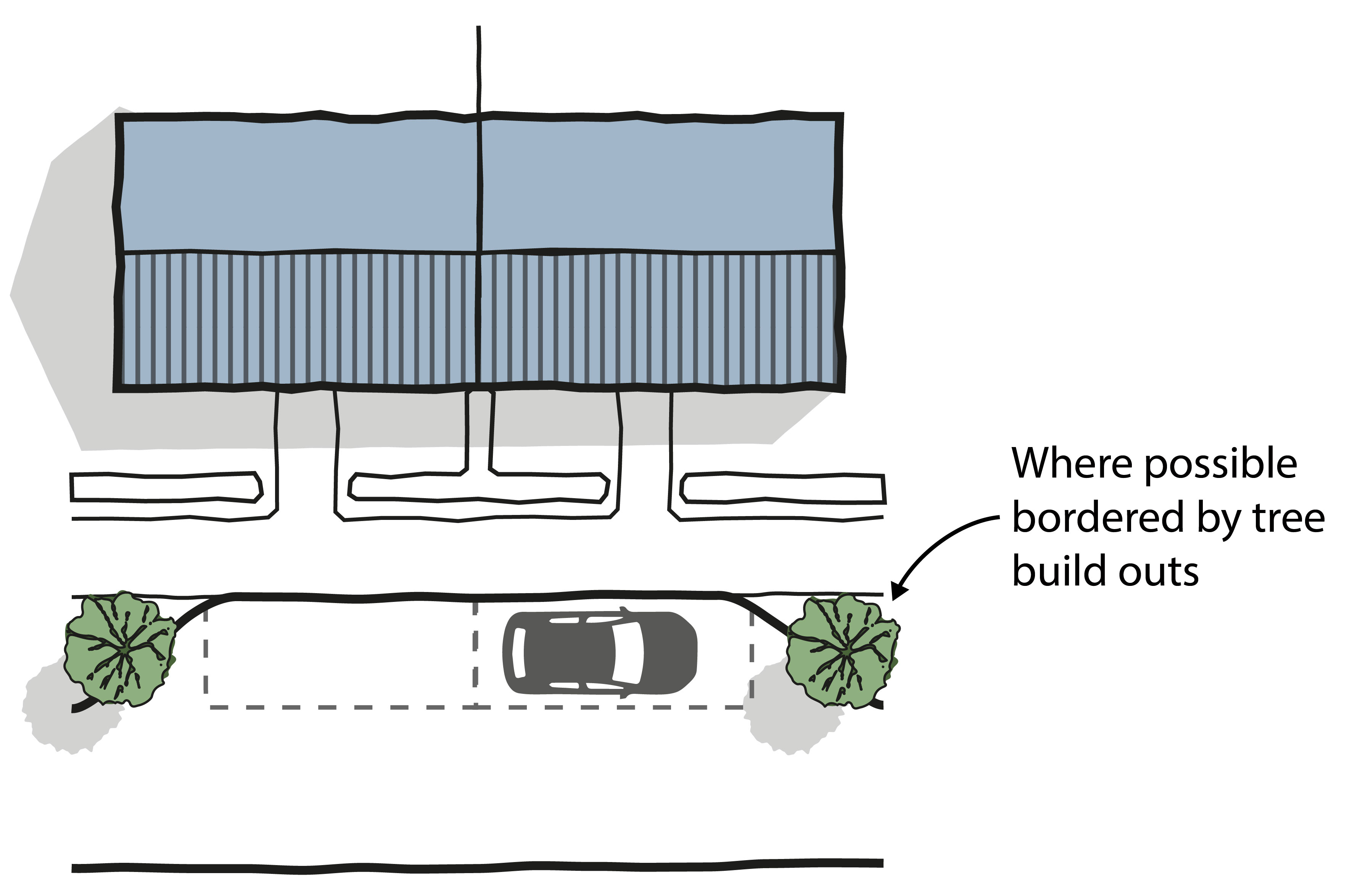
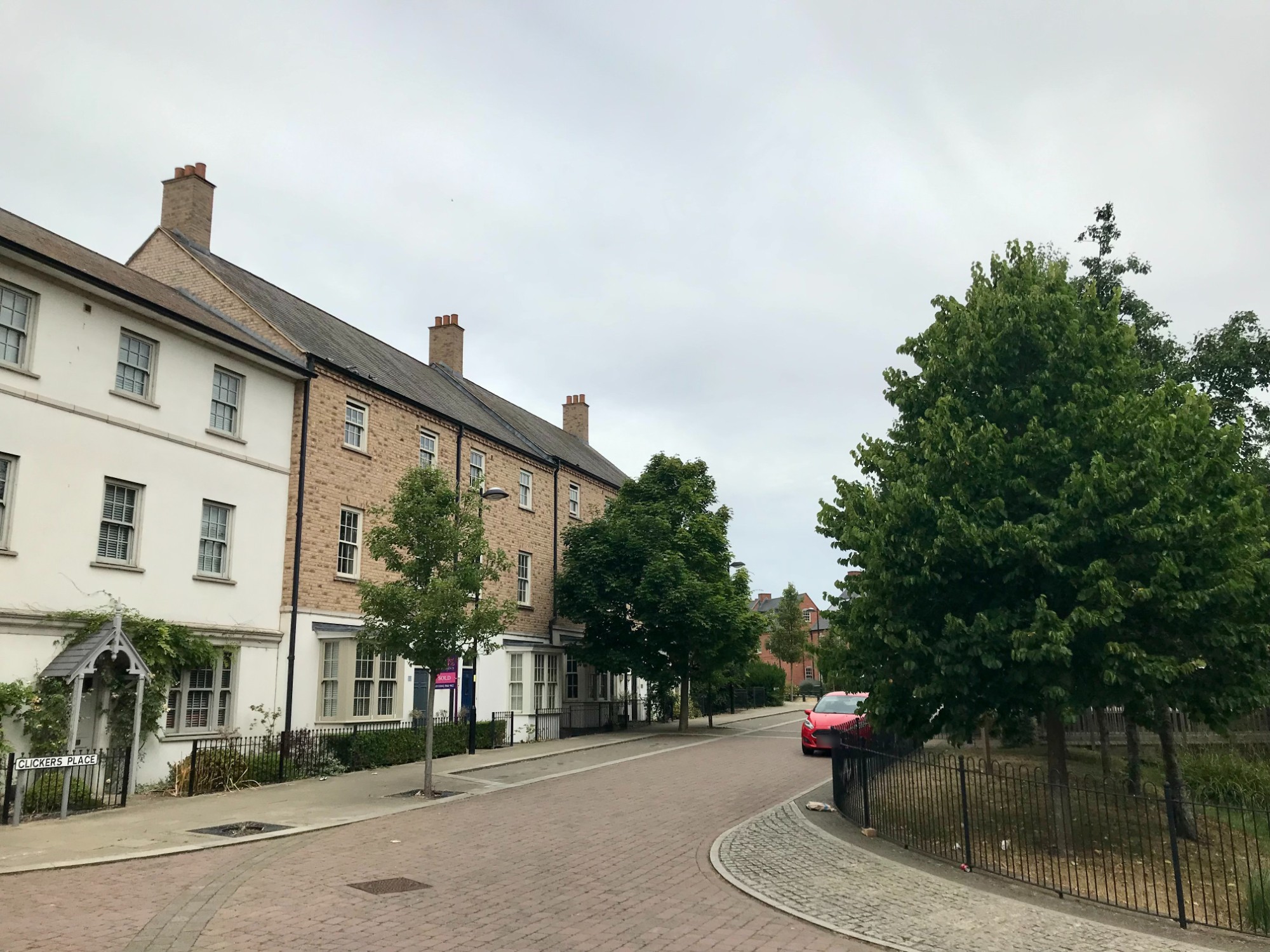
On street parking can be within visibility splays on High Streets (Type 1.B and 1.C), Residential Streets (Types 2.A, 2.B and 2.C), and Tertiary Streets where parking is permitted (Type 3).
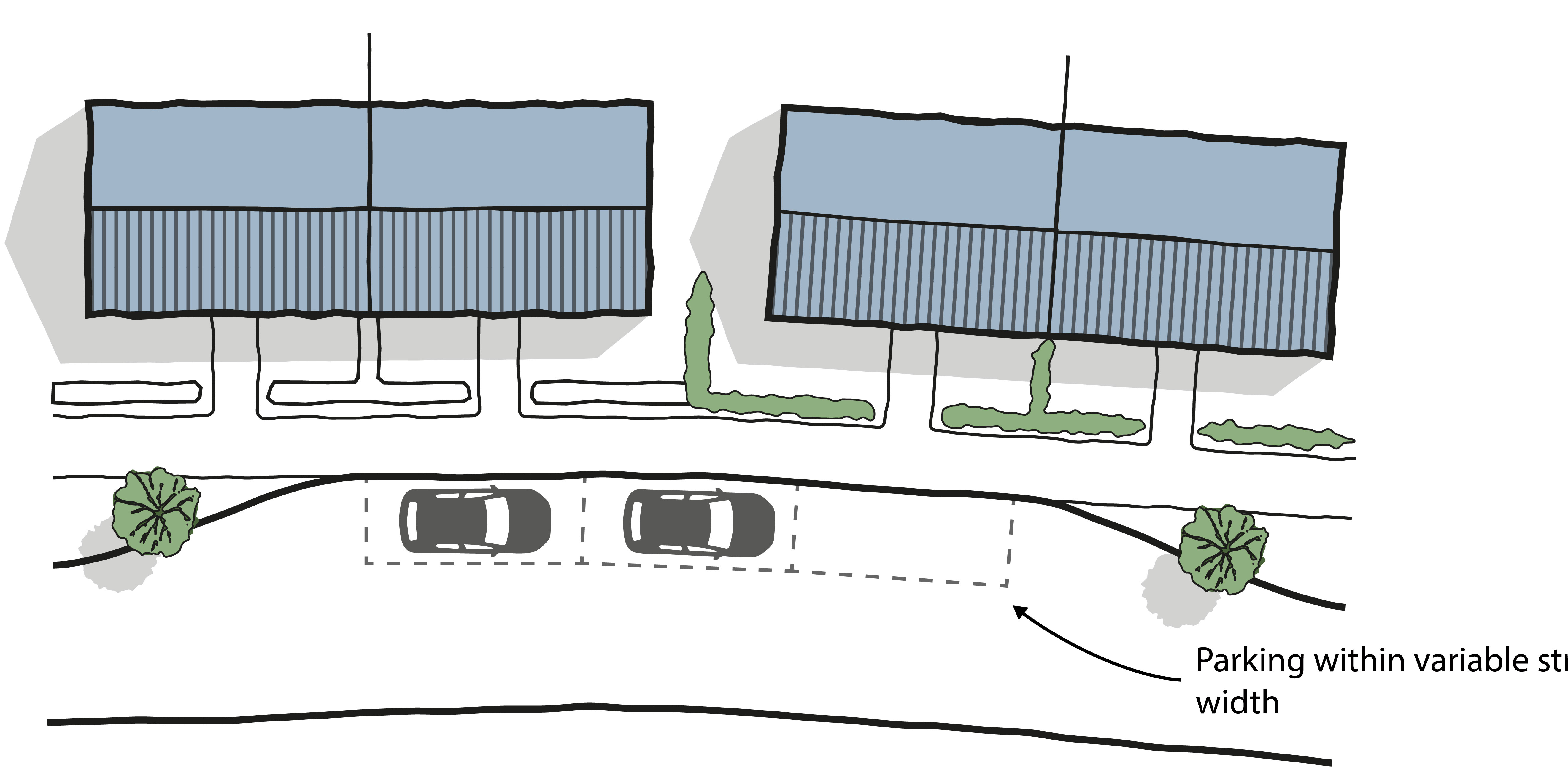
Additional space for parking could be provided by using varying street widths.
Central reservation parking
Central reservation parking is appropriate for wider streets and can lead to reasonably high level of parking provision.
On street parking bays must be broken up with trees and planting every 3 to 5 spaces.
On street parking bays should be in groups of no more than 3 when parallel or 5 when perpendicular.
Central reservation should only be used on Principal Streets (Type 1.A) and High Streets – High Activity (Type 1.B)
Parking greens
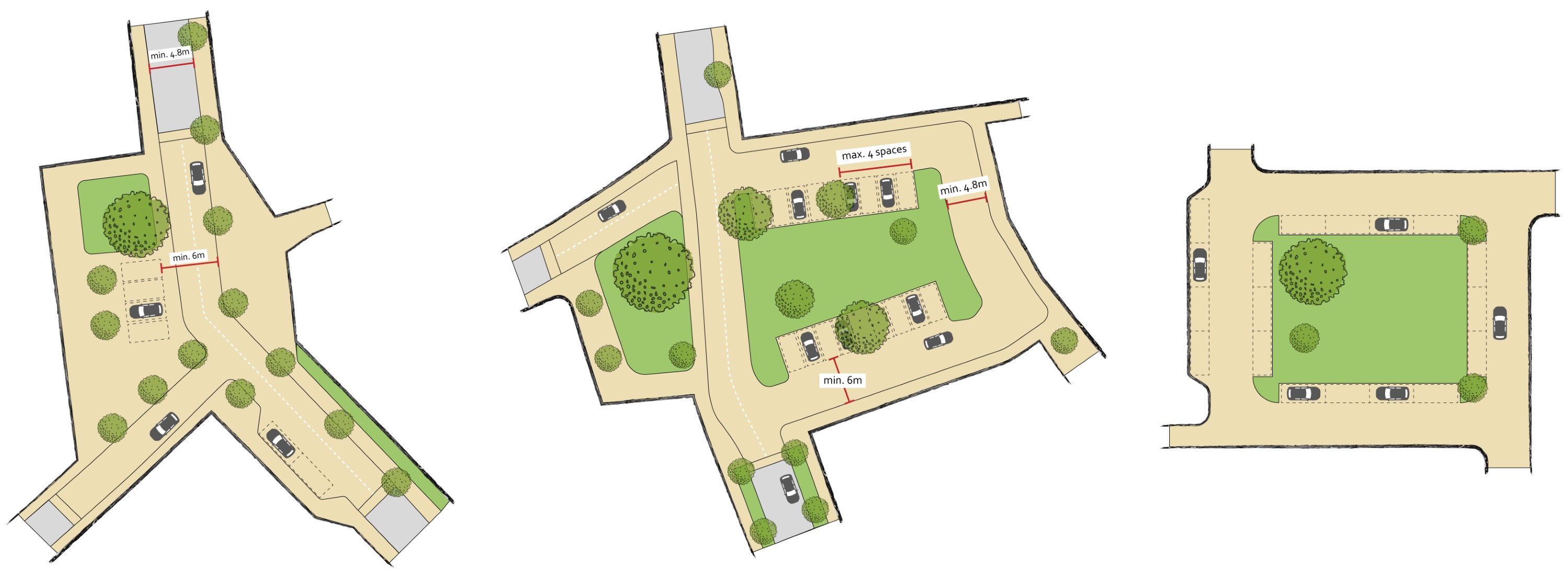
Through careful design, parking can be integrated into focal public green spaces where it does not harm townscape character.
Parking on greens must be broken up with trees or greenery, including SuDS. Parking bays must be in groups of no more than 3 when parallel or 4 when perpendicular.
At least 50% of a parking green must be public green space.
A parking green at Telford Millennium Village
Loading bays
On street loading bays must be provided on all Principal Streets (Type 1) where there are commercial uses, unless dedicated servicing is provided elsewhere.
Loading bays should be provided within carriageway or where the existing pavement is sufficiently wide (over 4m), inset bays may be used.
In the former case, bays should be clearly delineated using materials, rather than white lining.
Inset bays should be at pavement level and accessed via a splay kerb.