Movement

3.8.8 Parking case studies

Parking Case Studies 

To reduce the dominance of parking, there is a need to move away from providing all parking on plot in most circumstances. This can be achieved through a variety of parking typologies, or by following the strategy of a split provision, where only one car is by the front door, and additional cars are within a communal parking area nearby. Examples of schemes that have taken a mixed approach to parking are set out below.
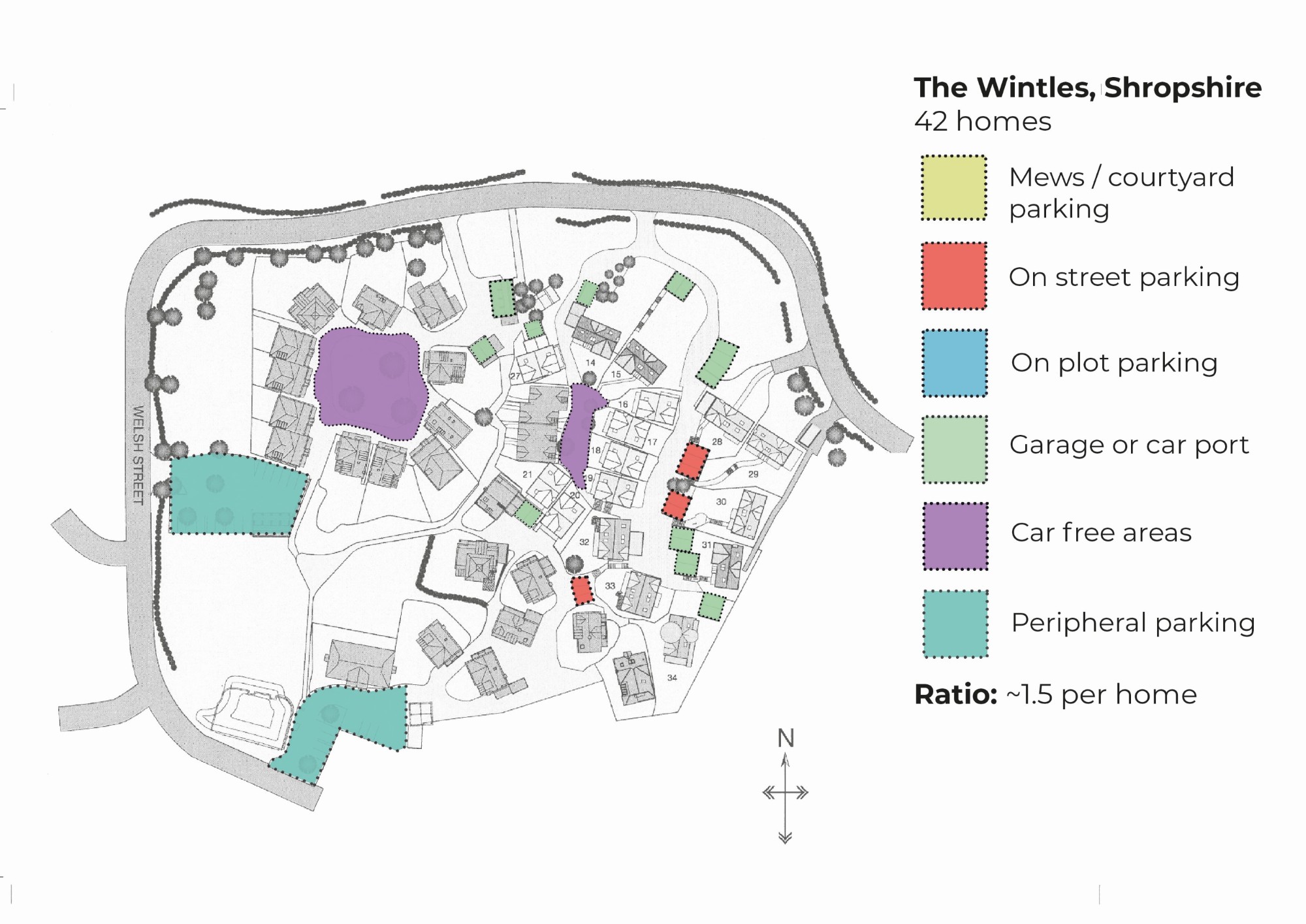
Parking strategy, Wintles image
The Wintles in Shropshire uses a mix of car ports and peripheral parking areas to help maintain a rural character.
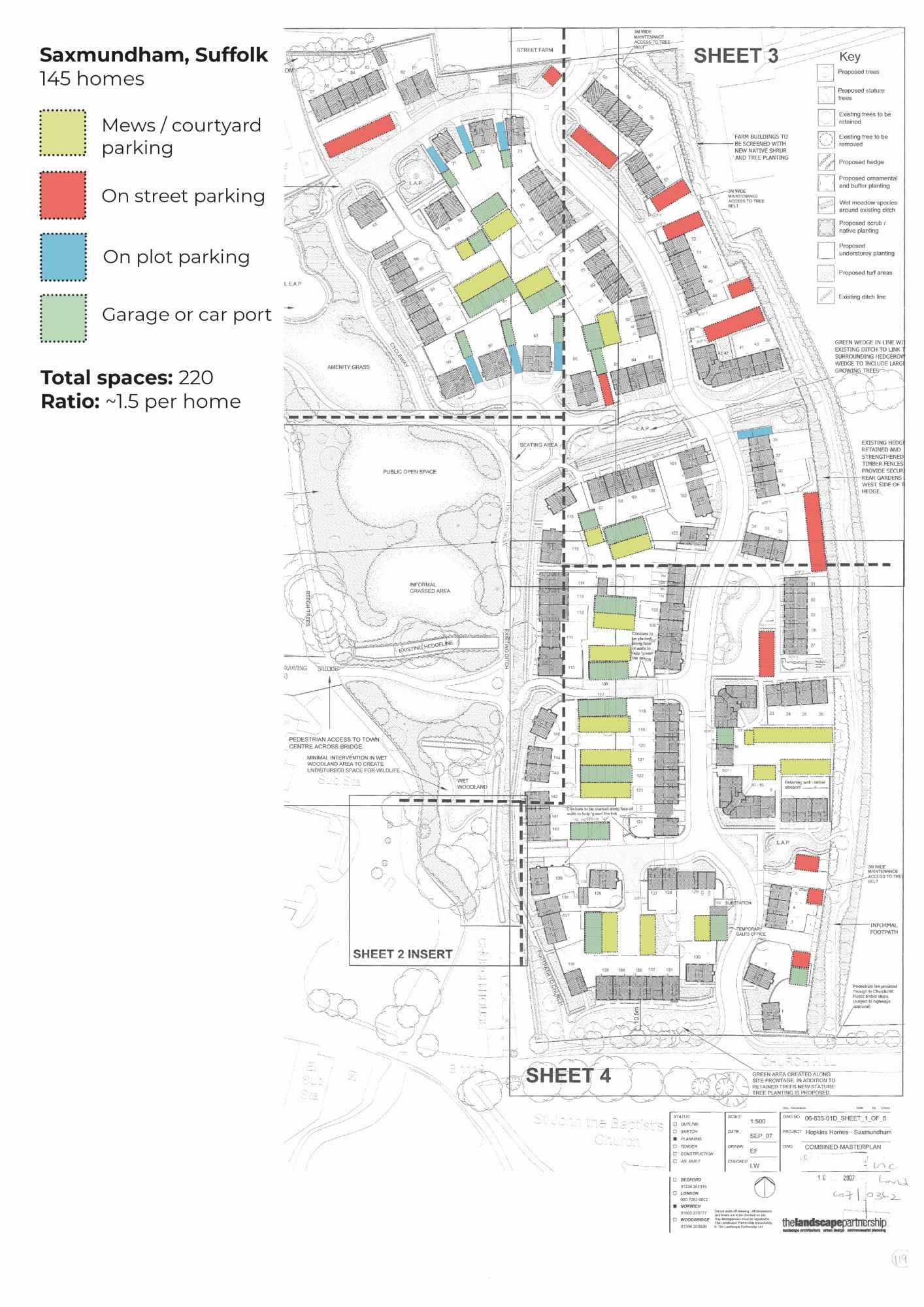
Parking strategy Saxmundham image
A mix of on-street and well-designed courtyard parking with greenery ensures the car is accommodated without dominating the street, Saxmundham, Suffolk.
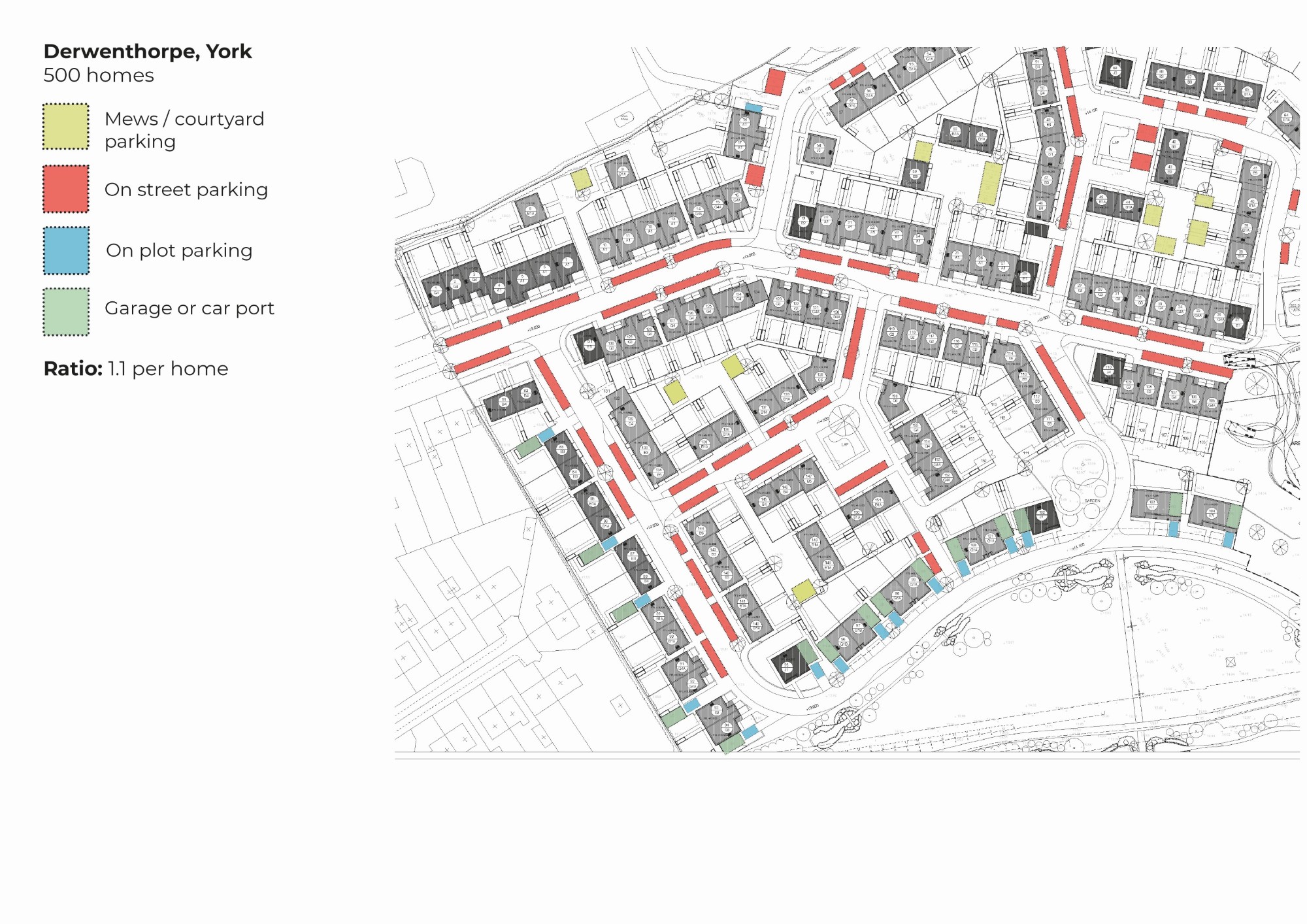
Parking strategy Derwenthorpe image
Parking is provided on-street (allocated) and separated by build outs and greenery with some rear courtyards, Derwenthorpe. York.
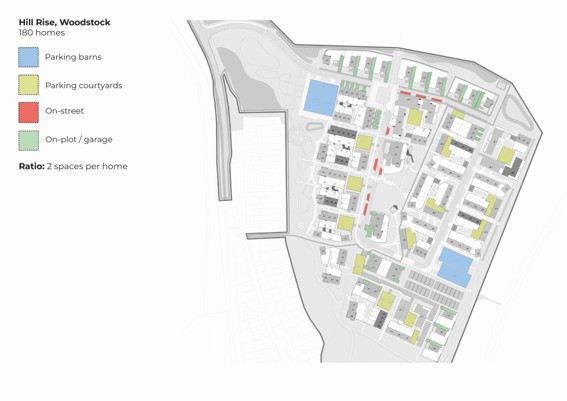
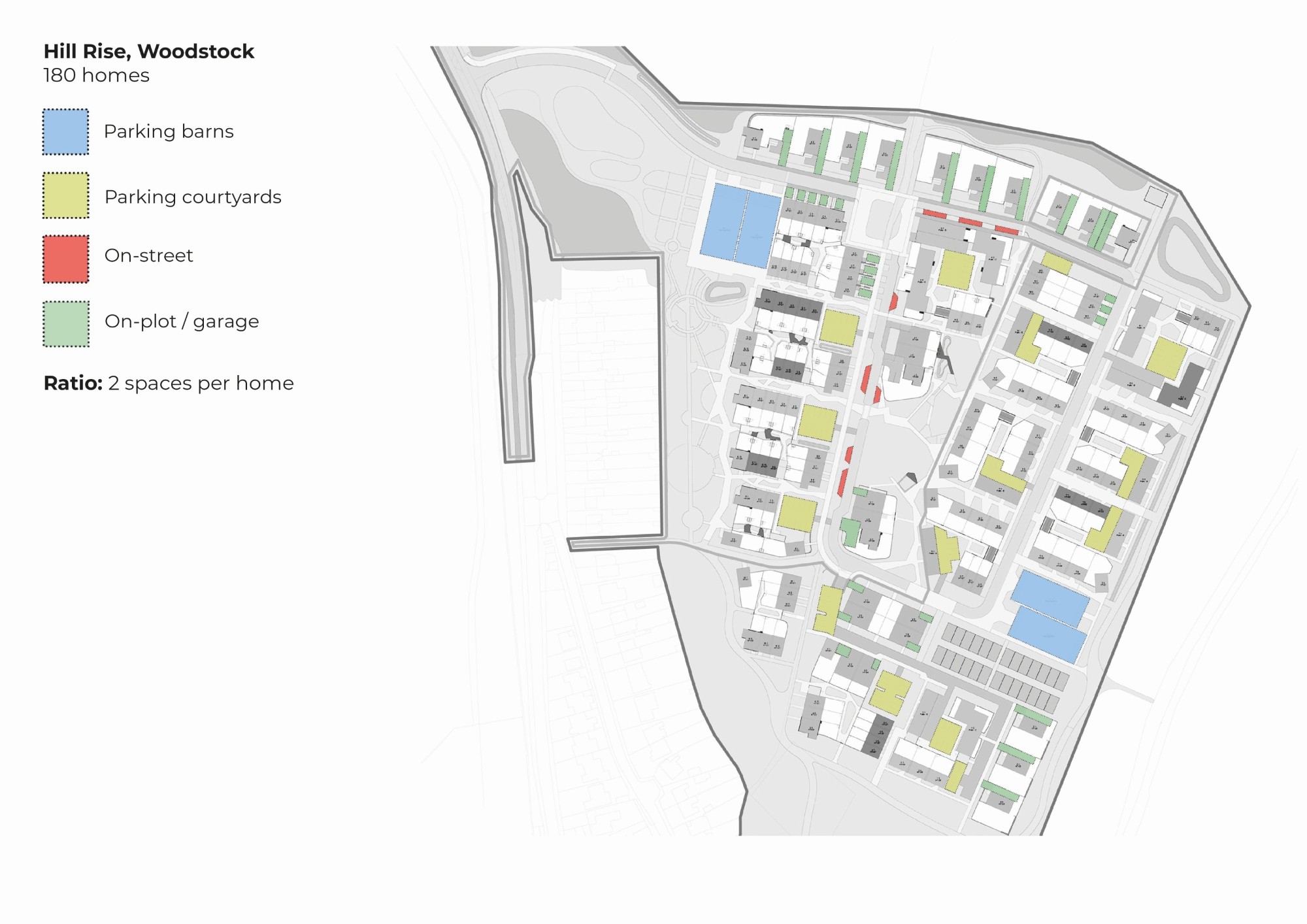
Site plan showing the distribution of parking types across a residential development, including parking barns, courtyards, on-street spaces and on-plot garages.
Proposals for Hill Rise in rural Oxfordshire include split parking provision. (Credit for base image- Pollar Thomas Edwards Architects)
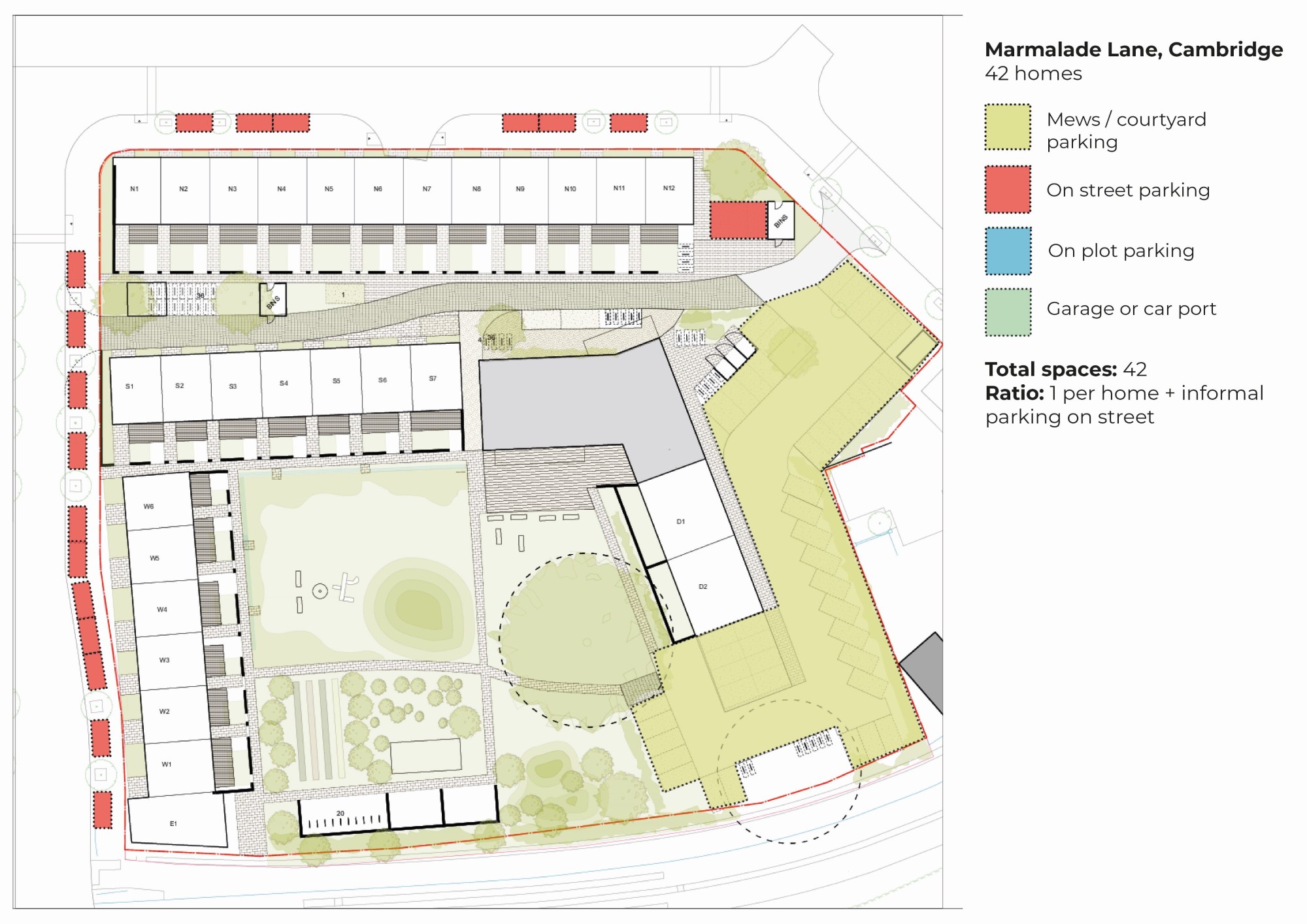
Parking strategy, Marmalade Lane image
Parking is concentrated in a peripheral car park, leaving the rest for greenery, gardens and people, Marmalade Lane, Cambridge.
Parking Strategy Hill Rise, Pollard Thomas Edwards image
Parking space allocated per house located in small squares and courtyards nearby, any additional cars are catered for by the parking barns, Hill Rise, Woodstock.
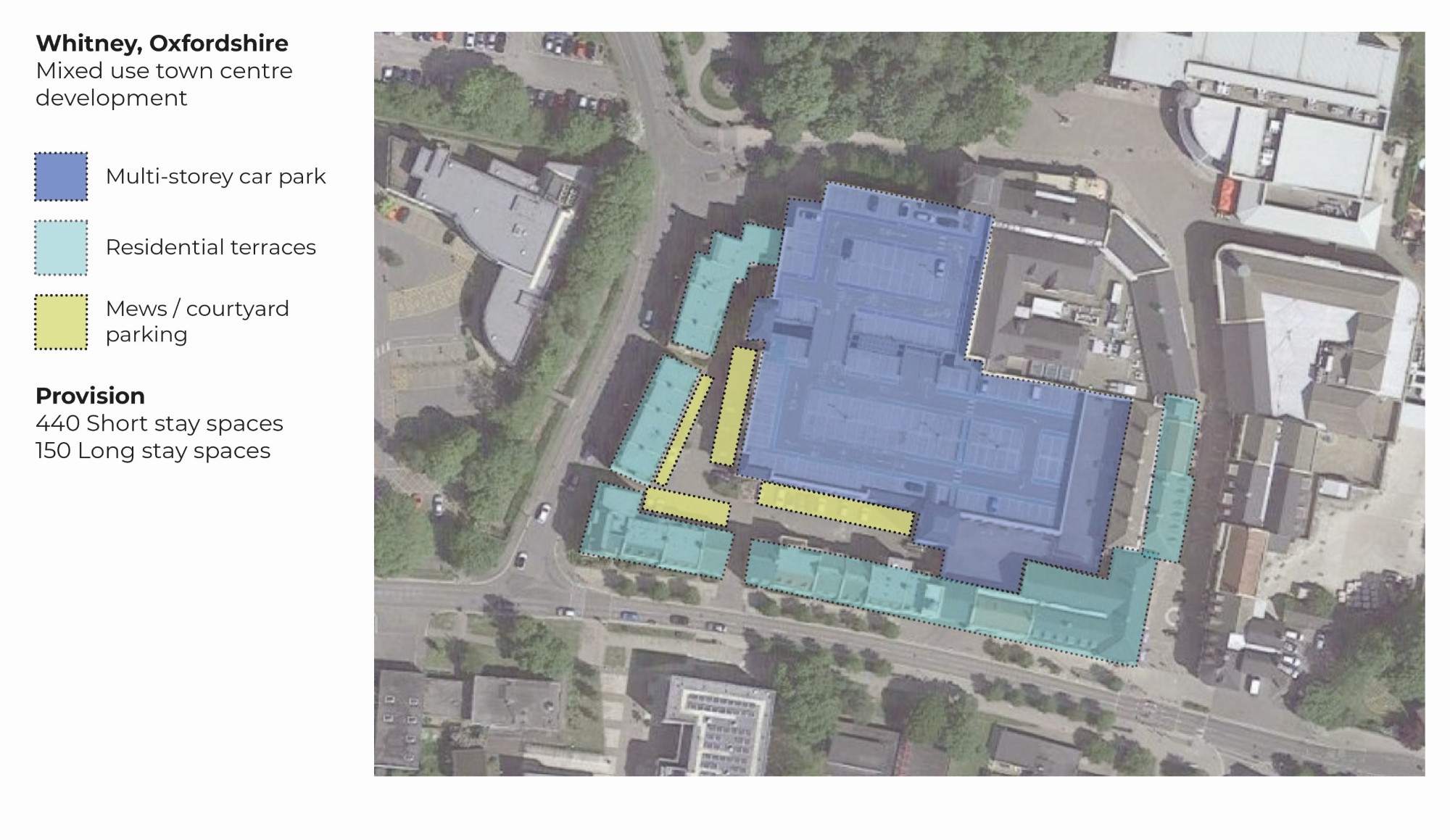
Parking Strategy Whitney image
In a mixed-use urban infill site, multi-storey car parks can also be concealed within housing, Witney, Oxfordshire.