Built Form

5.1.2 Density

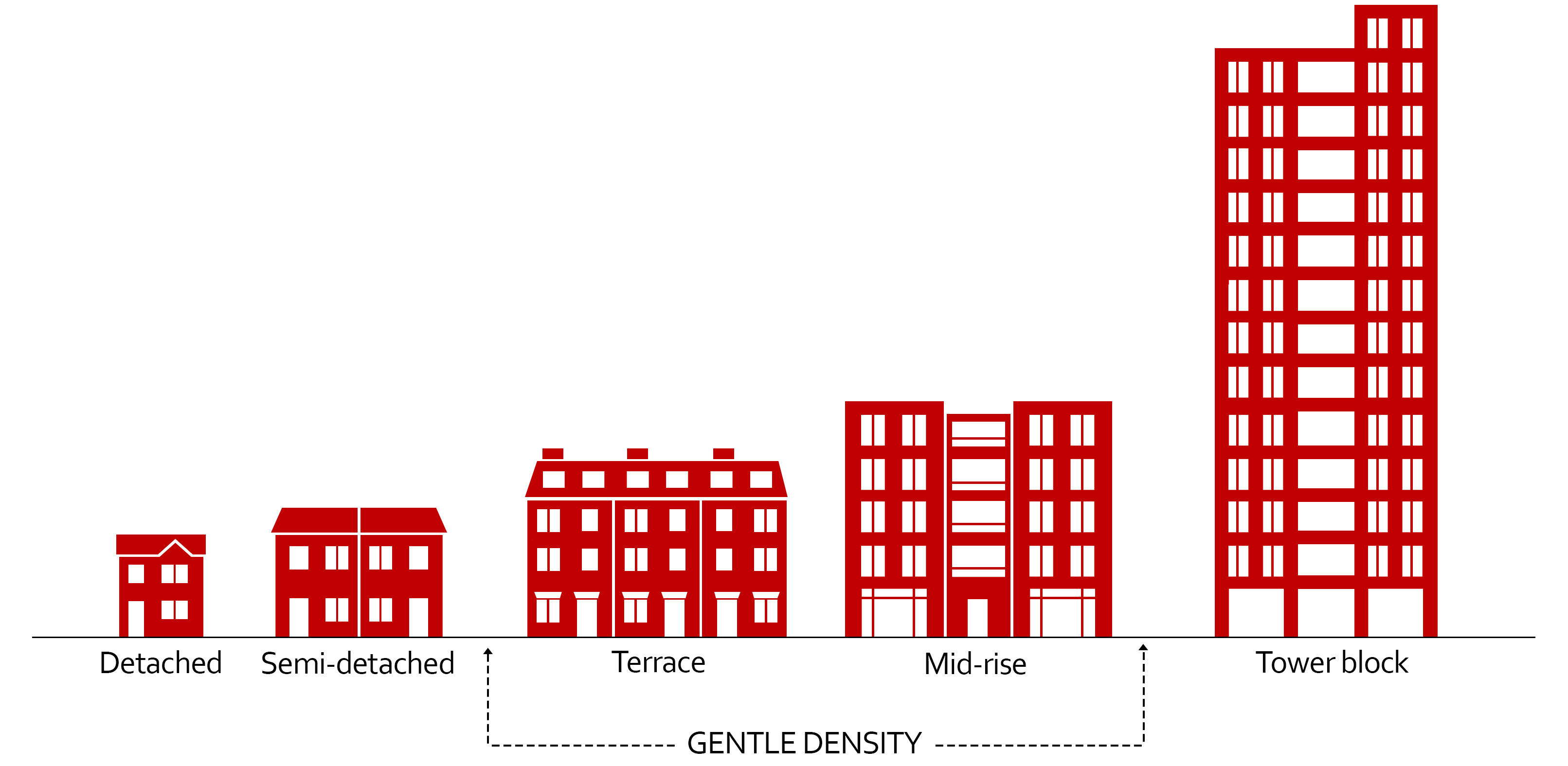
Gentle density helps create vibrant places with populations to support shops, cafés and public transport while still maintaining a sense of privacy. The level of density varies with local context but in Cheshire West and Chester centre we define this as development that is 2 to 6 storeys in height.

The appropriate density for a given development will vary depending on the location of the site and its surroundings. For the purposes of this code, densities are measured in net dwellings per hectare (or dph).

SHOULD

Net density ranges: As set out in 1. Introduction, this design code uses an Area Type based approach to set standards for new developments. The following density standards should be applied to sites, depending on their context:

  • Chester city centre: 70+dph
  • Local centre / High street: 60+dph
  • Urban neighbourhood: 50–70 dph
  • Suburban: 35– 60 dph
  • Village: 25–35 dph
SHOULD

Areas of higher density housing (over 60 dph) should be centred around existing town centres, high streets and railway stations.

SHOULD

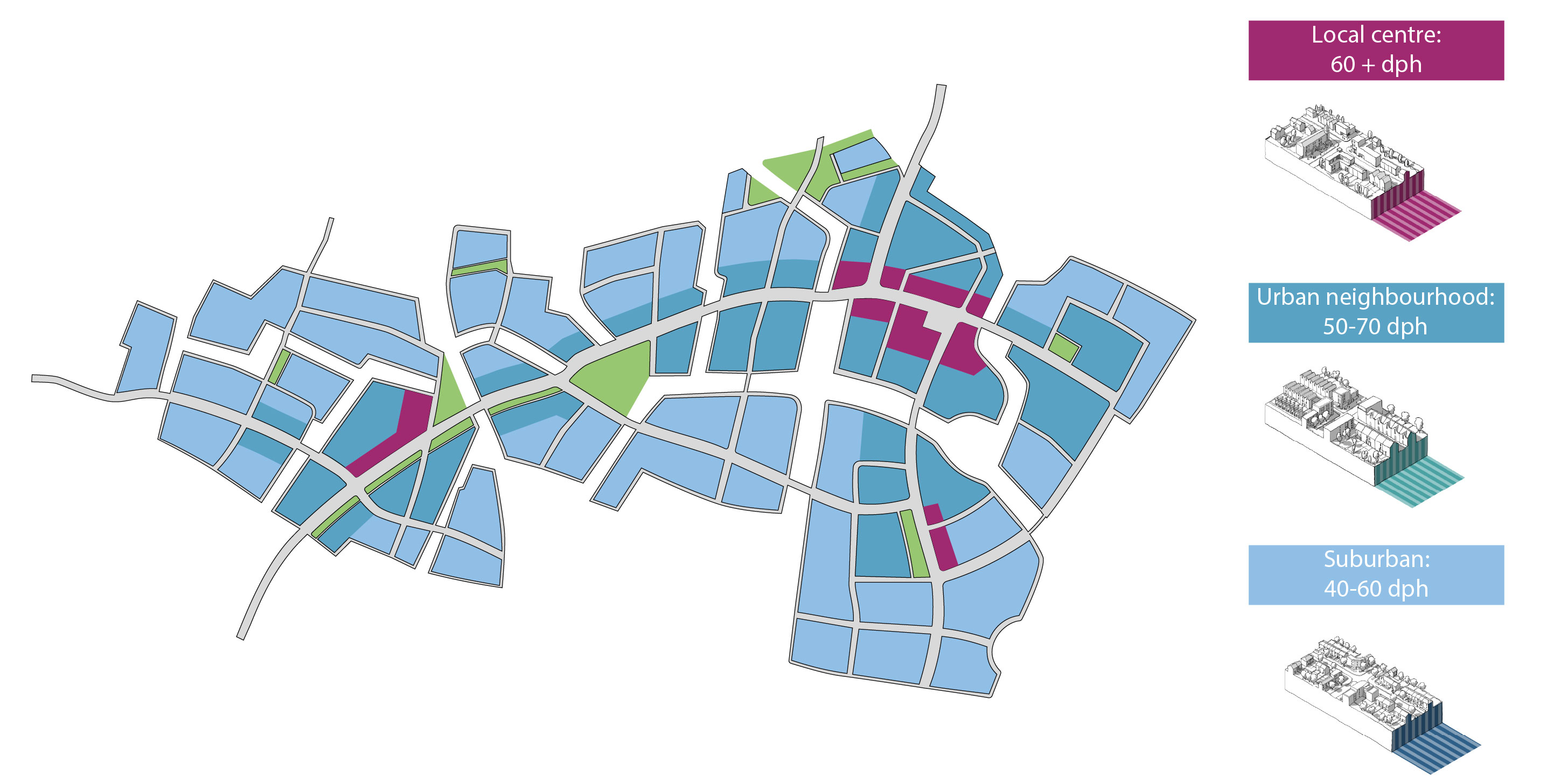
Major developments of over 250 homes are of a sufficient size to include a gradation in densities. They should generally have a denser centre around a 'heart' and/or along primary routes.
Gentle Density image
Fig 5.3 What gentle density means.

PoundburyFigure image
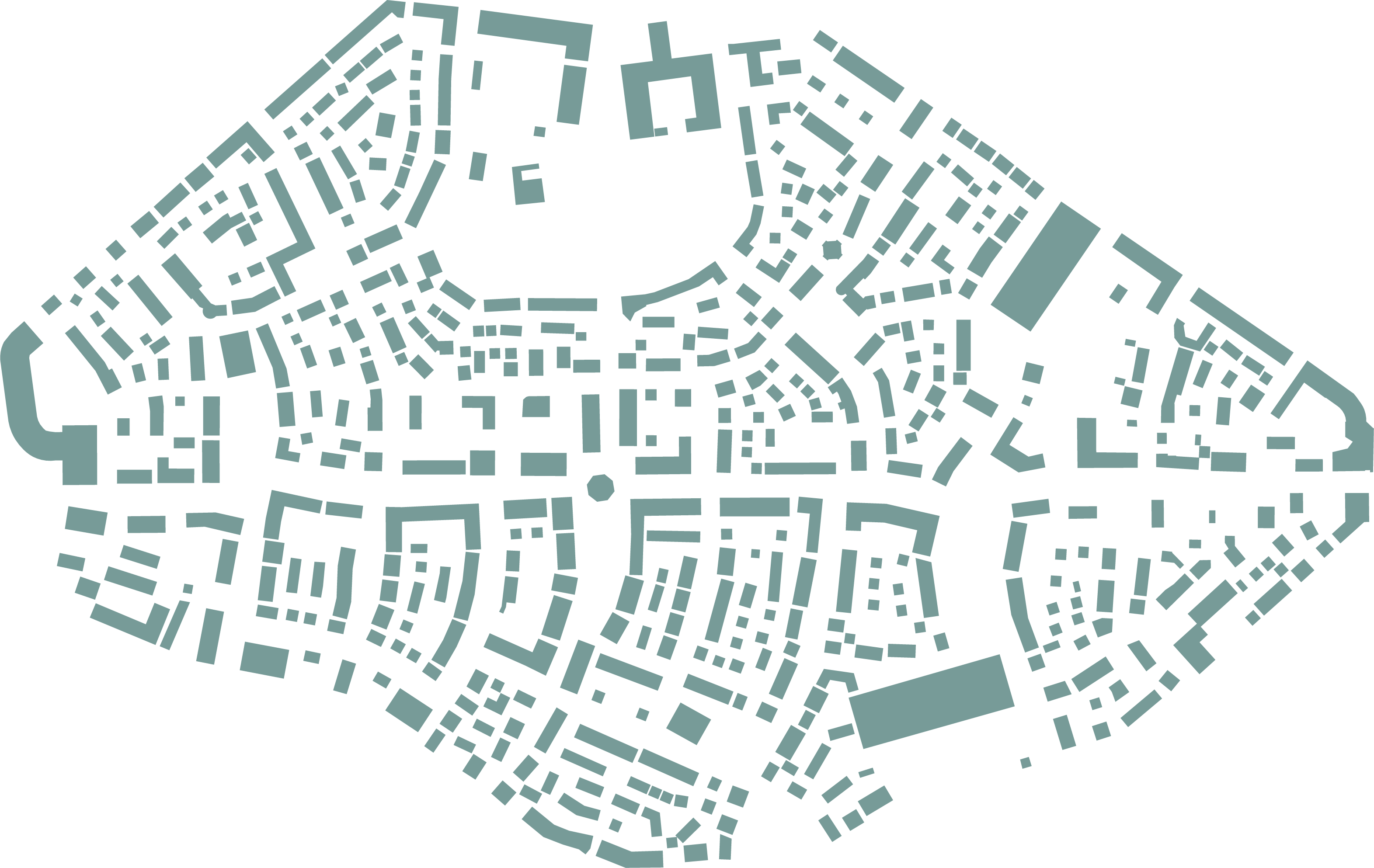
Fig 5.4 "Figure ground plan of Poundbury, Dorchester. A vibrant ‘gentle density’ mixed-use community, delivering 2,700 homes 182 businesses and two schools at an average net density of 58 dph. "

CW&C Density area type application-01 image
Fig 5.5 An example of a major mixed-use development of 1,000 homes with a range of densities.

Figure Grounds - City Centre image
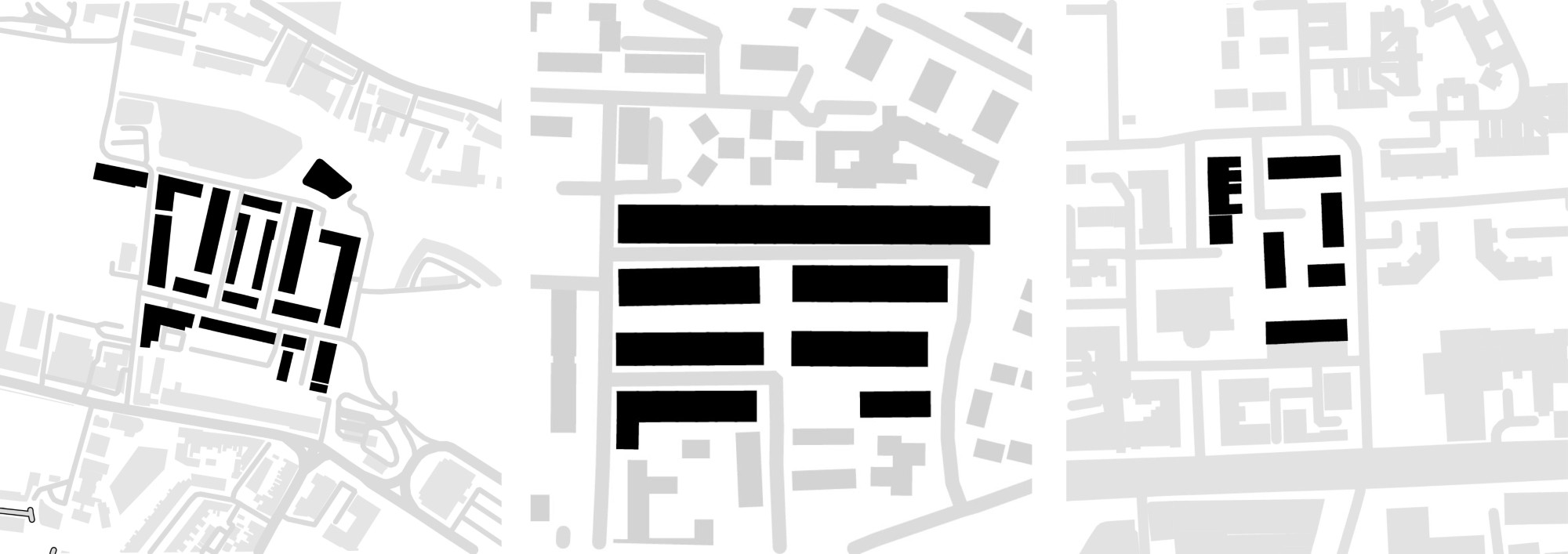
Fig 5.6 Figure grounds of city centre or high street development at densities over 70 dph. Bath Riverside (l) and Goldsmith Street, Norwich (c) and Timekeeper Square, Salford (r).

Figure Grounds - Urban neighbourhood image
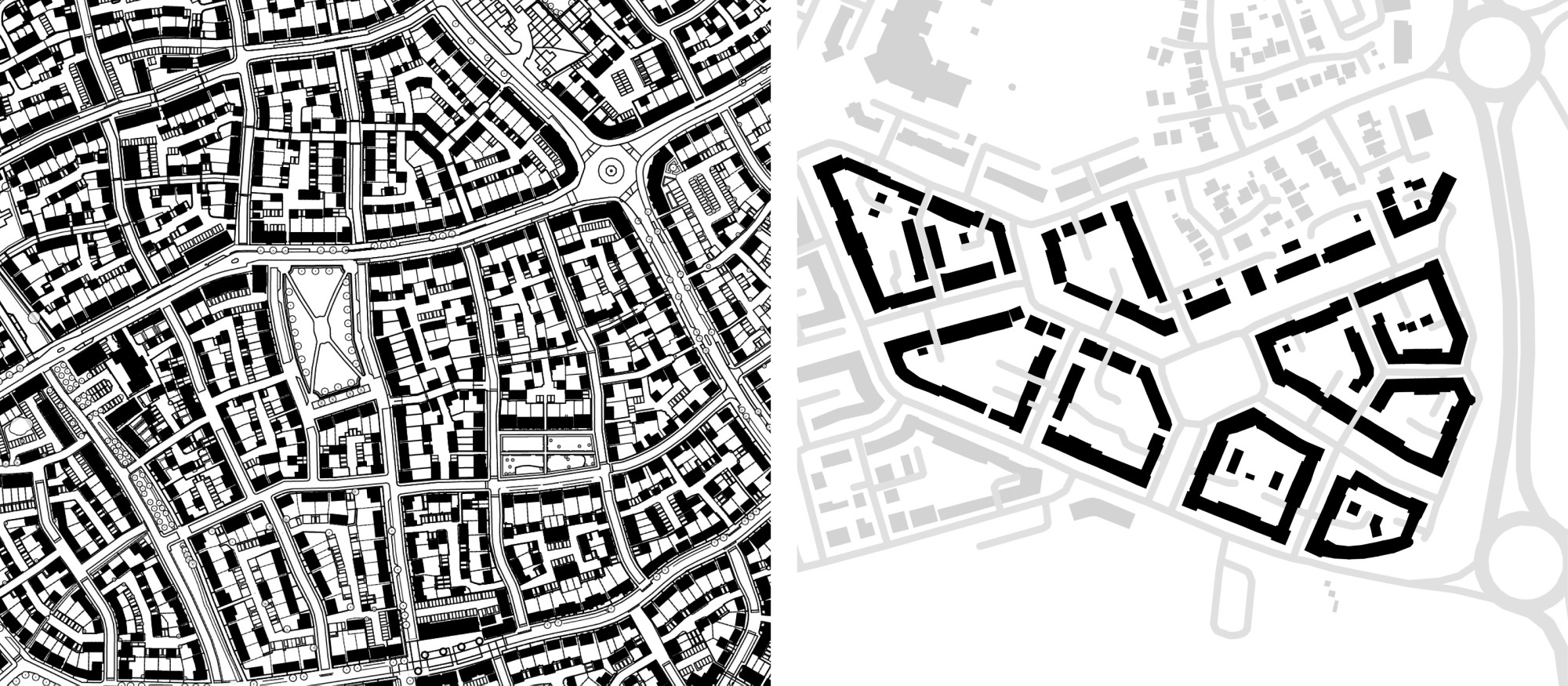
Fig 5.7 Figure grounds of urban neighbourhood developments at densities between 50 - 70 dph. Nansledan High Street, Cornwall (l) and Upton, Northampton (r).

Figure Grounds - Suburbs image
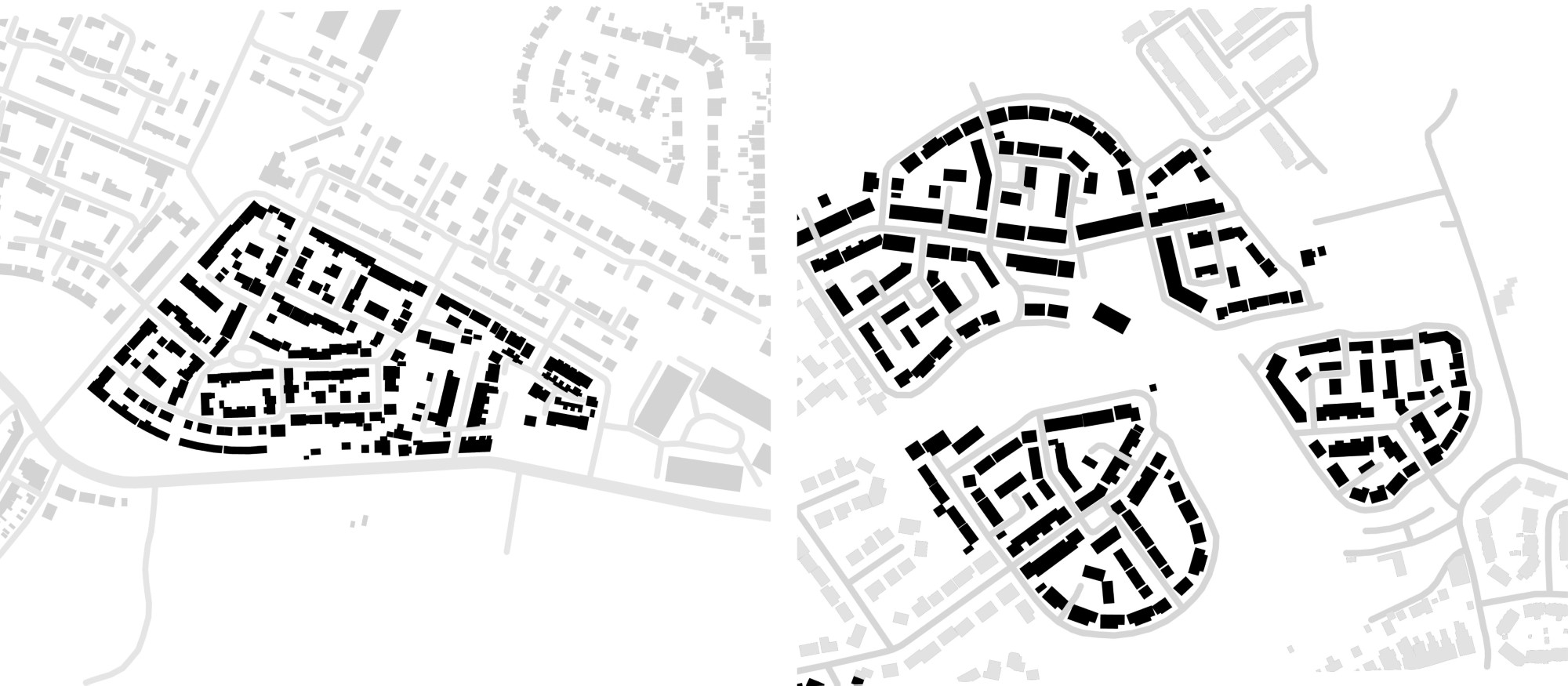
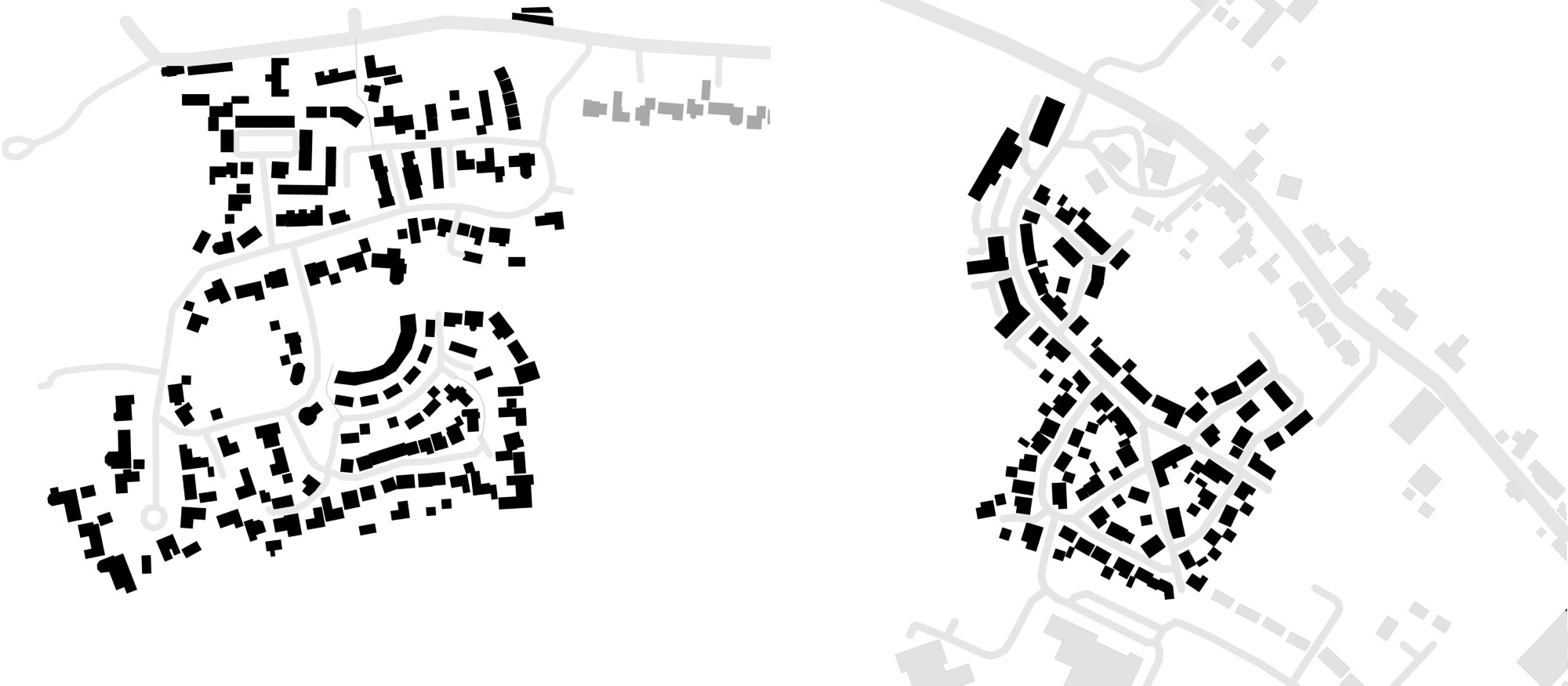
Fig 5.8 Figure grounds of suburban developments at densities between 35 -60 dph. Allerton Bywater Millennium Village, West Yorkshire (l) and Derwenthorpe, York (r).

Figure Grounds - Rural image
Fig 5.9 Figure grounds of rural development at densities between 35-60 dph. Harmston, Lincolnshire (l) and Tisbury, Wiltshire (r).

Gilston density range examples  (to be updated)
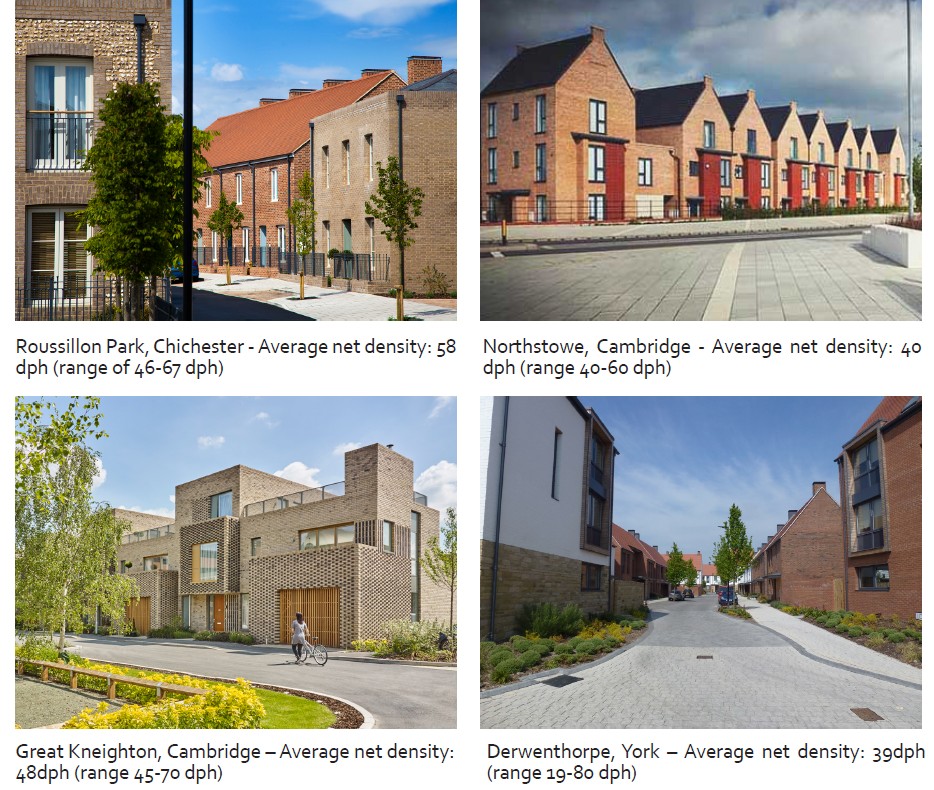
Fig 5.10 These examples demonstrate the principles of ‘gentle density’ in action: attractive homes, on elegant green streets, closer to goods, services and amenities.