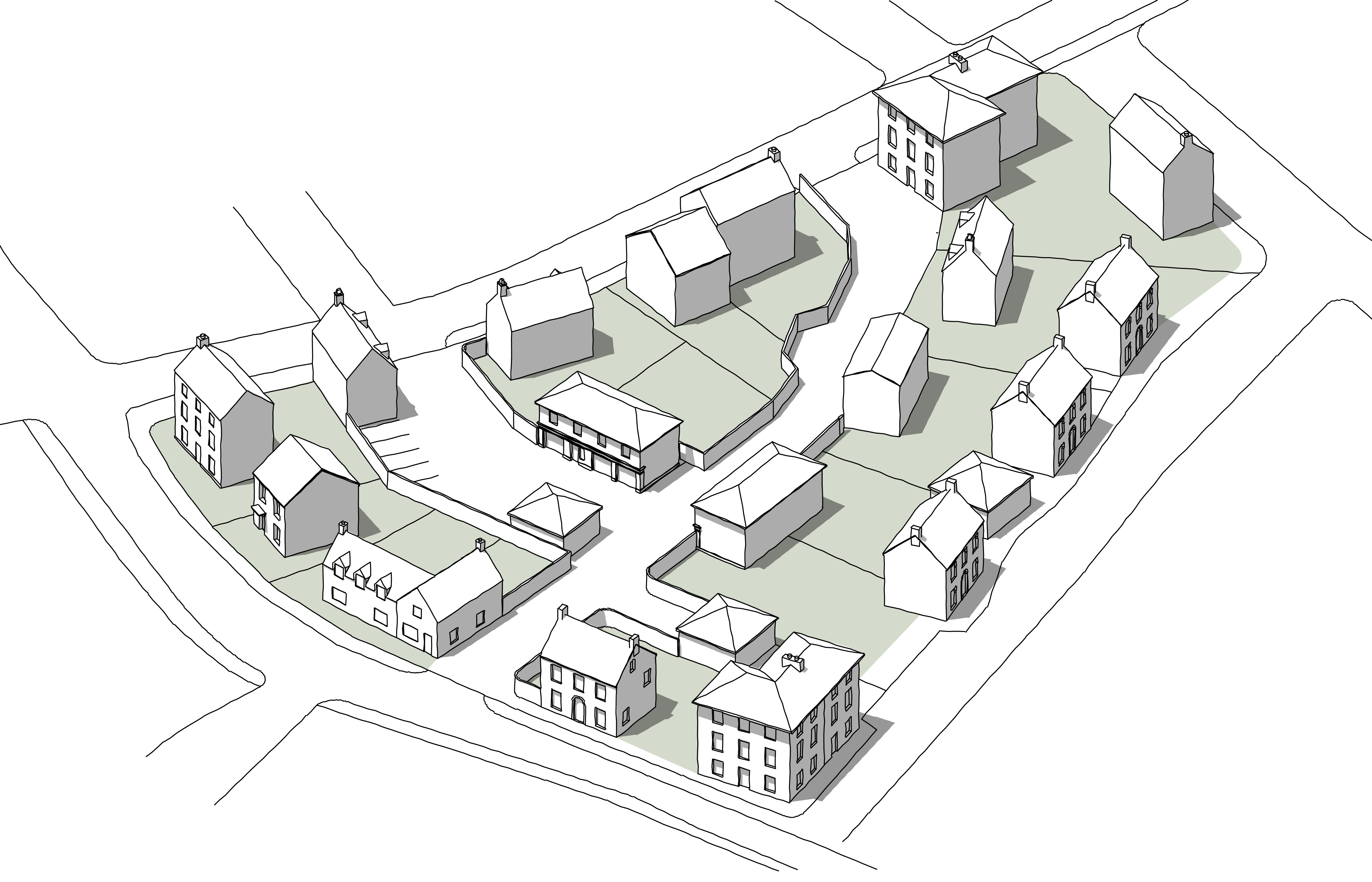
Built Form

5.1.5 Building lines and set backs

Building lines and set backs influences street character, privacy and how buildings relate to the public realm. Set back is the distance between a building and the edge of its plot, usually measured from the back of street or pavement to the building.

SHOULD

Building lines and set backs should respond to area type and context. Town centres, high streets, local centres and urban neighbourhoods should have continuous frontages with set backs typically between 0 to 2m. A suburban or village setting should have a more informal arrangement with a varied frontage and setbacks typically between 2 and 6m.
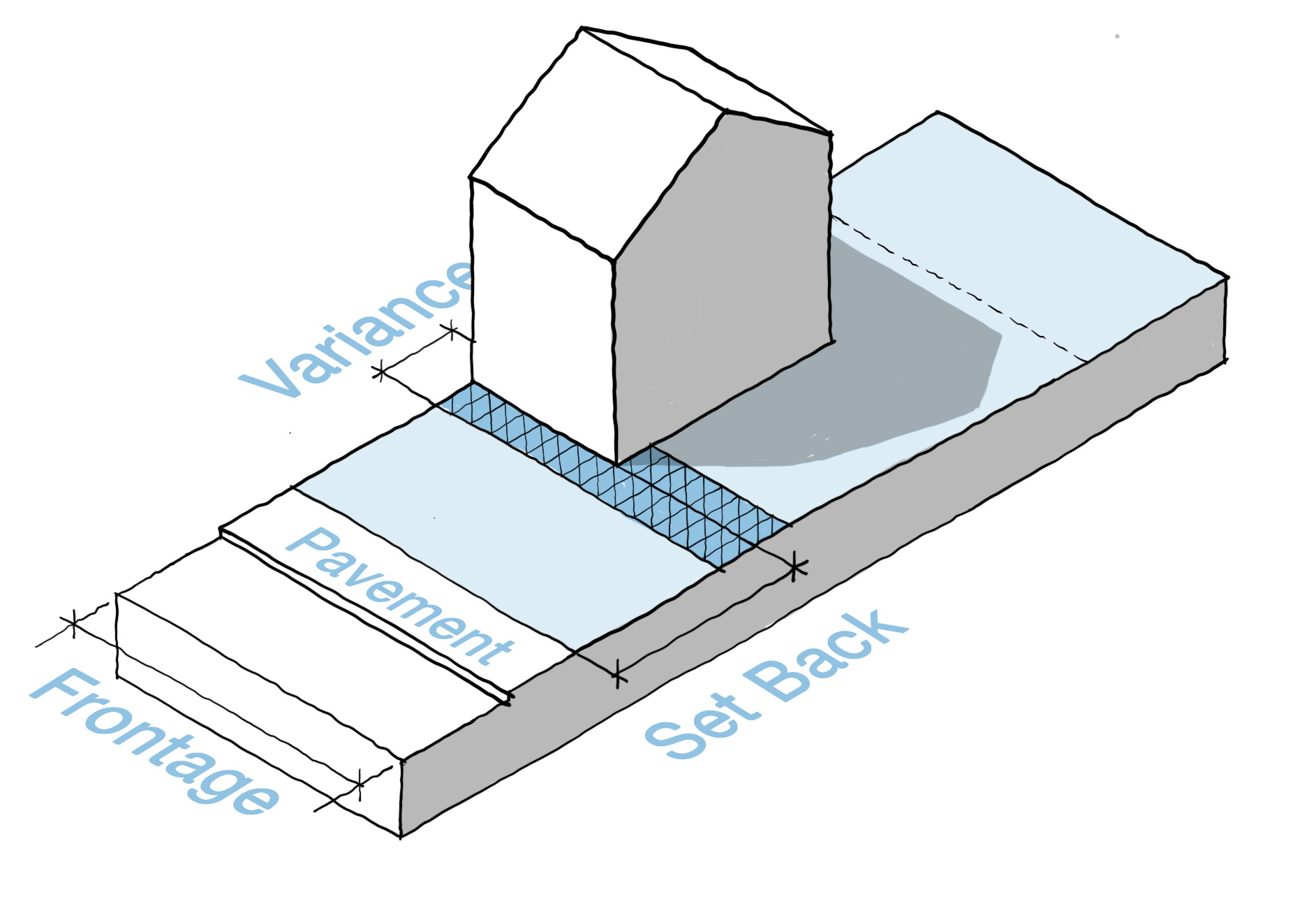
Built Form - Set-back (NMDC) image
Fig 5.16 Set back is the distance between edge of the street and the building façade (Credit: NMDC).

Buildingline2 image

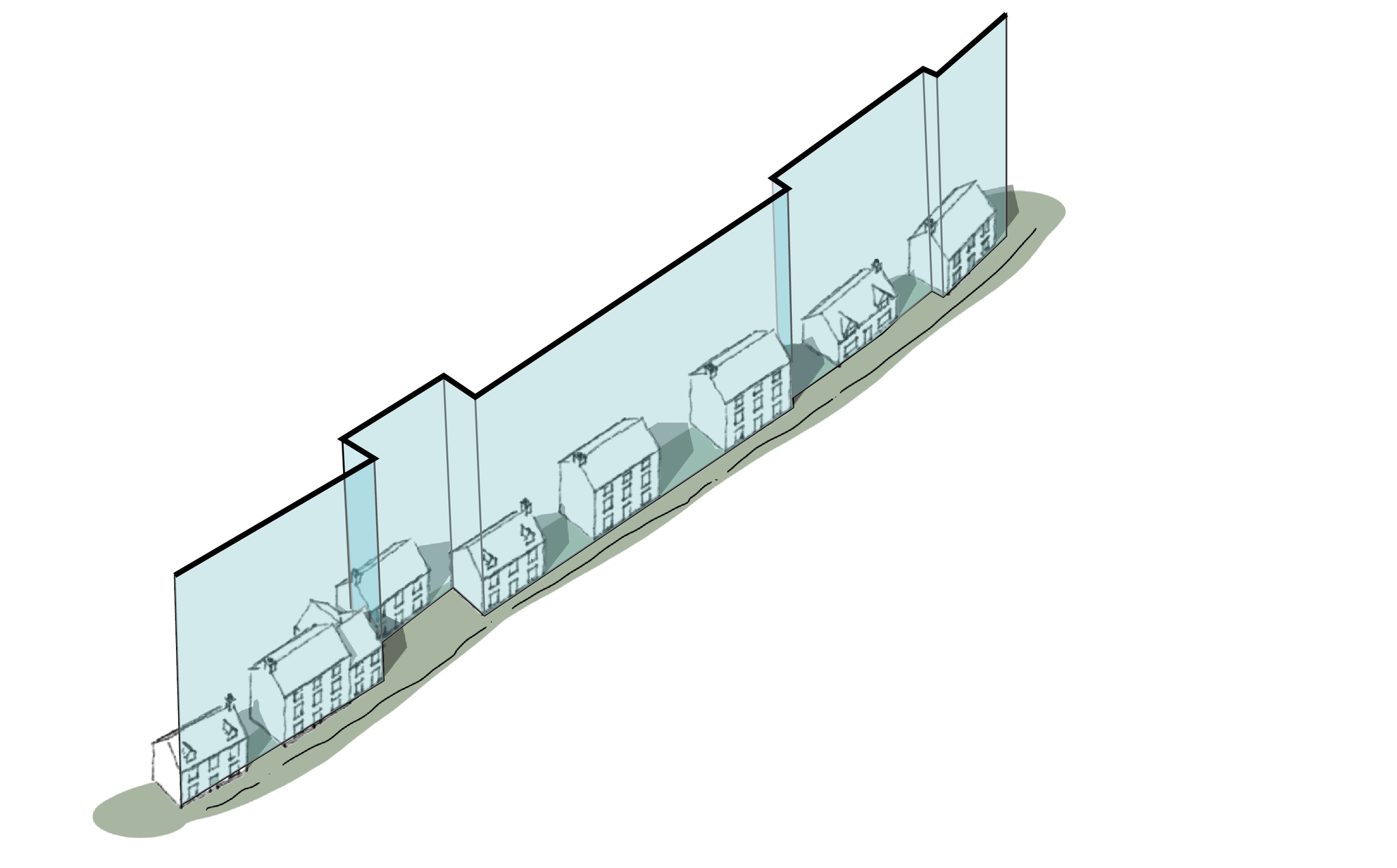
Building lines and set backs image
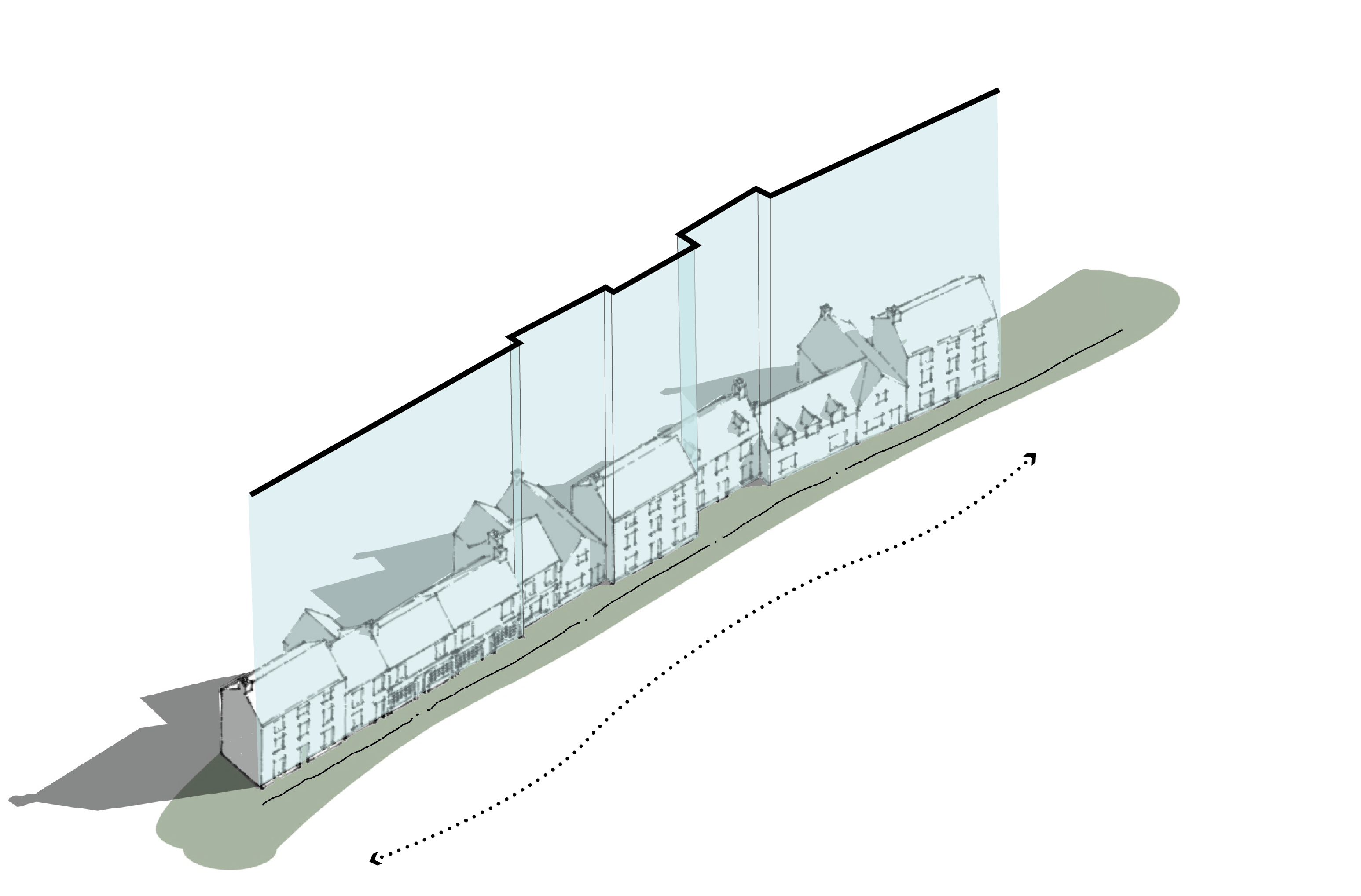
Fig 5.17 An example of a street in a high street or urban neighbourhood (top) with minimal variation in the building line and continuous frontage. The suburban or village street (bottom) has mixed set backs and greater distances between homes creating a varied frontage.

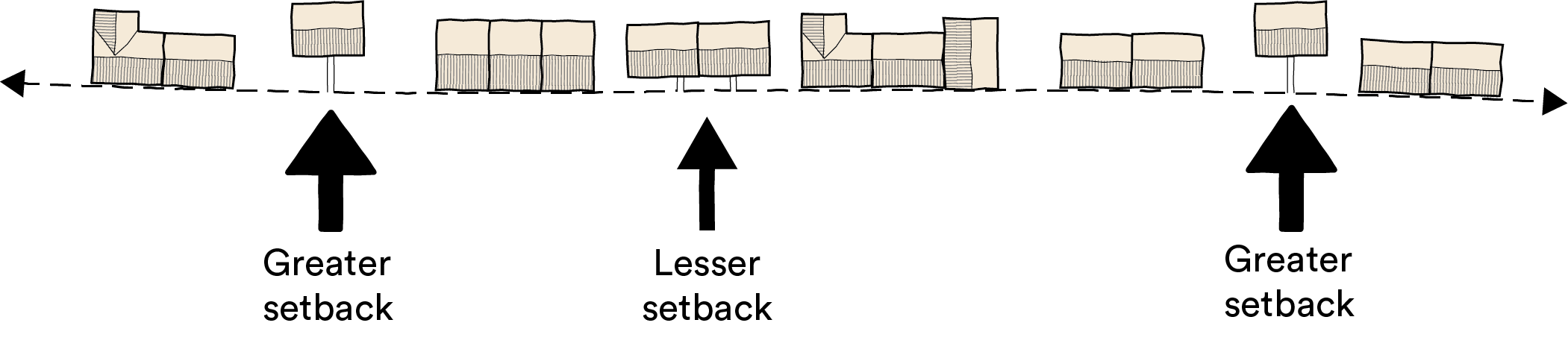
Setbacks image
Fig 5.18 Varied set backs and building line can help create a varied and organic layout that is in keeping with a historic high street or village context.

Formal Block image
Fig 5.19 Diagram of a 'formal' residential block with a continuous frontage, regular building arrangement and uniform building set backs.

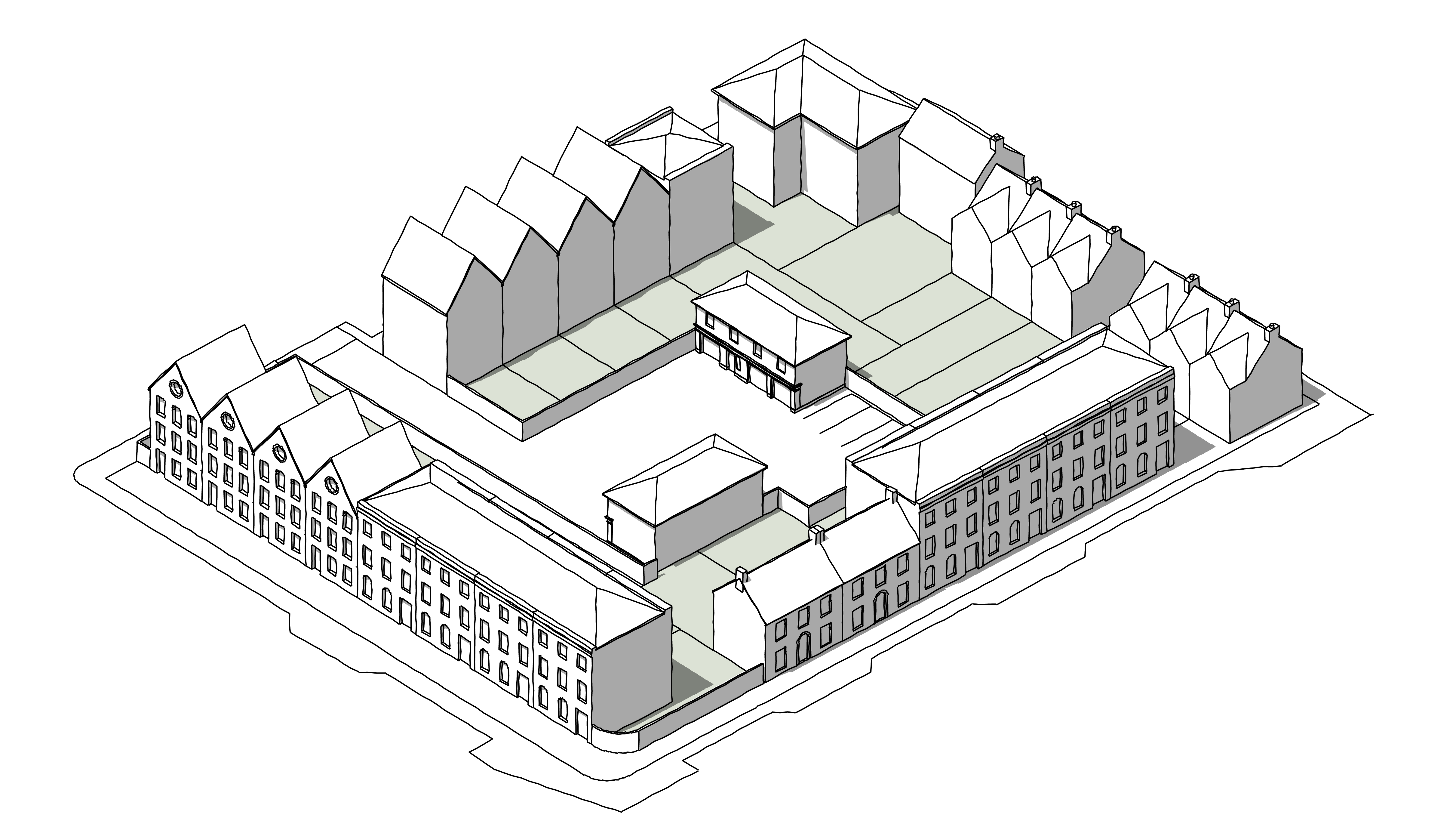
Semi Formal Block image
Fig 5.20 Diagram of a 'semi-formal' residential block with varied building setbacks and an internal mews court.

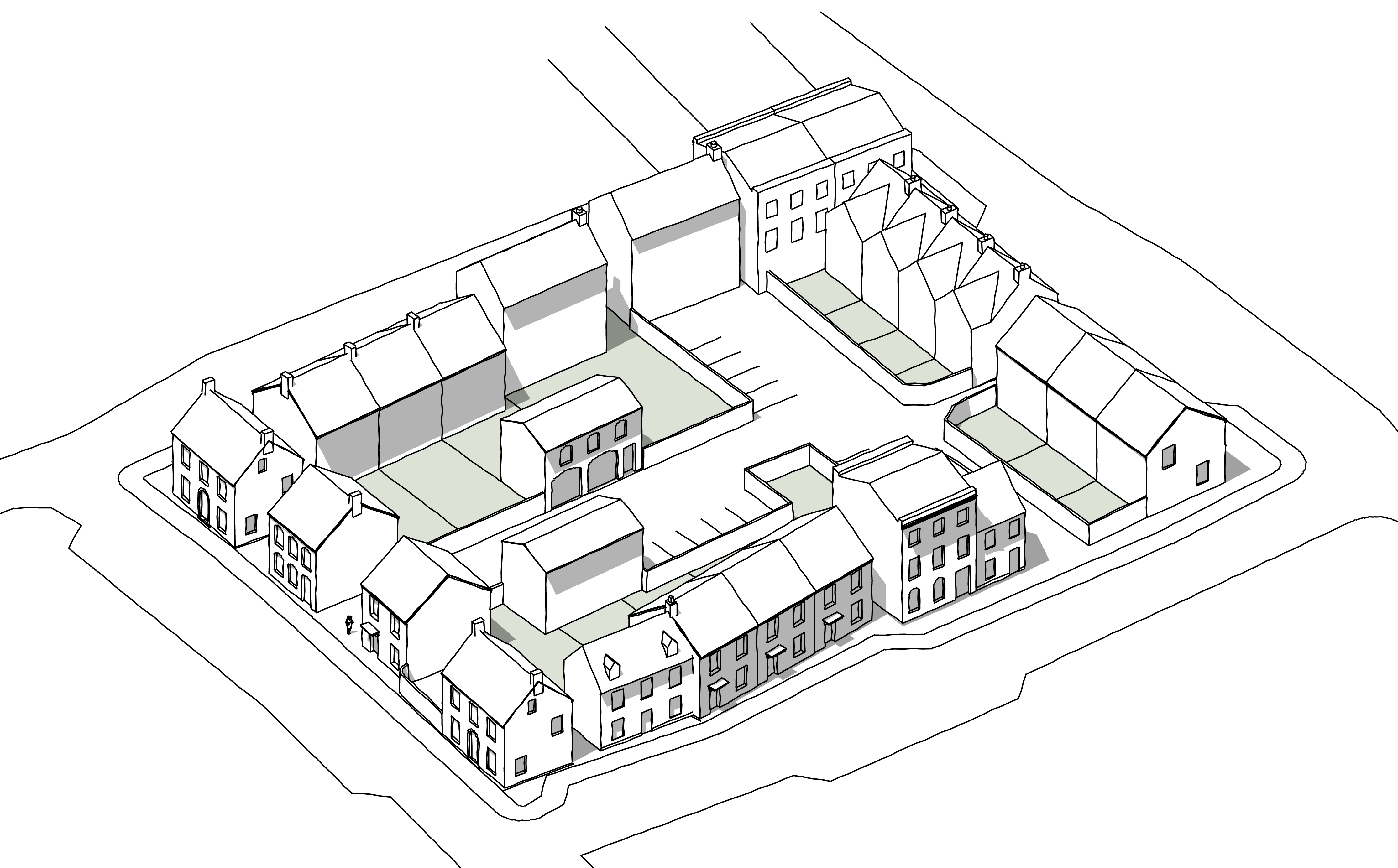
Informal Block image
Fig 5.21 Diagram of an 'informal' residential block with varied building set backs and looser arrangement of buildings.