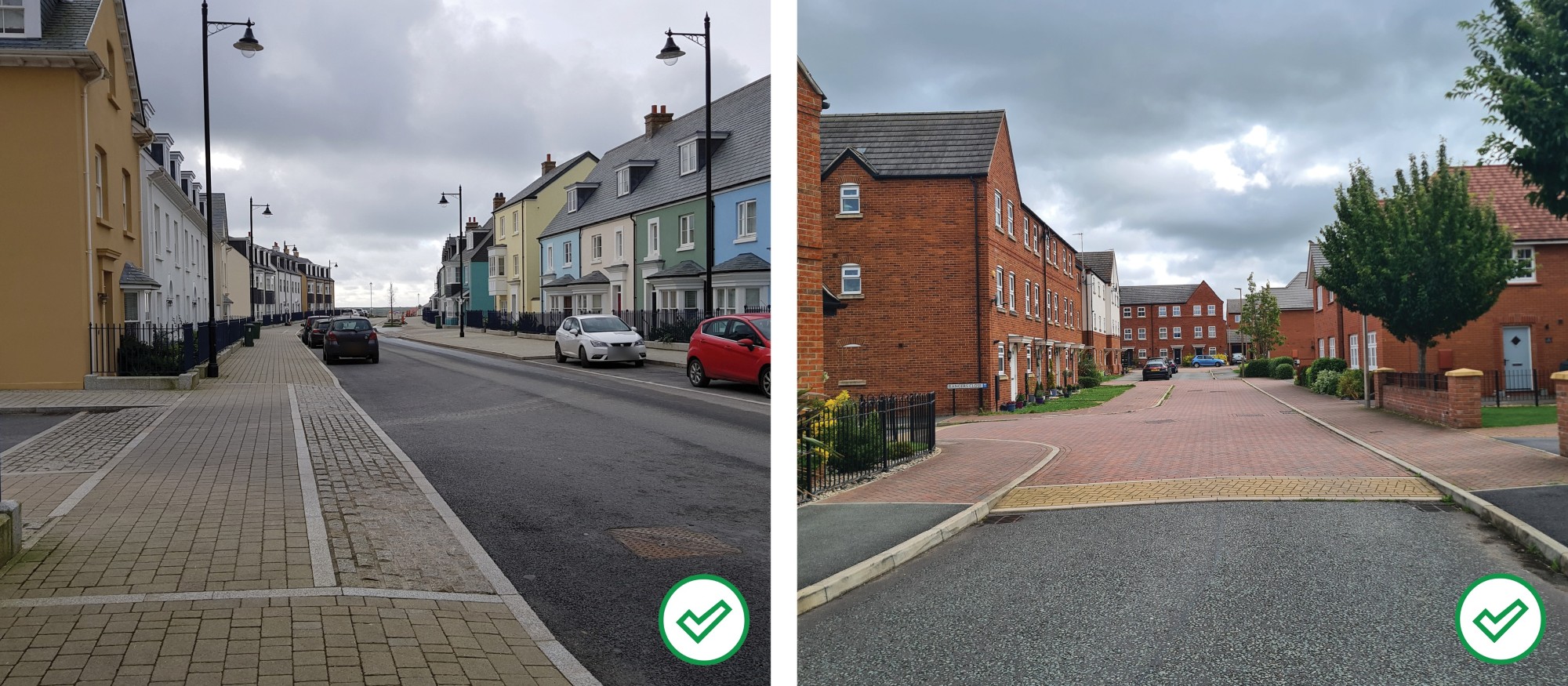
3.4.5 Traffic calming and speed control
The Street Typologies approach keeps speeds low and encourages better driver behaviour through good street design, rather than enforcement measures.
The following traffic calming hierarchy must be adhered to:
1. The street must be designed in a way that intrinsically encourages low speeds and careful, considerate driving. See 'Intrinsic Measures' section below
2. Where intrinsic measures are insufficient to deliver the slow traffic speeds required, horizontal deflections and other features that reduce speed may be introduced. See 'Horizontal Deflections' section below.
3. Vertical deflections (e.g. speed humps) should only be introduced where all other options have been exhausted. See 'Vertical Deflections' section below.
Signage and road markings only are not considered an effective traffic calming solution, and should only be relied on in combination with the above.
Residential streets should avoid an unrestrained length (a length of street without the above features) of more than 60m.
Intrinsic Measures
These are street design measures that make driving slowly, carefully, and considerately second nature. Driving at speed should feel uncomfortable.
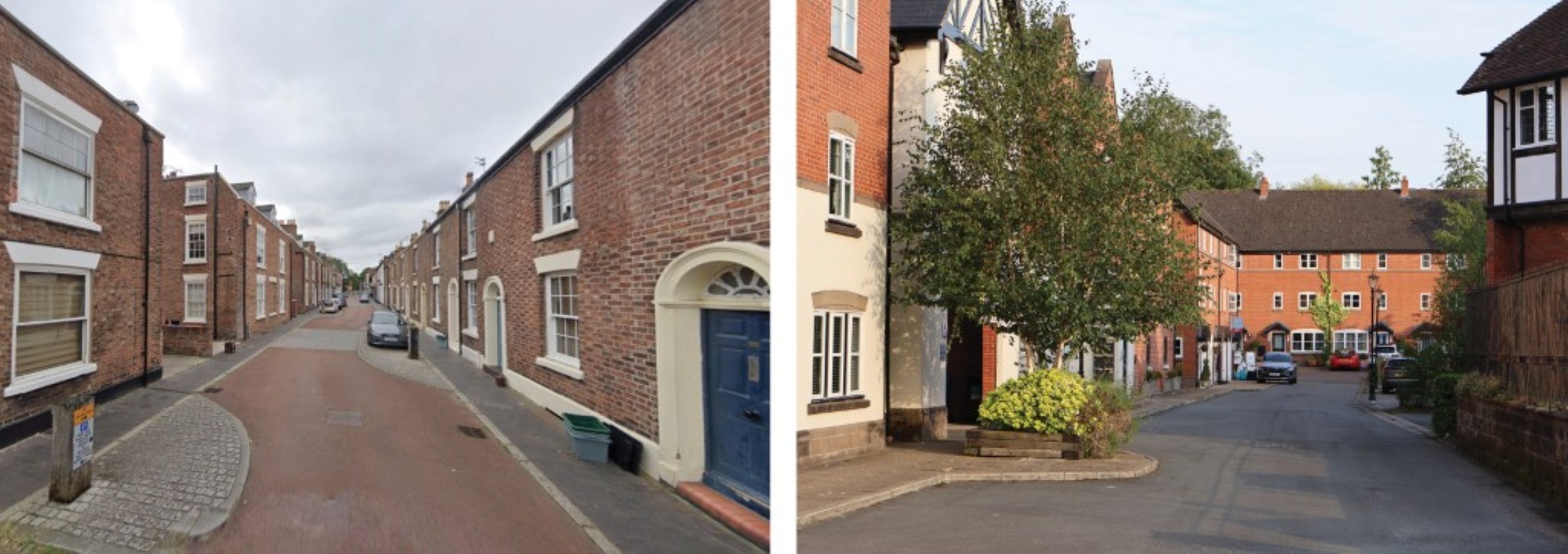
Long straight alignments should be avoided, as reducing forward visibility is a very effective method of reducing speeds. This can be achieved through changes in direction, and short staggers and junctions.
The need to design alignments for slower speeds should not come at the expense of permeability, walkability, and good urban design. Excessively windy streets, with poor relation to the building line, should be avoided.
Features such as on street parking and street trees that create 'edge friction' should be incorporated.
Centre line markings could be omitted from Principal Streets (Type 1.A) or existing carriageways 6.5m wide or under, and where the speed limit is less than 30 mph.
Other features could be used to help visually narrow the street, such as:
- Edge markings
- A wide channel laid in a different material
- Bringing the building line in to create a greater sense of enclosure.
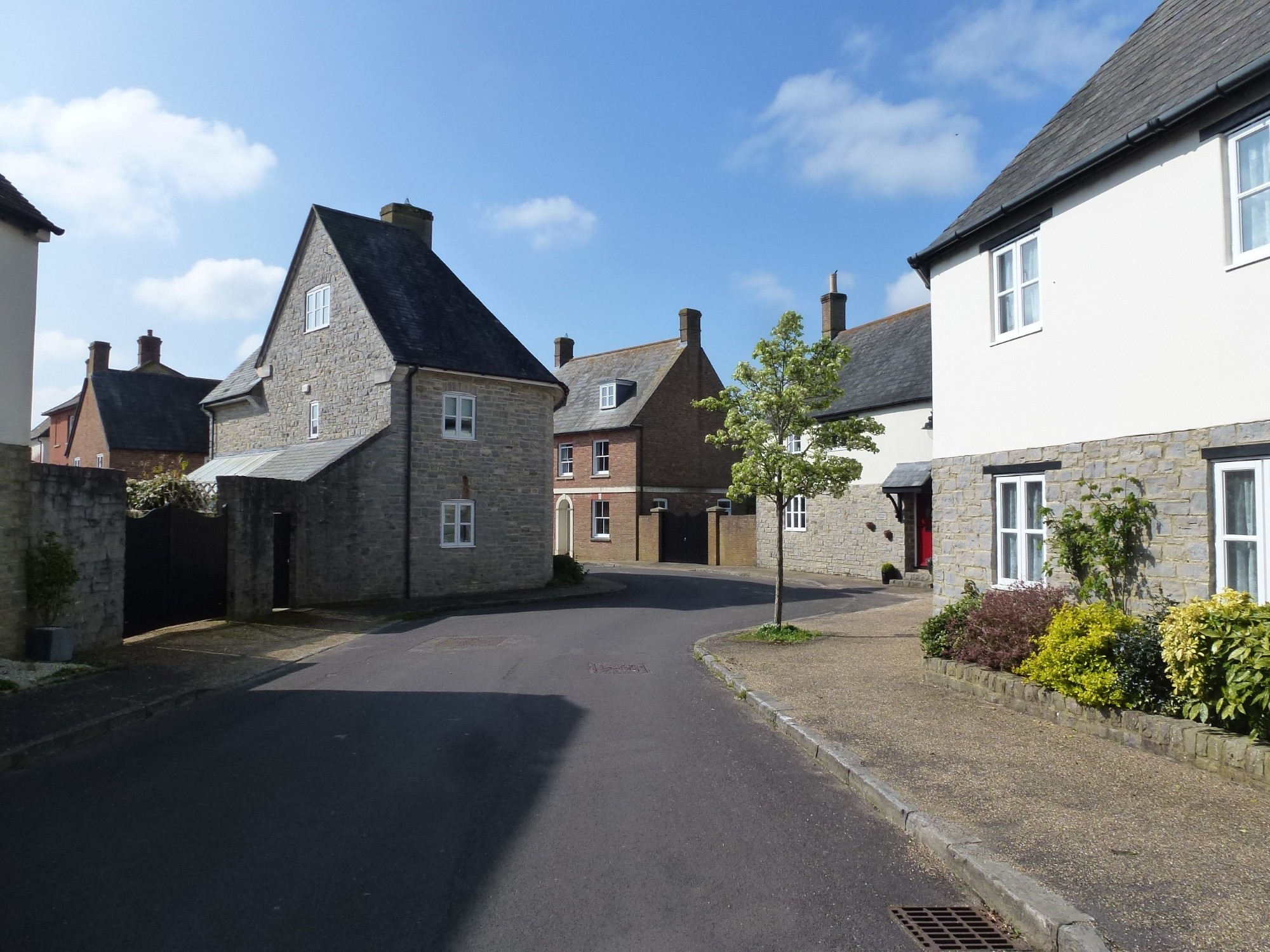
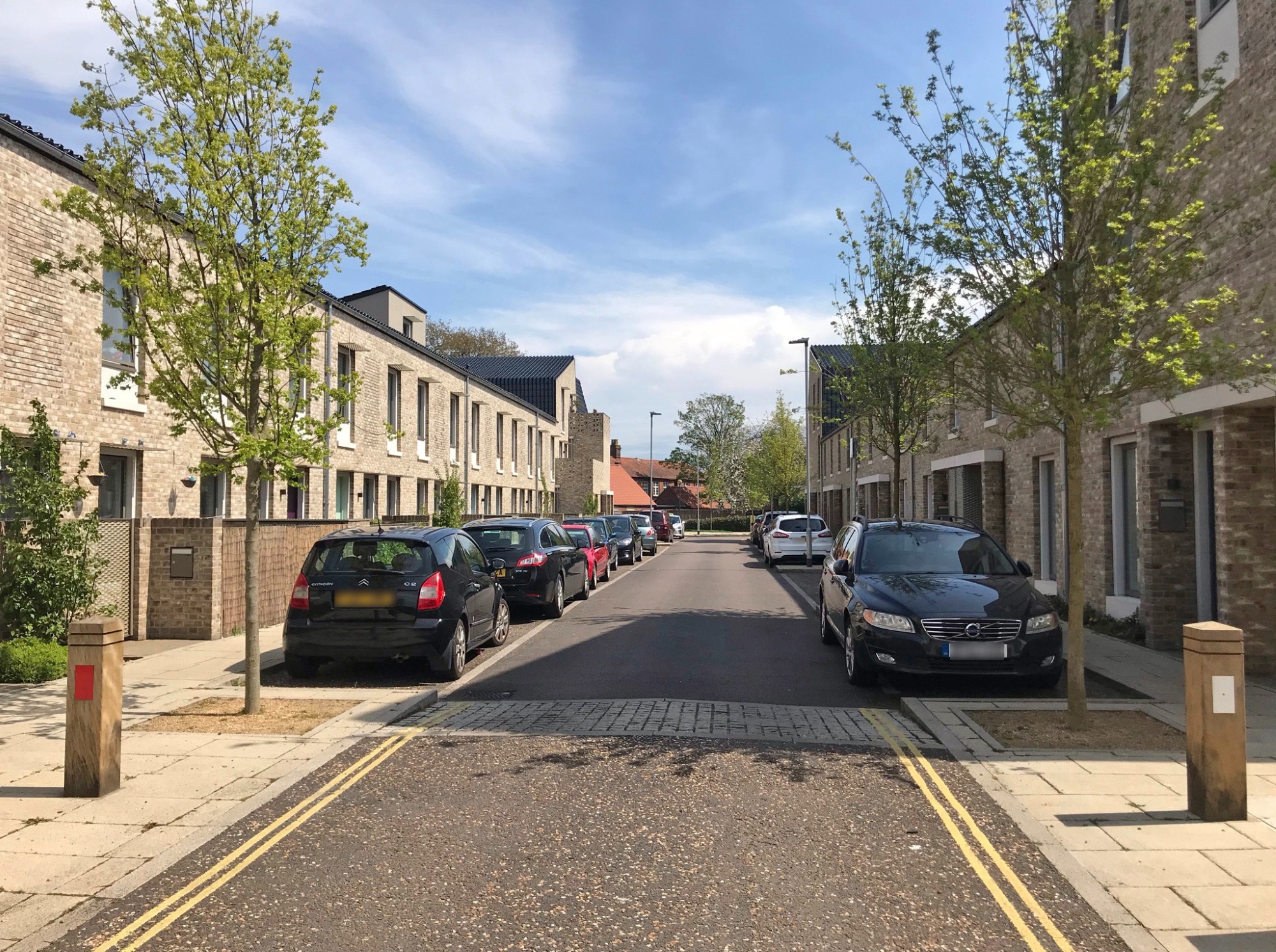
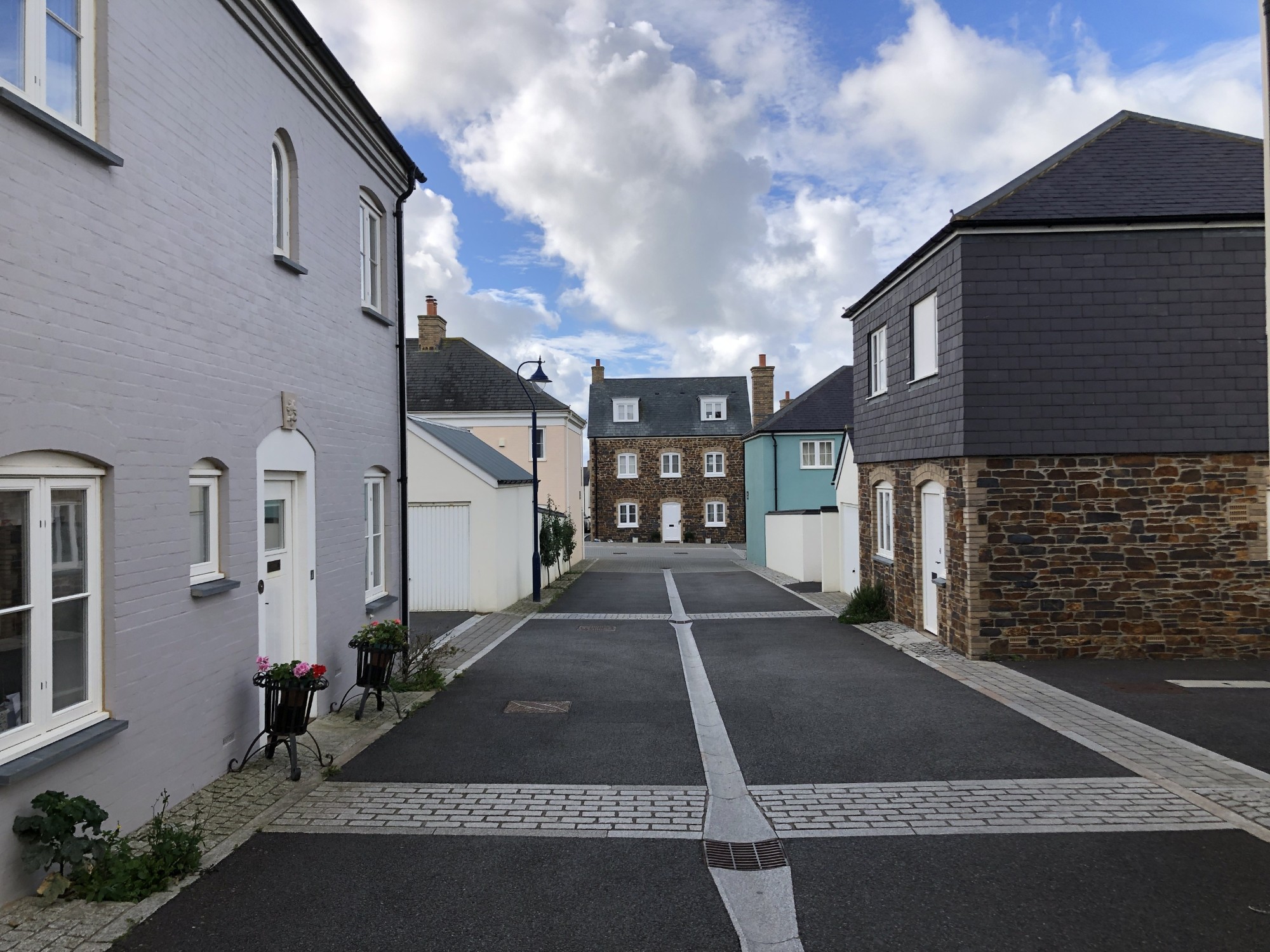
Detailed requirements for speed control measures
The following rules relate to the design of traffic calming measures for both new streets and retrofit schemes, including Section 278 works.
Where horizonal and vertical deflections are required, they must be regularly spaced:
- An optimum spacing of 60-70m is recommended in 20 mph zones.
- For 30 mph zones spacing must be less than 100m.
With the exception of Principal streets, all new residential streets must have a maximum speed limit of 20mph. Design speeds must be in accordance with the street typologies in Section 4.3.
Horizontal deflections
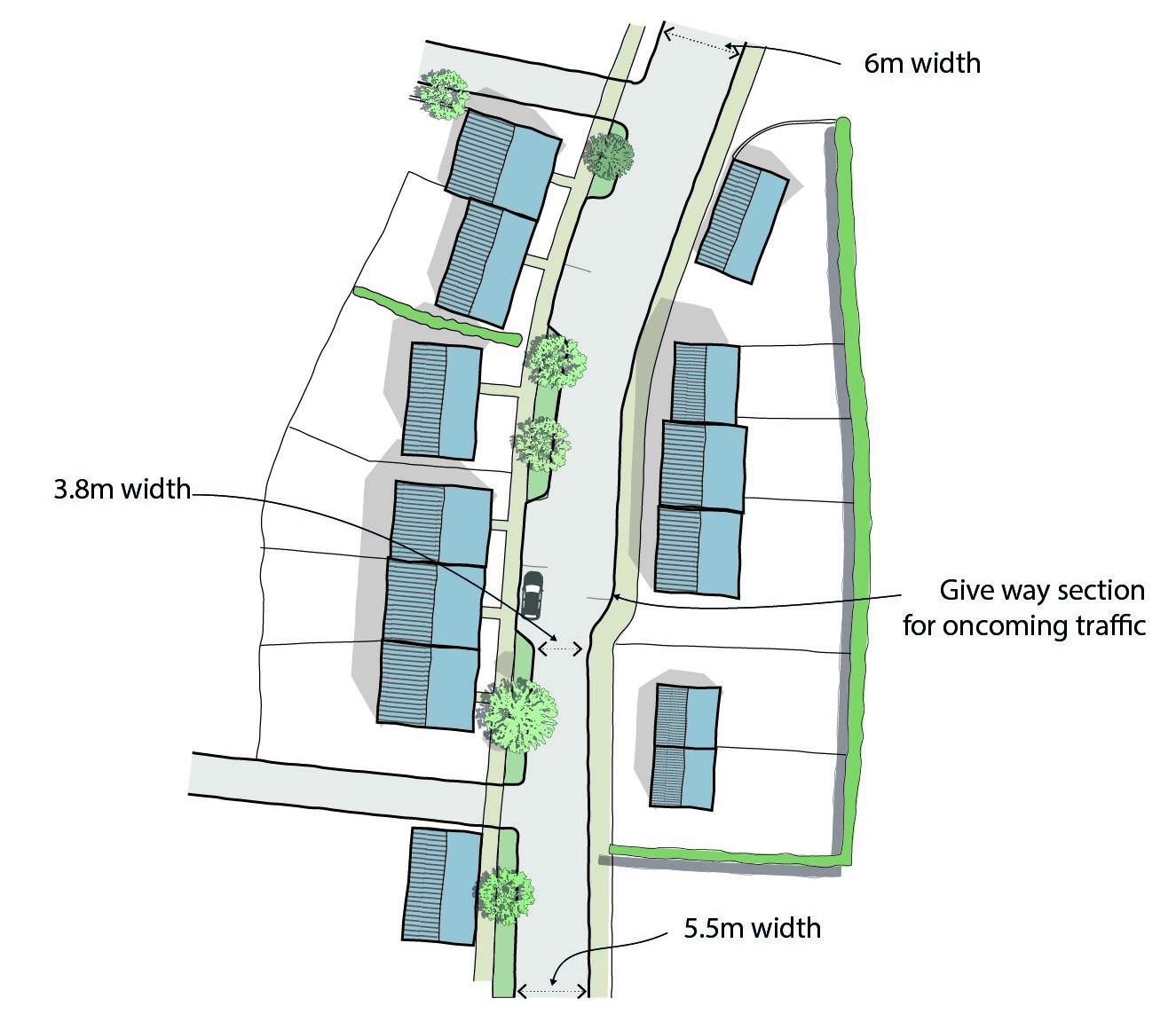
This includes street narrowing features, such as build outs for trees or SuDS, regular spacing of junctions and crossings and central islands. Most of these features will be more effective with the addition of vertical deflection measures, such as raised table crossings
A cycle bypass must be provided for pinch points between 3.2m and 3.9m wide, as drivers may try to overtake cyclists despite there being too little space.
On shared or pedestrian priority streets, street furniture and planting should be used to create deflections in the effective vehicle paths and encourage very low speeds.
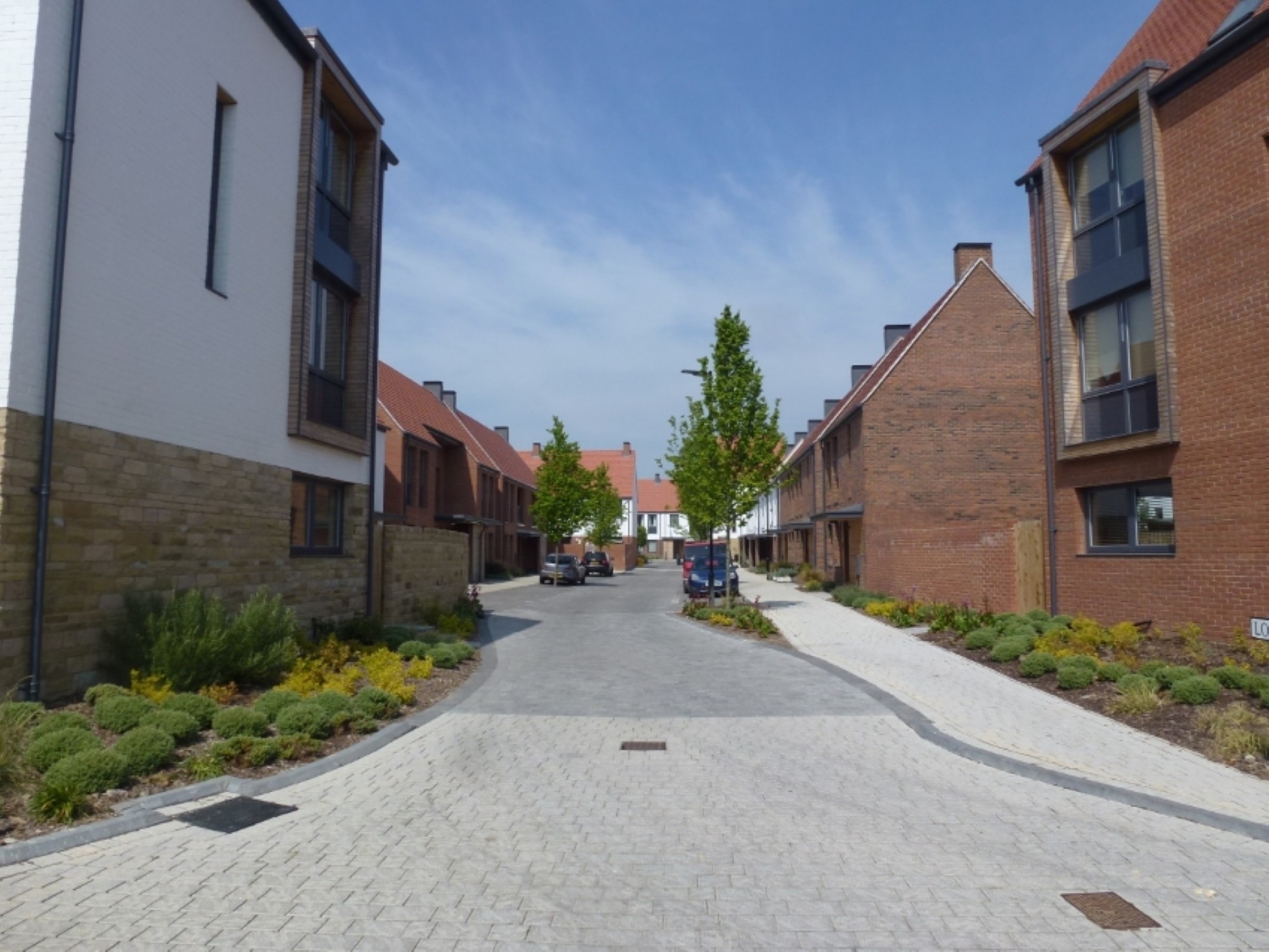
Build outs, where the kerb line is brought into the carriageway to narrow it, should incorporate greenery, ideally street trees. This can include SuDS features and low level planting.
Any narrowing, such as pinch points, could be combined with a raised table to provide additional speed control.
Vertical deflections
These are the tools of last resort for speed control, but can be used in conjunction with other measures.
Any vertical deflection features, including rumble strips, should incorporate a gap or formal bypass for cycles. This should be provided in a manner that can be easily cleansed alongside the rest of the carriageway.
Except where cycle lanes are provided, ramps and humps should have a sinusoidal profile (S-shaped) to accomodate cyclists
Vertical deflections (raised tables) could also be suitable on crossings and junctions. These are covered in section 4.5 of this Code.