
3.4.9 Cycle infrastructure requirements
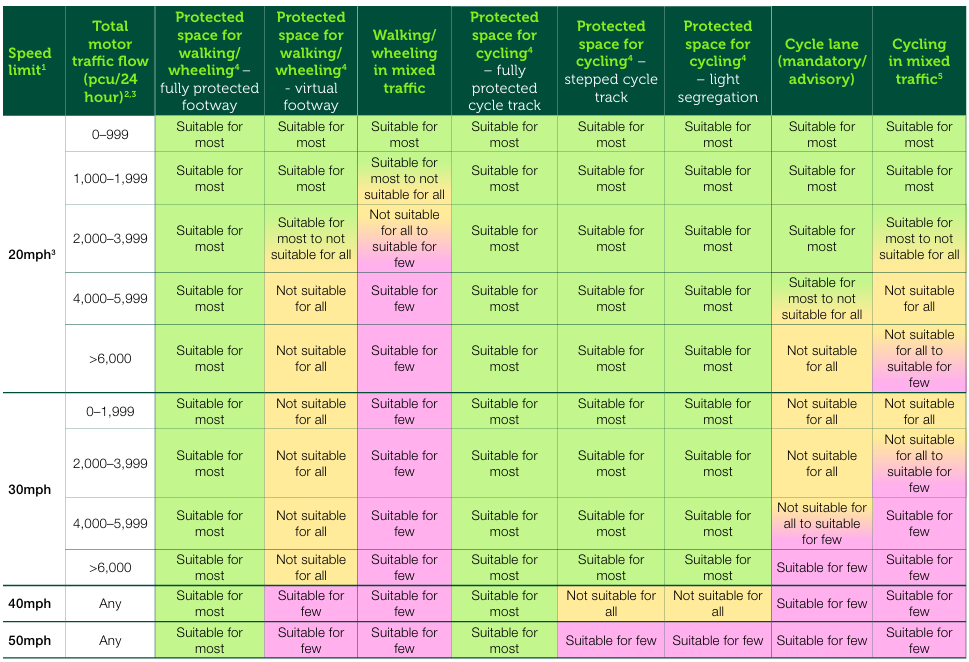
The level of cycle infrastructure required is based on the speed and traffic volume of the street. Street design must meet the requirements set out in Active Travel England's Rural Design Guidance. copied below. This replaces Figure 4.1 of LTN 1/20.
All streets with a design speed of 30mph or above must include segregated cycle lanes.
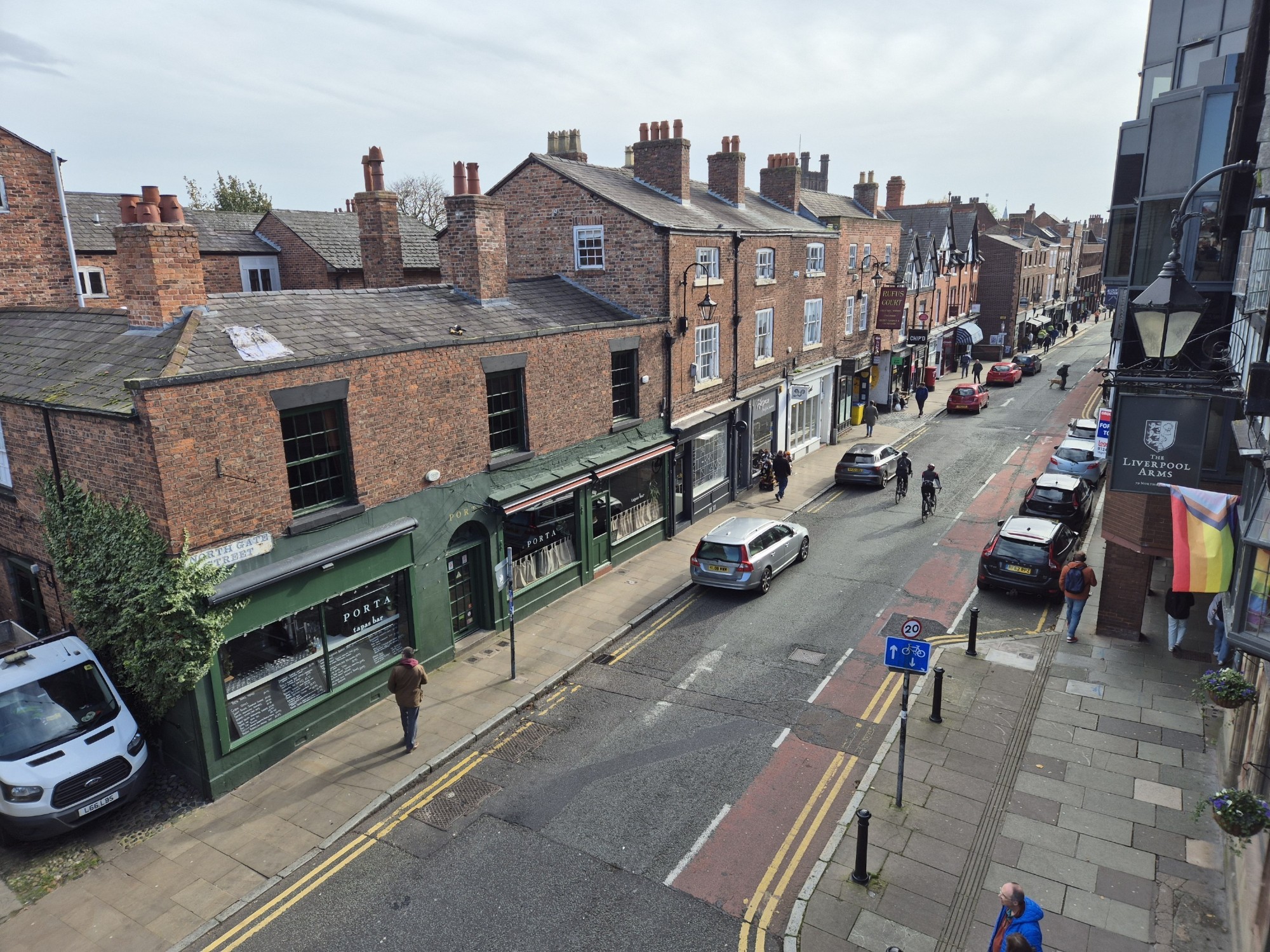
New one-way streets must allow contraflow cycling, except where there is separate cycle provision such as segregated cycle lanes. The minimum one-way street width for contraflow must be 4.0m
Segregated cycle lanes
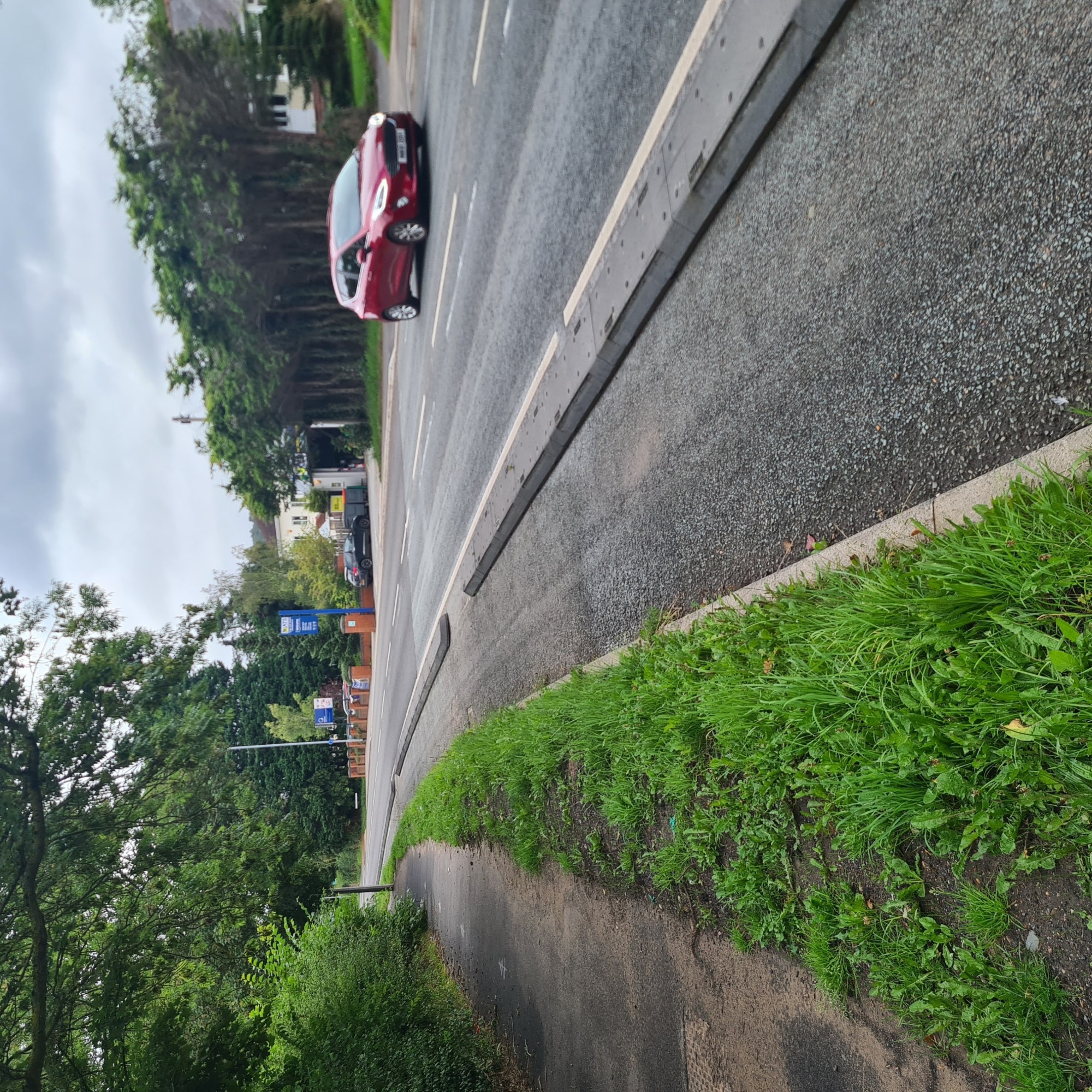
Where traffic speeds and volumes mean cycling in mixed traffic conditions is unsafe, provision of segregated cycle infrastructure, protected from motor traffic, is required. The Council promotes two types of segregation:
- Full height kerb - These should normally be designed at carriageway level, with full height kerb separation on both sides and a raised buffer between the track and the carriageway.
- Stepped cycle track - These should be set between pavement level and carriageway level, separated by low kerb). A buffer zone will be added to the width of the cycle track when along side parking or the carriageway.
Shared cycle and pedestrian routes should not be used in built up areas. However, where they are necessary, they must be a minimum of 4.0m wide and include an upstand to physically separate the two modes.
Cycle Lane Design
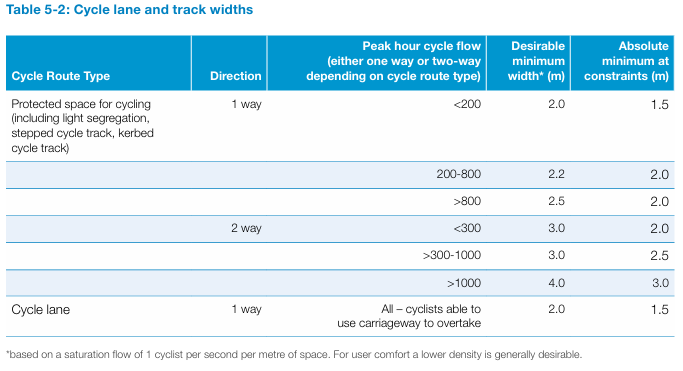
The following rules set out the minimum widths of cycle lanes and tracks.
Cycle infrastructure shall be designed in accordance with Table 5-2 of LTN 1/20. One-way protected cycle tracks shall be 2.0m-2.5m wide and two-way protected cycle tracks shall be 3.0m-4.0m wide, depending on forecast cycle flows. Absolute minimum widths must only be used in specific stretches or pinch points where site constraints have been demonstrated.
Full height kerbs for segregated tracks should be between 75mm - 125mm.
Low kerbs separating stepped cycle tracks must be between 25mm - 75mm and must be splayed (angled) in profile.
The following buffer widths must apply when:
0mm - Alongside verges and footways
500mm - Alongside parking spaces
1,500mm - Alongside accessible parking spaces
500mm - Alongside the carriageway, up to 30mph
1,000mm - Alongside the carriageway, up to 40mph
Buffer zones, including grass verges, on full‑height cycle tracks should be laid in a different material, such as block paving, to visually narrow the cycle track.