3.4.6 Turning heads
While layouts should avoid cul-de-sacs as far as is possible, it is recognised that this is not always feasible and that turning heads may be required, such as on small infill sites where it is not possible to create more than one site entrance. Turning heads may also be required at modal filters.
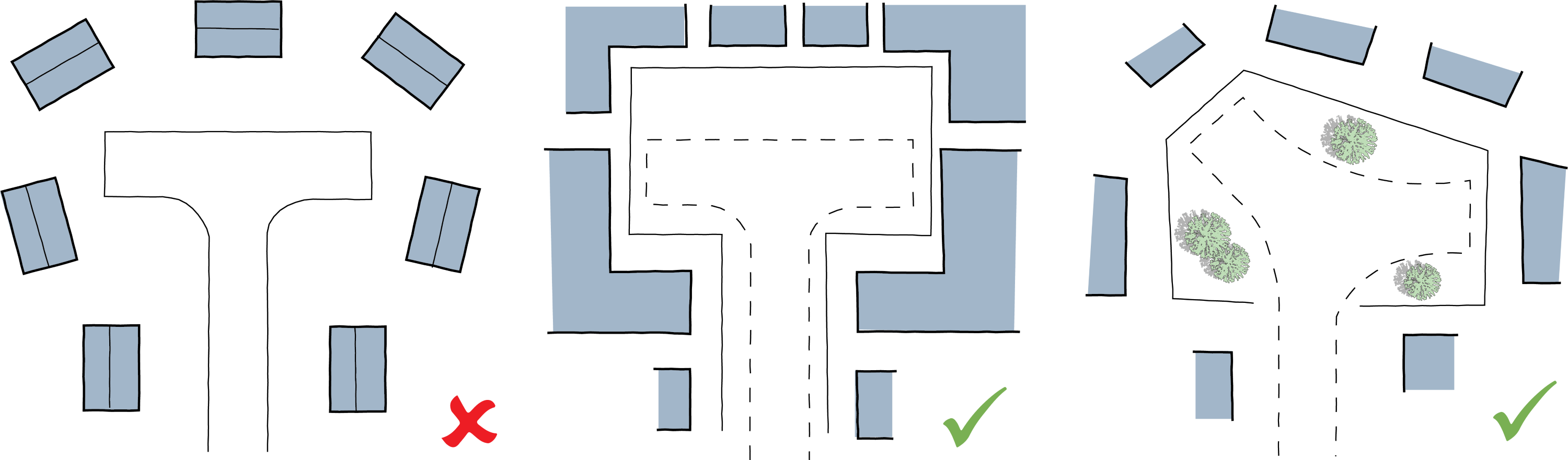
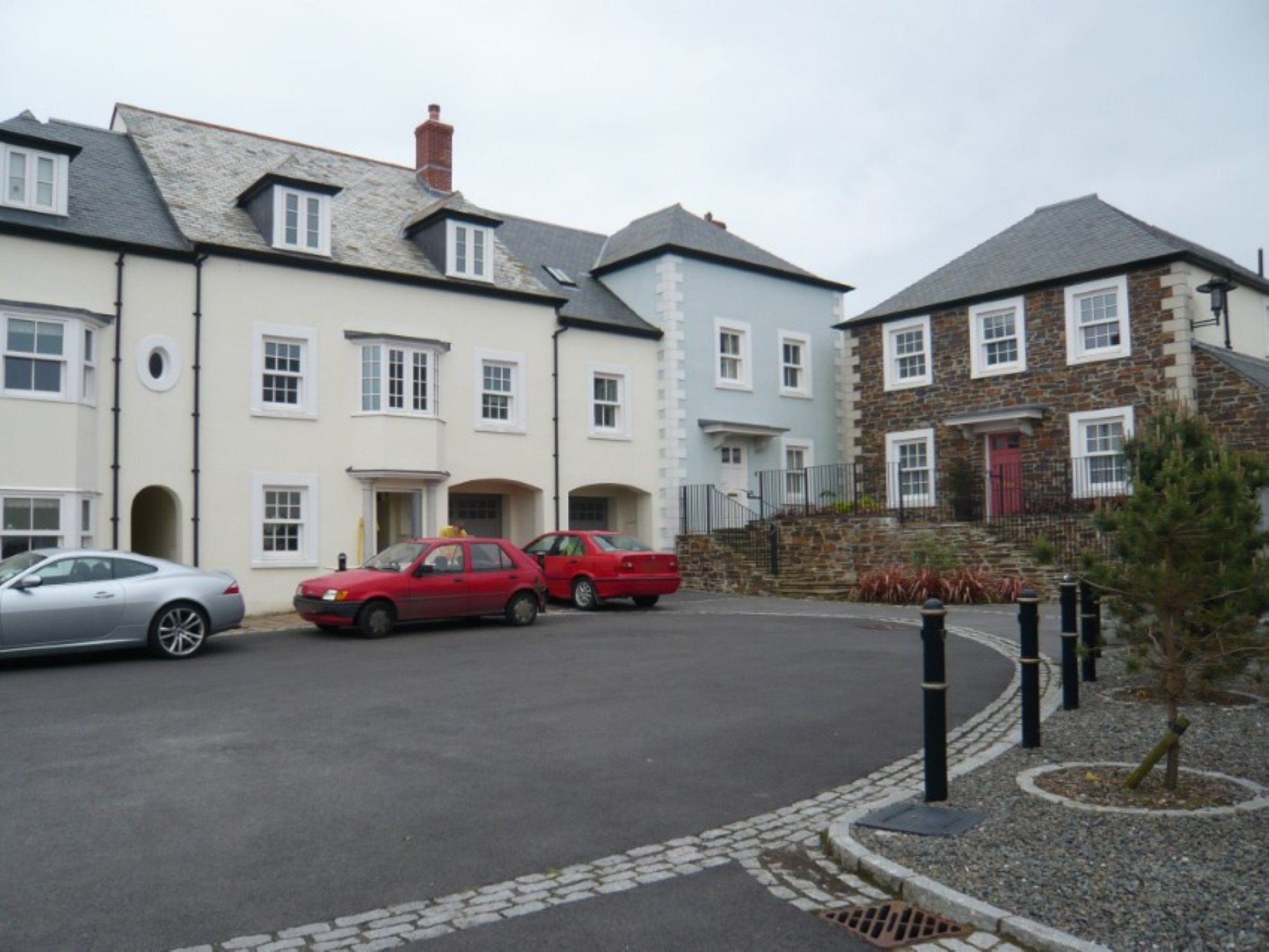
This does not mean that conventional turning heads, with wide expanses of tarmac, are necessary or acceptable. Other approaches are possible that integrate good street design and placemaking principles.
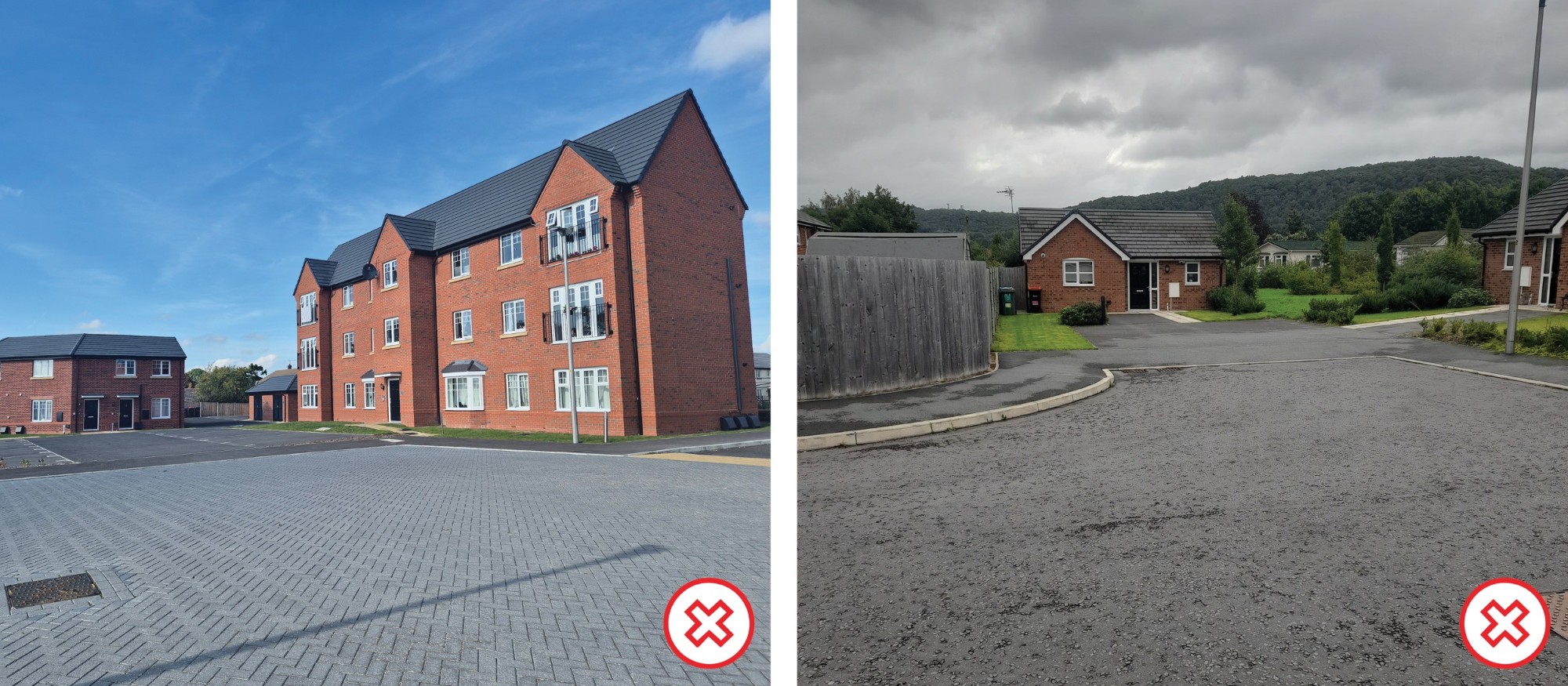
Conventional turning head patterns must not be used. In residential areas, they must be hidden and form part of squares or courtyards that have a place function too. Characteristics that must be avoided are:
- Large expanses of tarmac
- Leftover space and verges, including circulating footways that lead nowhere
- A shape that is unrelated to the building line
Turning heads must provide adequate space for safely turning large vehicles, such as refuse vehicles or fire appliances. This can be achieved by using the design principles set out below, or by undertaking vehicle tracking to demonstrate that the proposal is feasible.
Turning heads on commercial and industrial developments must be tracked to accomodate a 15.5m articulated or 11m rigid vehicle.
Turning heads should incorporate greenery, including street trees and SuDS.
The building line should be used to frame the courtyard or square and ensure it is overlooked and has a sense of enclosure.
Turning movements associated with industrial or commercial developments should be accomodated within the site boundary, avoiding the need to reverse on the highway or within highway junctions.
Turning loops could be used as an alternative, provided that:
- The middle of the loop is primarily (at least 60%) used for greenery, including trees and SuDS. -
- It does not result in left over space or unnecessary verges.